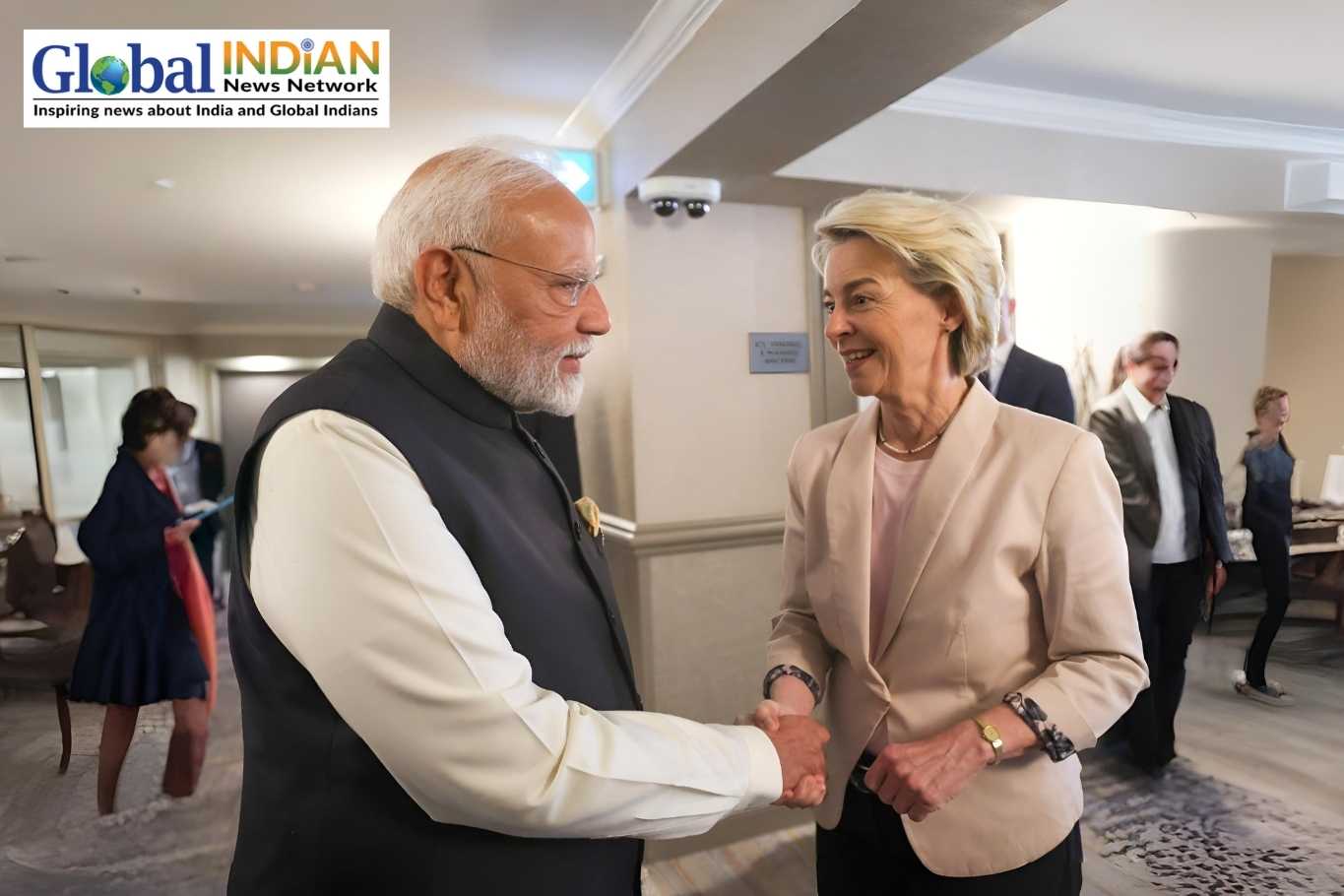
 European Commission President Ursula von der Leyen has positioned India as a cornerstone of Europe’s trade strategy, emphasizing the need to finalize the decades-long India-EU free trade agreement (FTA). Her visit to New Delhi, coinciding with her role as Chief Guest for India’s Republic Day, is aimed at energizing bilateral ties and closing remaining gaps in what she describes as “the mother of all deals.”
The agreement promises to significantly enhance economic relations between India and Europe, reflecting India’s growing strategic confidence on the global stage. The deal could reshape global trade patterns, offering European nations an opportunity to strengthen ties with a stable, expanding market that poses no geopolitical threat, unlike other regions facing political and economic uncertainty.
Negotiations had initially aimed for completion by the end of 2025, but New Delhi delayed decisions to account for the U.S. administration’s unpredictable stance on trade. With limited prospects for a favorable bilateral agreement with the United States under the Trump administration, India now has a chance to assert its economic leverage and independence by moving forward with Europe.
Though the FTA may not be perfect, with certain agricultural goods potentially excluded and protections for Indian carmakers remaining partial, the urgency to finalize the agreement is high. Prolonged delays could see the European Parliament impose legal or procedural hurdles, similar to past experiences with Latin American trade deals.
Signing the agreement would not only boost trade and investment between India and the EU but also send a strong signal to Washington about India’s capacity to navigate complex global partnerships independently. Economically, the FTA could unlock new avenues for energy, technology, and industrial cooperation, providing Indian businesses with alternatives to markets constrained by existing U.S. trade barriers.
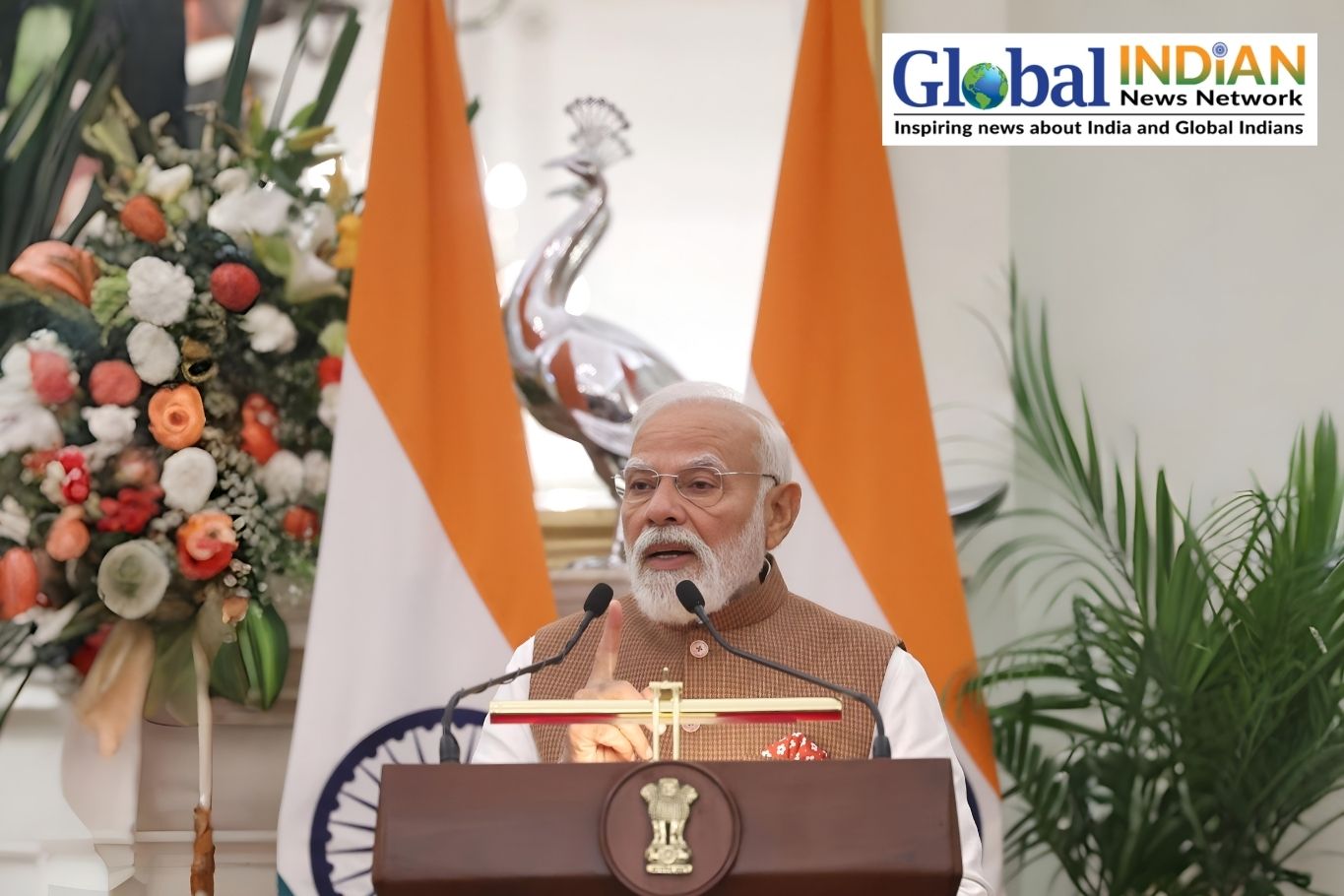
As von der Leyen visits, Prime Minister Modi has the opportunity to cement a landmark bilateral deal that strengthens India’s position as a resilient and strategic player in global trade while demonstrating its ability to manage relations with multiple global powers simultaneously.