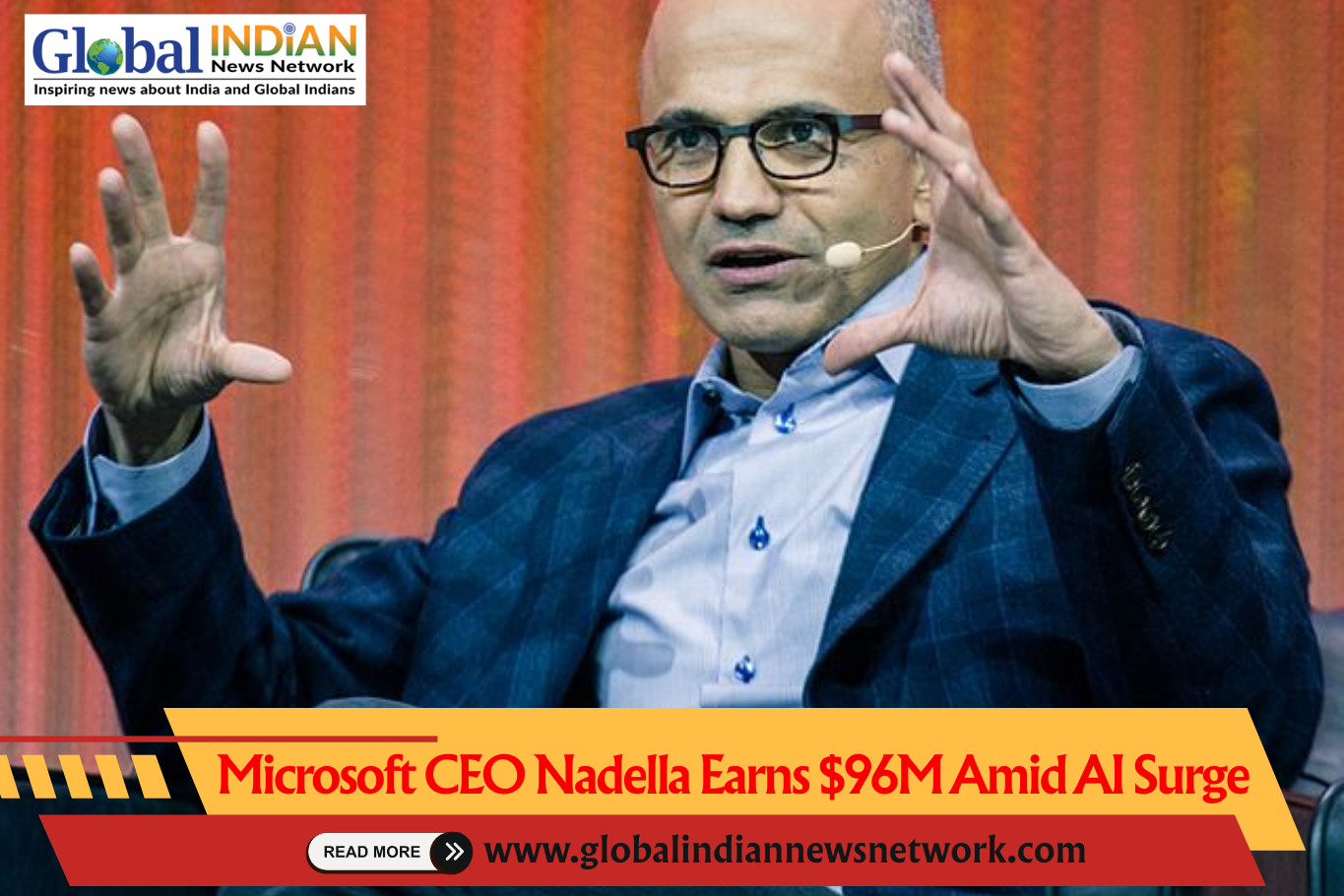
 Microsoft Chief Executive Officer Satya Nadella received a total compensation package of $96.5 million for fiscal year 2025, marking the highest payout since he assumed the role in 2014. This represents a significant increase from the $79.1 million he earned the previous year, highlighting Microsoft’s strong performance, particularly in artificial intelligence (AI) and cloud computing.
Approximately 90% of Nadella’s compensation came in the form of Microsoft shares, while his base salary stood at $2.5 million. The company’s board lauded his leadership, noting that Nadella and his team have positioned Microsoft as a global AI leader during this generational technology shift.
Nadella’s focus on AI has been transformative for Microsoft, beginning with a $1 billion investment in OpenAI in 2019, followed by an additional $10 billion. These moves have been pivotal in driving innovation and establishing Microsoft at the forefront of generative AI technologies.
Under Nadella’s stewardship, Microsoft has pursued strategic acquisitions to expand its business footprint. The purchases of LinkedIn and GitHub strengthened Microsoft’s presence in professional networking and software development. Additionally, acquiring Activision Blizzard has solidified its position in the gaming sector. These initiatives have diversified Microsoft’s portfolio and contributed to strong market performance, with shares rising 23% through 2025 as of Tuesday’s close.
Cloud computing has also been central to Microsoft’s growth strategy. Azure has emerged as a strong competitor to Amazon Web Services, posting consistent growth and capturing a significant share of the cloud market.
Nadella’s leadership team also benefited from fiscal 2025 growth. Chief Financial Officer Amy Hood received $29.5 million, while Judson Althoff, newly promoted to lead Microsoft’s commercial business, earned $28.2 million.
Born in Hyderabad, India, Nadella earned an electrical engineering degree from Mangalore University in 1988 and a master’s in computer science from the University of Wisconsin, Milwaukee. He joined Microsoft in 1992 after working at Sun Microsystems, progressing through leadership roles in Windows NT, online services, and server tools before becoming CEO on February 4, 2014, succeeding Bill Gates and Steve Ballmer.
Under Nadella’s vision, Microsoft has not only achieved remarkable financial success but also established itself as a leading innovator in AI, cloud computing, and emerging technologies, solidifying its role as a global tech powerhouse.