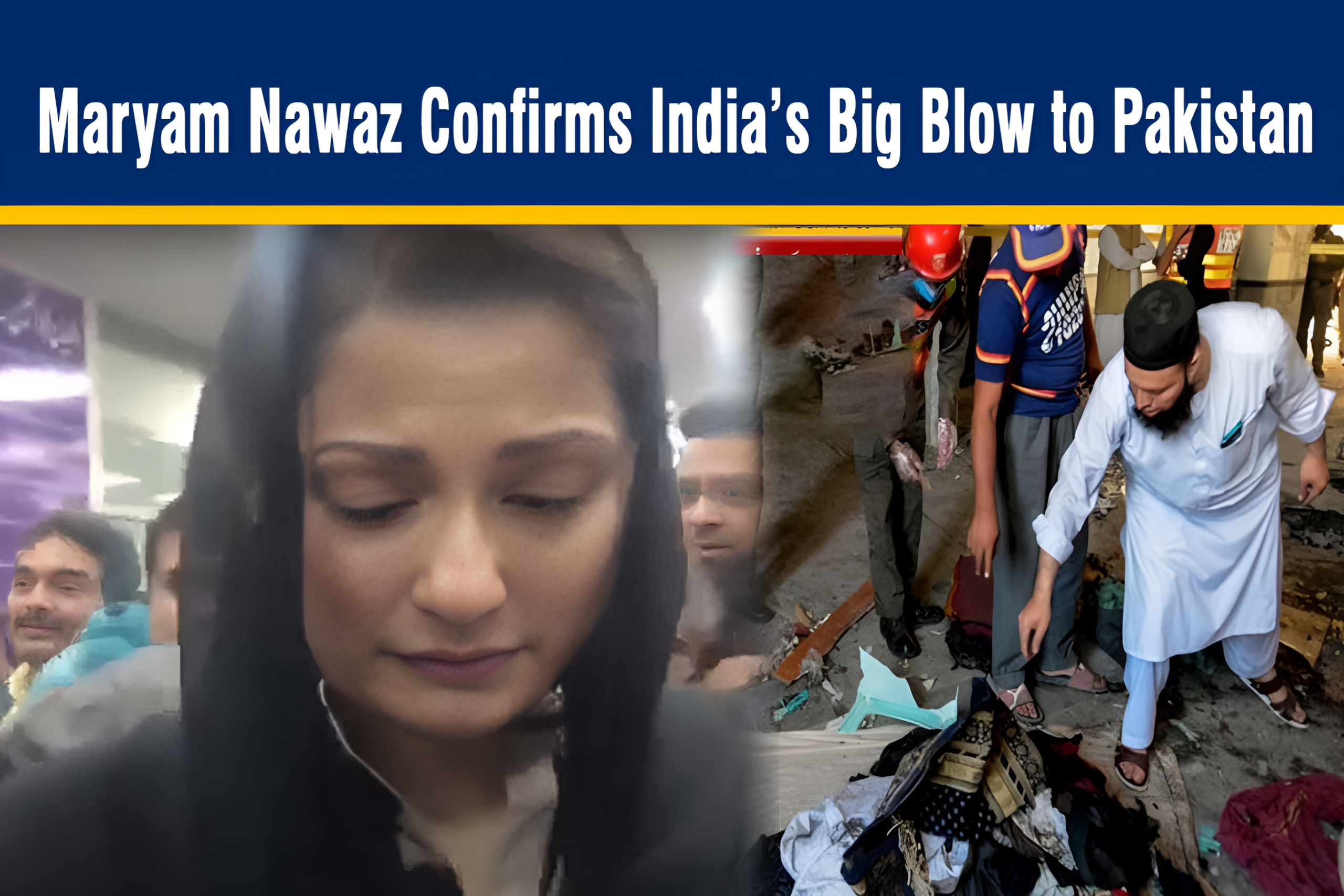
Maryam Nawaz, the Chief Minister of Punjab and niece of Prime Minister Shehbaz Sharif, has made a candid admission about the extent of damage inflicted by India’s Operation Sindoor. During a ceremony at the University of Sargodha, Nawaz drew stark comparisons between India’s May 7 military operation and the May 9, 2023, attacks on Pakistani military establishments by supporters of the Pakistan Tehreek-e-Insaf (PTI) party.
She claimed that the devastation caused by PTI activists—who had stormed sensitive locations like the General Headquarters in Rawalpindi—surpassed even that inflicted by a foreign adversary. Nawaz remarked that PTI’s actions delivered a blow to national integrity that even long-standing enemies hadn’t managed in decades.
Her statements also reflected an uncommon openness in Pakistani leadership regarding Operation Sindoor. While condemning PTI’s domestic unrest, she acknowledged that India’s military strikes severely impacted Pakistan’s defense infrastructure.
This admission follows a similar revelation by Prime Minister Shehbaz Sharif, who confirmed that India’s ballistic missiles had targeted several strategic sites, including the Nur Khan Airbase, on May 10. This was part of a four-day escalation and marks the first formal acknowledgement from Islamabad after weeks of silence and denial.
Sharif stated that he was informed of the attack at 2:30 AM by General Asim Munir, describing the situation as deeply alarming. Earlier, Pakistan asserted that its air force had responded by rendering India’s S-400 air defense system at the Adampur base inoperative. However, Indian Prime Minister Narendra Modi’s visit to that very base afterward raised doubts over Pakistan’s claims.
Moreover, while Pakistan had initially accused India of hitting civilian areas, a confirmation later came from Sindh’s Chief Minister that Bholari Air Base was indeed struck, killing six Pakistani Air Force members—corroborating India’s position that only military installations were targeted.
This series of acknowledgments marks a significant shift in Pakistan’s narrative and highlights the deep impacts of both domestic unrest and foreign military actions.