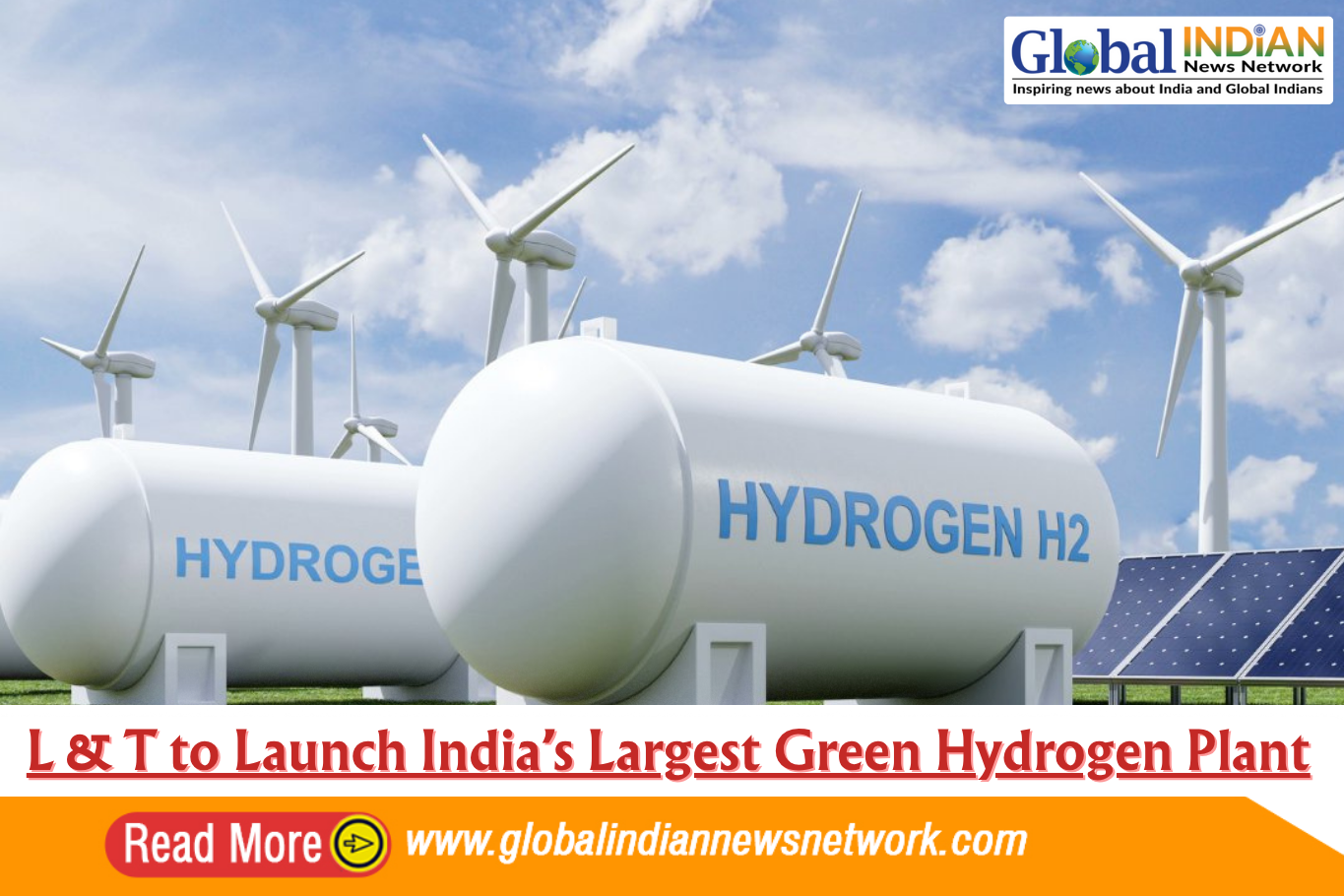
L&T Energy GreenTech (LTEG), a wholly owned subsidiary of Larsen & Toubro (L&T), is set to develop India’s largest green hydrogen facility at the Indian Oil Corporation Limited (IOCL) refinery in Panipat, Haryana. According to the company’s official announcement, this state-of-the-art plant will operate under a build-own-operate (BOO) model and will supply 10,000 tonnes of green hydrogen annually to IOCL over a 25-year period.
This landmark project is part of India’s broader push under the National Green Hydrogen Mission, a government initiative aimed at accelerating the transition to clean energy. The Panipat plant is expected to play a pivotal role in decarbonising IOCL’s refinery processes, marking a major step in reducing industrial carbon emissions. The facility will be powered entirely by renewable energy, operating continuously throughout the year to ensure stable production.
A significant highlight of the project is its reliance on high-pressure alkaline electrolysers manufactured domestically by L&T Electrolysers Ltd at their Hazira plant in Gujarat. This aligns with India’s Aatmanirbhar Bharat mission by fostering local production and reducing dependence on imported technology.
Subramaniam Sarma, Deputy Managing Director and President of L&T, highlighted the strategic importance of the project, stating that it cements L&T’s position as a leader in India’s green hydrogen sector. He noted that this initiative will set a new standard for sustainable industrial operations in the country.
Derek Shah, Head of Green Manufacturing & Development at L&T, emphasized the project’s role in showcasing L&T’s complete green energy capabilities. According to Shah, the Panipat facility will combine local manufacturing with cutting-edge technology, delivering a high-efficiency, zero-emission solution that supports India’s green energy goals.
Once operational, this project will not only meet IOCL’s green hydrogen needs but also stand as a testament to India’s commitment to clean energy innovation. It represents a key milestone in building a low-carbon, self-sufficient industrial ecosystem that contributes to both national sustainability goals and global climate initiatives.