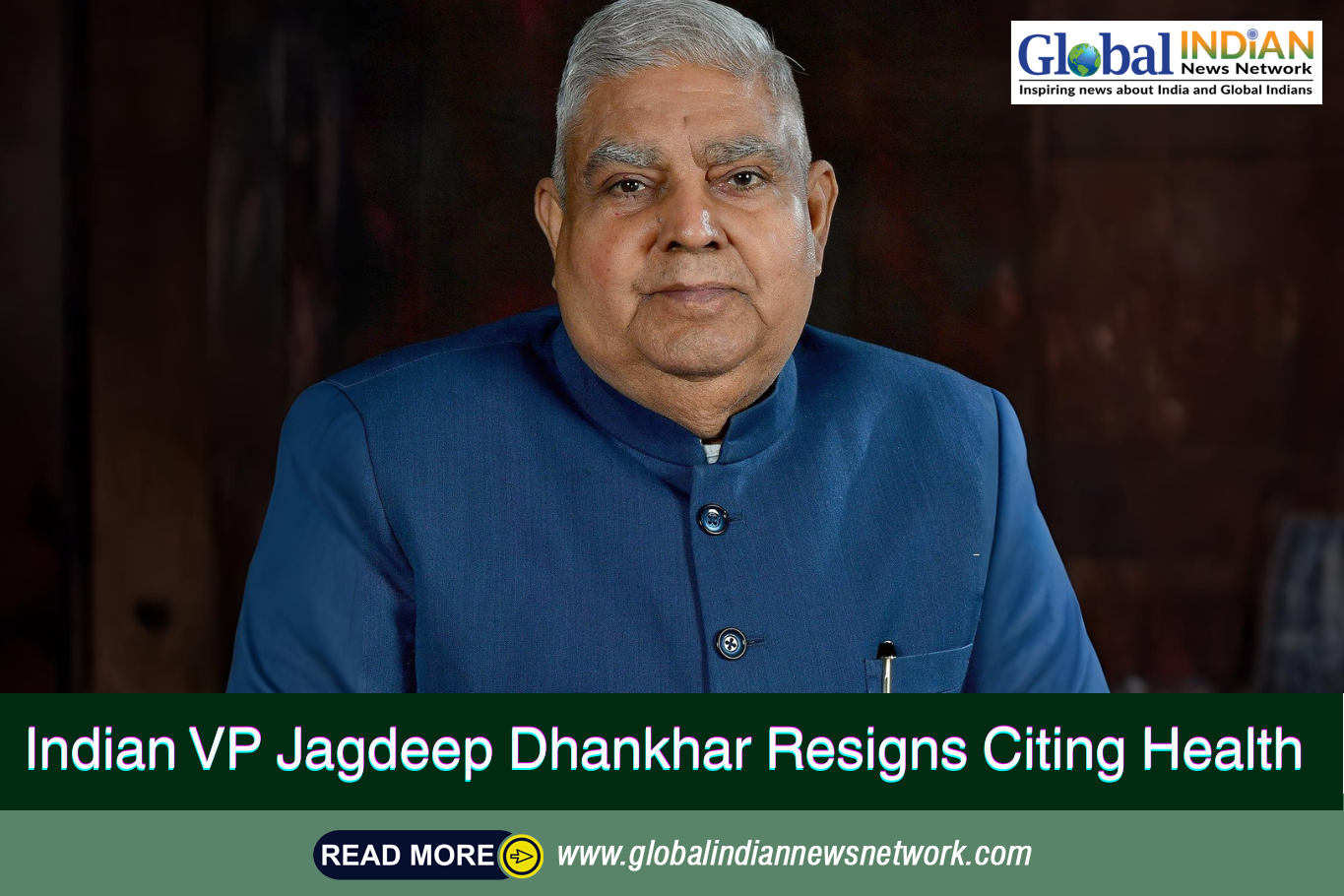
India’s Vice President Jagdeep Dhankhar officially stepped down from his position on Monday, citing health concerns as the reason for his early departure. Dhankhar, 74, had been holding the office since August 2022 and decided to resign before completing his five-year term.
In his resignation letter addressed to President Droupadi Murmu, Dhankhar wrote, “To focus on my health and follow medical guidance, I hereby tender my resignation as the Vice President of India, effective immediately.” His statement was shared publicly through his official account on the social media platform X.
As the Vice President of India, Dhankhar held the second-highest constitutional position in the country. Apart from acting as the deputy to the President, the role also includes serving as the Chairperson of the Rajya Sabha, India’s upper house of Parliament. Additionally, the Vice President is responsible for stepping in as acting President if the office of the President becomes temporarily vacant.
Dhankhar’s sudden resignation creates a significant vacancy in the Indian political hierarchy, especially considering his role in presiding over crucial legislative sessions in the Rajya Sabha. The Vice President’s office typically holds a tenure of five years, but Dhankhar’s term was cut short due to his decision to prioritize his well-being.
Before becoming Vice President, Dhankhar had a long career in public service and law. His tenure in the role was marked by several high-profile parliamentary sessions and important constitutional responsibilities.
The announcement comes amid India’s ongoing monsoon session of Parliament, adding an unexpected development to the political landscape. The government is expected to begin the process of appointing a new Vice President in accordance with constitutional guidelines.
Dhankhar’s resignation has sparked discussions about succession plans and the implications for legislative proceedings, particularly given his role in moderating debates and ensuring the smooth functioning of India’s upper house.
This development underscores the importance of health considerations in public office and highlights the need for seamless transitions in the highest levels of governance.