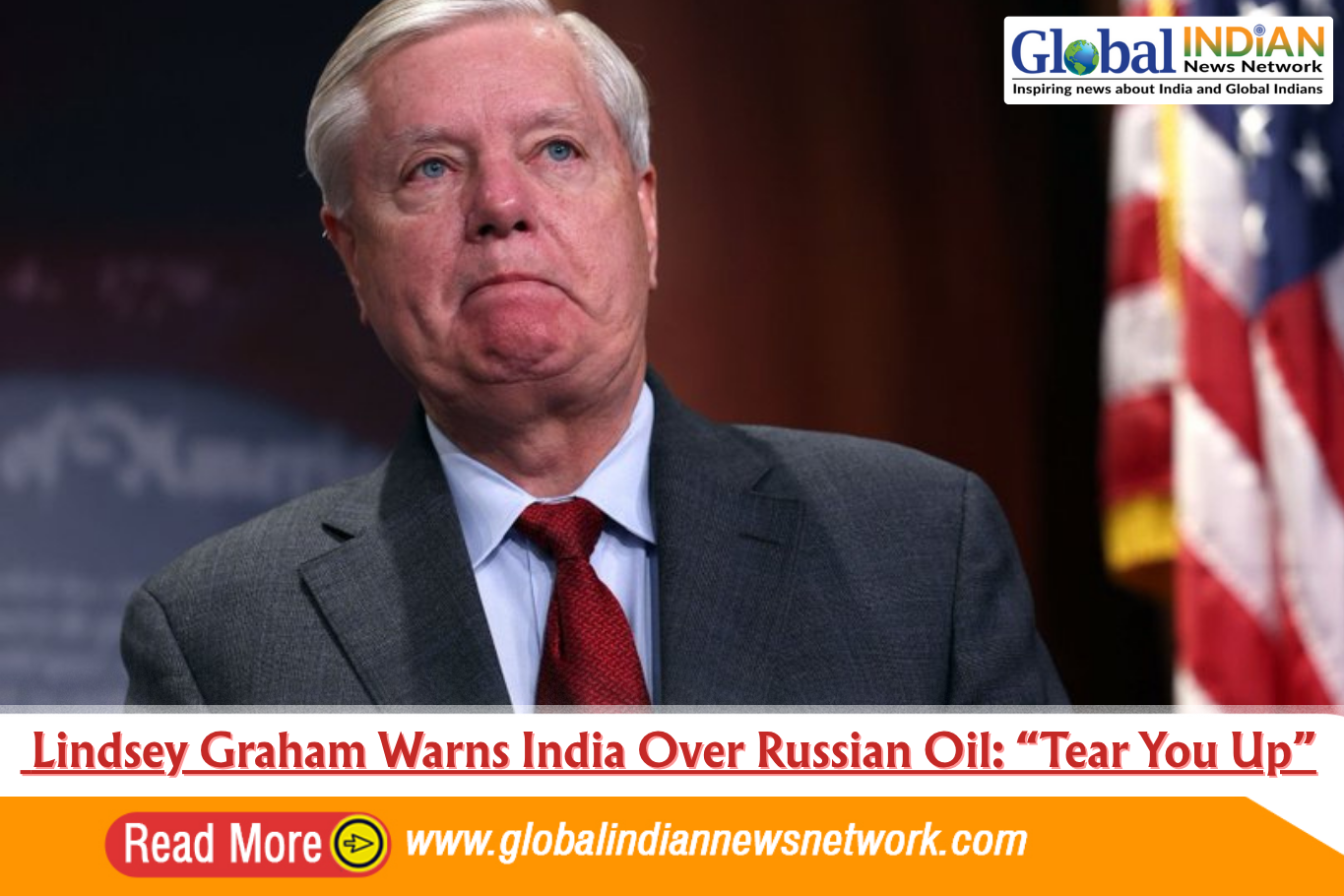
As global condemnation of Russia’s invasion of Ukraine intensifies, India is under growing pressure from Western powers to reduce its oil imports from Moscow. The latest warning came from US Senator Lindsey Graham, who said a future Trump-led administration would slap 100% tariffs on oil-linked imports from countries that continue purchasing Russian crude—including India, China, and Brazil.
Graham, a close ally of former President Donald Trump, claimed that these three nations collectively account for around 80% of Russia’s crude exports, a lifeline funding the war in Ukraine. Speaking on Fox News, he accused them of financially supporting the conflict. “If you keep buying cheap Russian oil and let this war drag on, we’re going to hit you hard economically,” he warned.
The senator has already proposed legislation that would impose 500% tariffs on goods from countries that persist in trading with Moscow, calling such commerce “blood money.” He argued that crippling Russia’s revenue is the only way to bring an end to the conflict.
India, however, has pushed back, defending its energy strategy as grounded in market dynamics and national interests. Officials in New Delhi emphasized that their oil purchases are based on available global supply and urged the West to avoid double standards when it comes to trade and geopolitical decisions.
The diplomatic tension has further escalated following European Union sanctions against Nayara Energy, a major Indian refinery based in Gujarat. The refinery, partially owned by Russia’s state-backed oil firm Rosneft, has now become the first Indian company to face EU penalties due to Russian connections. These sanctions could severely affect Nayara’s ability to export refined products to key regions like Africa.
Meanwhile, NATO Secretary General Mark Rutte echoed the West’s growing frustration, warning India of potential secondary sanctions if it doesn’t reconsider its stance. He urged India to pressure Russia into peace negotiations, stating that failing to do so could have serious consequences for India, Brazil, and China.
India now finds itself walking a diplomatic tightrope—trying to balance longstanding relationships with Western allies while maintaining economically beneficial ties with Moscow. As geopolitical pressure and trade risks rise, India’s energy diplomacy faces a critical stress test.