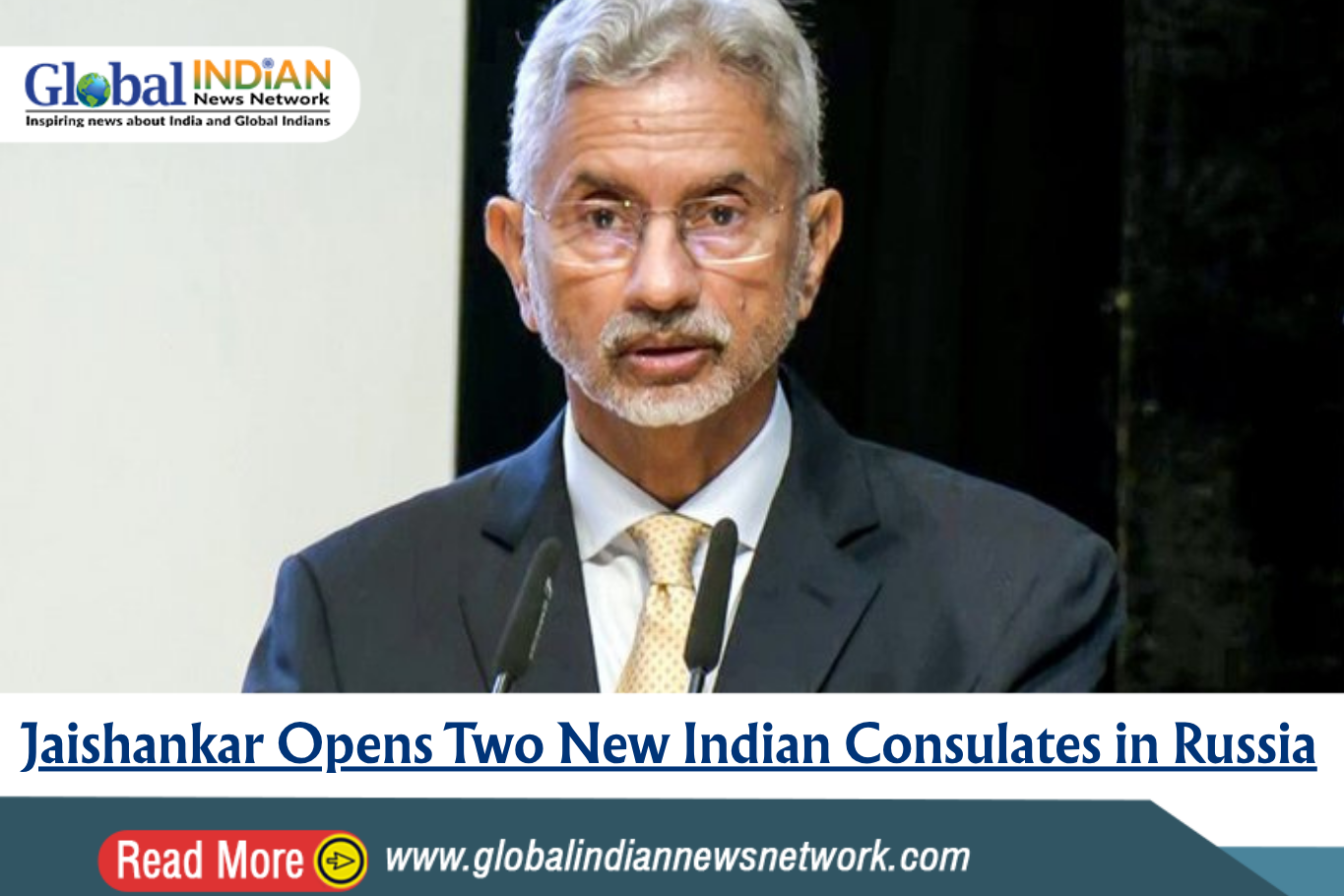
 External Affairs Minister S. Jaishankar on Wednesday highlighted that the launch of two new Indian Consulates General in Russia marks an important milestone in bilateral relations. Speaking at the inauguration ceremonies in Yekaterinburg and Kazan, he emphasized that these new missions represent the beginning of a more expansive phase of India–Russia engagement.
Jaishankar noted that the establishment of these consulates has been a priority for several months, with continuous coordination ensuring both facilities could open at the earliest opportunity. He acknowledged the dedicated efforts of the Indian Embassy in Moscow and the support extended by Russian authorities throughout the process.
The inauguration was attended by several high-ranking officials, including Russian Deputy Foreign Minister Andrey Rudenko, Indian Ambassador Vinay Kumar, representatives from regional administrations in both cities, senior Russian government officials, and members of the Indian community.
Expressing gratitude for Russia’s cooperation, Jaishankar thanked Deputy Foreign Minister Rudenko and the regional governments of Tatarstan and Sverdlovsk Oblast for facilitating the establishment of the new missions.
Speaking about Yekaterinburg, he said the city is widely considered Russia’s “third capital” due to its strong industrial base. The region plays a major role in sectors such as heavy engineering, gem processing, defense production, metallurgy, nuclear fuel, chemicals, and medical equipment. He also pointed out that Yekaterinburg hosts INNOPROM, one of Russia’s most influential international industrial exhibitions. Jaishankar stressed that the new consulate will help accelerate technological cooperation, industrial partnerships, trade exchanges, and scientific collaboration between businesses in both countries.
Discussing Kazan, Jaishankar described it as one of Russia’s most culturally vibrant and frequently visited cities. He said Kazan serves as a bridge between Russia and the wider Asian region due to its diverse, multicultural identity. The new consulate, he added, will strengthen people-to-people connections, promote educational exchanges under the ITEC program, and support cooperation in key sectors such as oil refining, automobiles, pharmaceuticals, defense production, fertilisers, and electrical equipment.
Jaishankar expressed confidence that the Indian diaspora, students, and business community will significantly benefit from improved consular access and India’s enhanced presence in the region. He concluded by saying that the opening of these missions will broaden trade, tourism, academic collaboration, cultural ties, and technological engagement—further deepening the long-standing partnership between India and Russia.