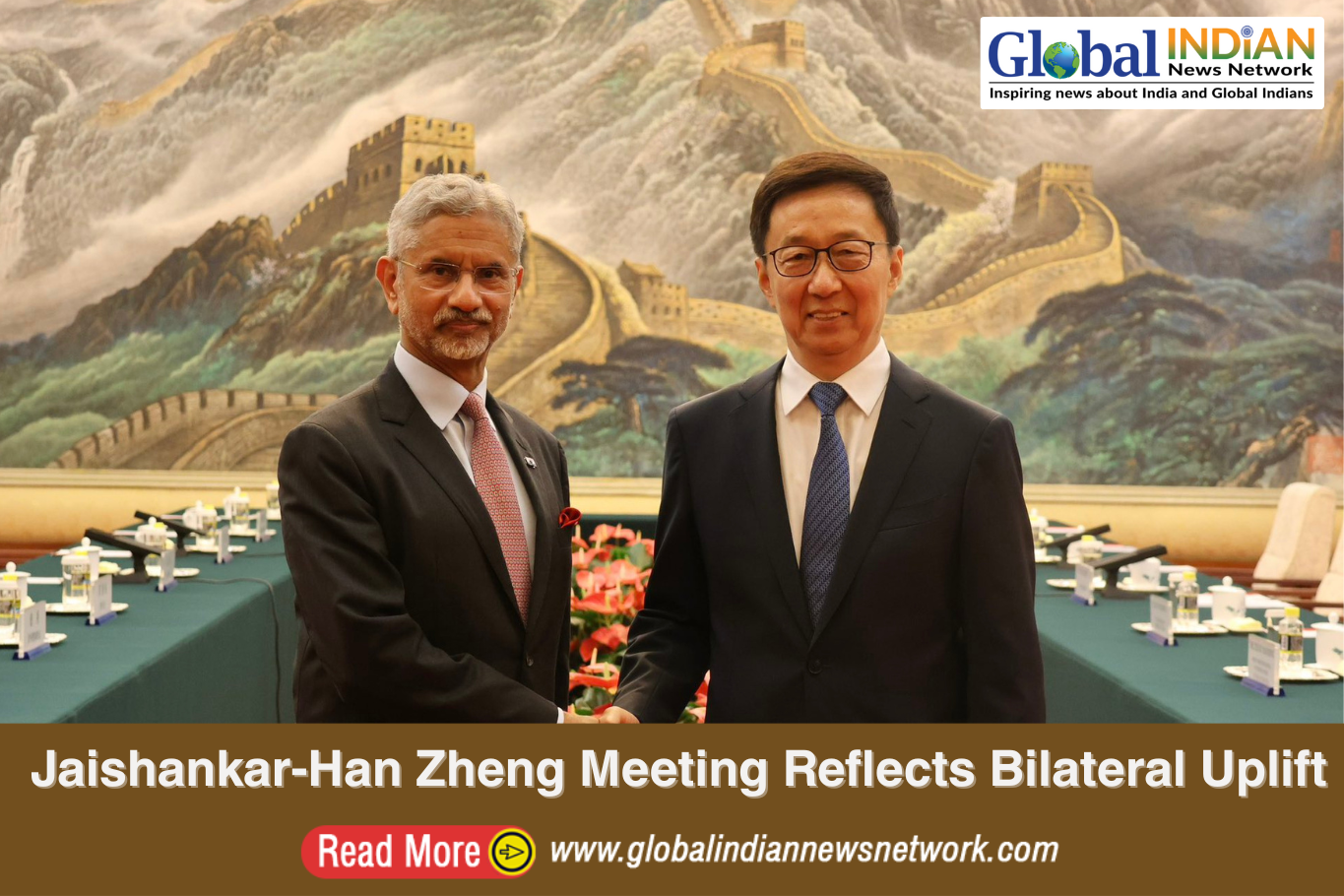
In a significant diplomatic engagement, India’s External Affairs Minister S. Jaishankar met with Chinese Vice President Han Zheng in Beijing on Monday, signaling an ongoing thaw in relations between the two Asian giants. This marks Jaishankar’s first visit to China in five years, a trip aimed at keeping the momentum of dialogue moving forward.
During his meeting, Jaishankar expressed India’s support for China’s presidency of the Shanghai Cooperation Organisation (SCO), reiterating India’s commitment to regional cooperation. In a social media post, he stated thathe was “pleased to meet Vice President Han Zheng soon after arriving in Beijing,” adding that he expects the visit to help maintain the positive direction in bilateral ties.
Jaishankar acknowledged that the relationship between India and China has shown signs of improvement since Indian Prime Minister Narendra Modi met Chinese President Xi Jinping in Kazan last October. He cited the resumption of the Kailash Mansarovar Yatra, a sacred pilgrimage halted after the 2020 Galwan clash, as an example of constructive engagement between the nations.
Both leaders also discussed the broader global geopolitical landscape, with Jaishankar noting the need for open and transparent communication between neighboring powers and major global economies like India and China.
His visit follows recent trips to China by Indian Defense Minister Rajnath Singh and National Security Advisor Ajit Doval, who also attended SCO-related events in June. Jaishankar is set to participate in the SCO Council of Foreign Ministers Meeting in Tianjin on July 15, where he will hold additional bilateral talks, including with Chinese Foreign Minister Wang Yi.
This dialogue comes amid a cautious reset in India-China relations after the 2020 Galwan Valley conflict, the worst border standoff between the nations in over four decades. That violent clash strained ties to historic lows, prompting both sides to halt routine interactions.
However, the decision to revive the Special Representatives (SR) dialogue—a mechanism for boundary negotiations—signals a potential path toward de-escalation. Wang Yi is expected to visit India next month to continue these discussions with NSA Doval, marking another step toward restoring diplomatic normalcy.