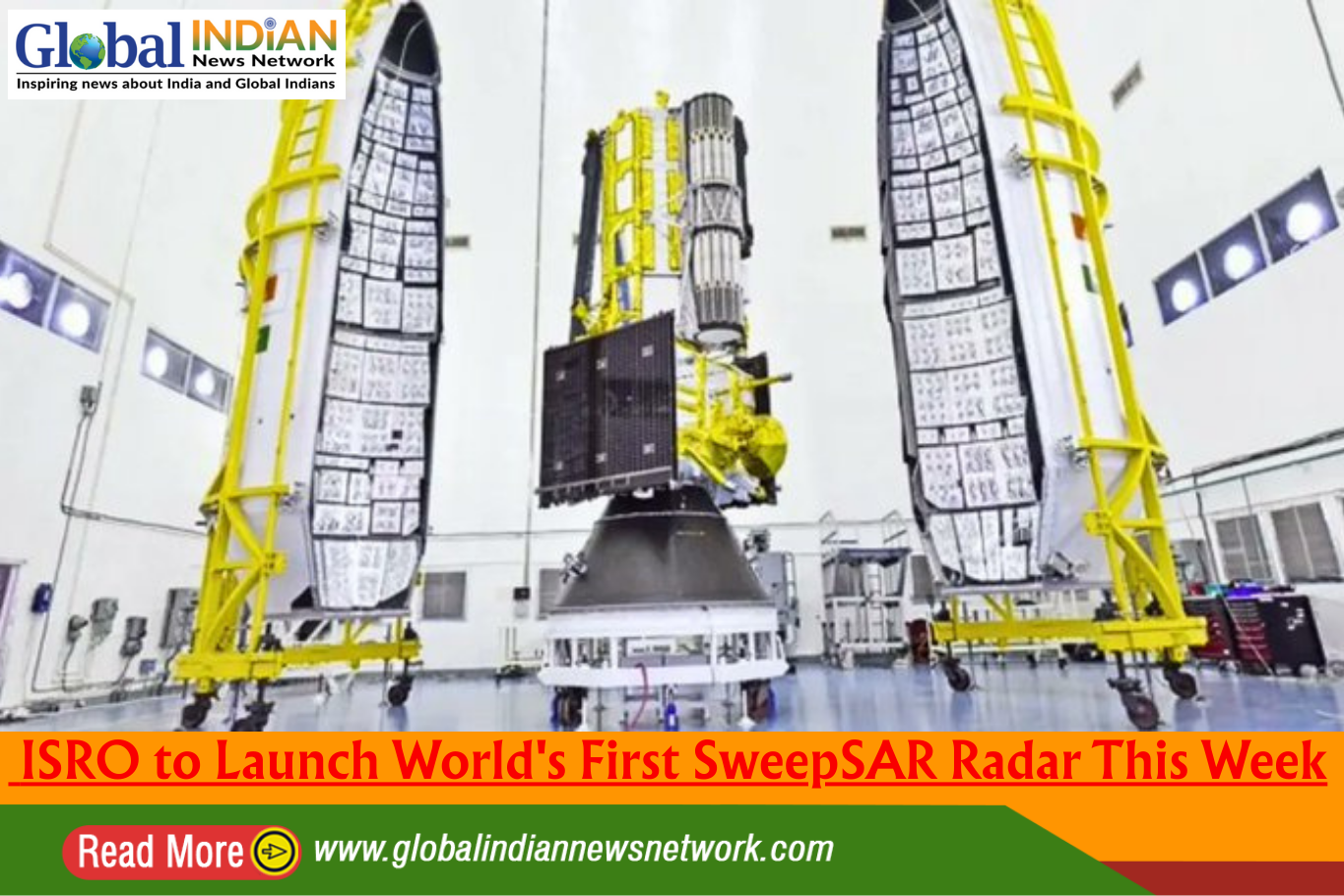
 The NASA-ISRO Synthetic Aperture Radar (NISAR) mission, the most expensive Earth observation satellite to date, is set to unfold its 12-meter-wide radar antenna in space this week. This groundbreaking project carries a strong Ahmedabad connection—scientists from ISRO’s Space Applications Centre (SAC) designed and built the S-band radar on board. Paired with NASA’s Jet Propulsion Laboratory-developed L-band radar, NISAR becomes the first satellite in the world to feature SweepSAR technology, capable of detecting the tiniest changes on Earth, from polar ice shifts to tectonic activity and forest biomass variations.
Nilesh Desai, Director of SAC-ISRO, described NISAR as a historic achievement in Indo-US space cooperation. While the US contributed the L-band radar and the synthetic aperture radar system, India provided the S-band radar, the satellite bus, and the launch vehicle. This mission is unique for being the first to integrate both polarimetric and interferometric modes using SweepSAR, offering unprecedented imaging capabilities that will strengthen India’s current and future space missions.
What makes NISAR stand out is the seamless compatibility between the two radar systems, achieved through extensive cross-country testing and deep collaboration. Both radars must operate in perfect sync to produce accurate depictions of Earth’s surface—a challenge met through meticulous engineering and mutual understanding between teams in India and the US.
Thirteen years in the making, the mission is an equal partnership. India’s fully indigenous S-band radar, developed at SAC in Ahmedabad, underscores the country’s leadership in microwave radar technology, much as it previously excelled in satellite optical imaging.
Beyond technological achievement, NISAR holds significant promise for disaster research. Gujarat’s 2001 earthquake left a devastating toll, and data from NISAR could help scientists analyze tectonic plate shifts down to centimeters, potentially improving earthquake preparedness. While prediction remains out of reach, the mission’s land deformation data could be vital in mitigating risks worldwide.
At the heart of NISAR’s capabilities is SweepSAR technology. This innovation uses a sophisticated array of radar antennas that “sweep” Earth’s surface with radio waves and capture multiple return signals across a wide swath. The system’s ability to steer and control individual antennas provides vastly more detailed information than traditional radar systems, opening new horizons in environmental monitoring and Earth science research.