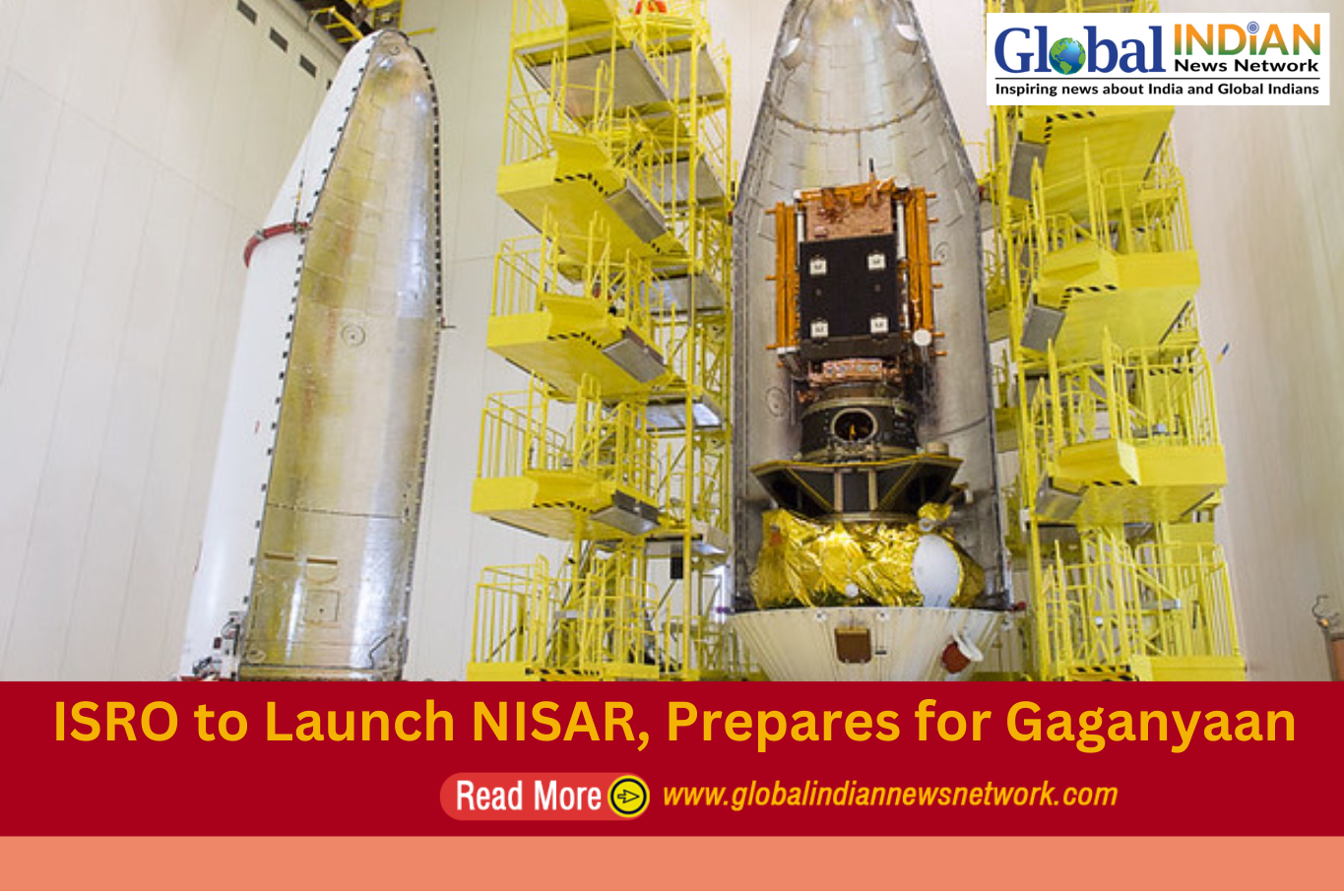
 The Indian Space Research Organisation (ISRO) is gearing up for a dynamic phase of space missions, kicking off with the much-anticipated launch of the NASA-ISRO Synthetic Aperture Radar (NISAR) satellite. Scheduled for July 30, this mission will take off aboard the GSLV-F16 rocket and is designed to revolutionize Earth observation efforts.
NISAR, a joint project between NASA and ISRO, will scan the entire planet every 12 days, capturing high-resolution radar imagery regardless of weather or lighting conditions. With a 242-kilometer swath width, the satellite will deliver vital data for studying climate change, managing natural disasters, and advancing geoscience research.
This satellite features cutting-edge radar systems from both nations: NASA’s L-band and ISRO’s S-band. The combination enables centimeter-level accuracy in detecting surface-level changes. It will help scientists closely track Earth’s dynamic phenomena, including glacial melt, vegetation shifts, and seismic activity. These insights will support governments and researchers in disaster preparedness, environmental protection, and infrastructure planning.
In addition to the Earth observation initiative, ISRO is also advancing preparations for India’s first human spaceflight program—Gaganyaan. According to Dr. V Narayanan, ISRO’s top scientist, three uncrewed missions are planned before astronauts embark on the historic journey.
The first of these test missions is scheduled for December and will include a humanoid robot named Vyommitra. The robot—whose name merges the Sanskrit words for “space” (Vyoma) and “friend” (Mitra)—is designed to mimic astronaut-like functions. Vyommitra will monitor onboard systems, issue warnings, support life systems, interact with ground control, and perform operations using six control panels.
If Vyommitra’s mission is successful, two additional uncrewed flights will follow next year. The final crewed Gaganyaan launch is slated for March 2027, aligning with Prime Minister Modi’s previously announced timeline.
These developments mark a significant leap in India’s space ambitions. With collaborations on global missions and the roadmap to sending humans to space, ISRO is establishing India as a major player in the evolving space exploration landscape. These missions not only reflect technological prowess but also showcase India’s path toward space independence and international cooperation.