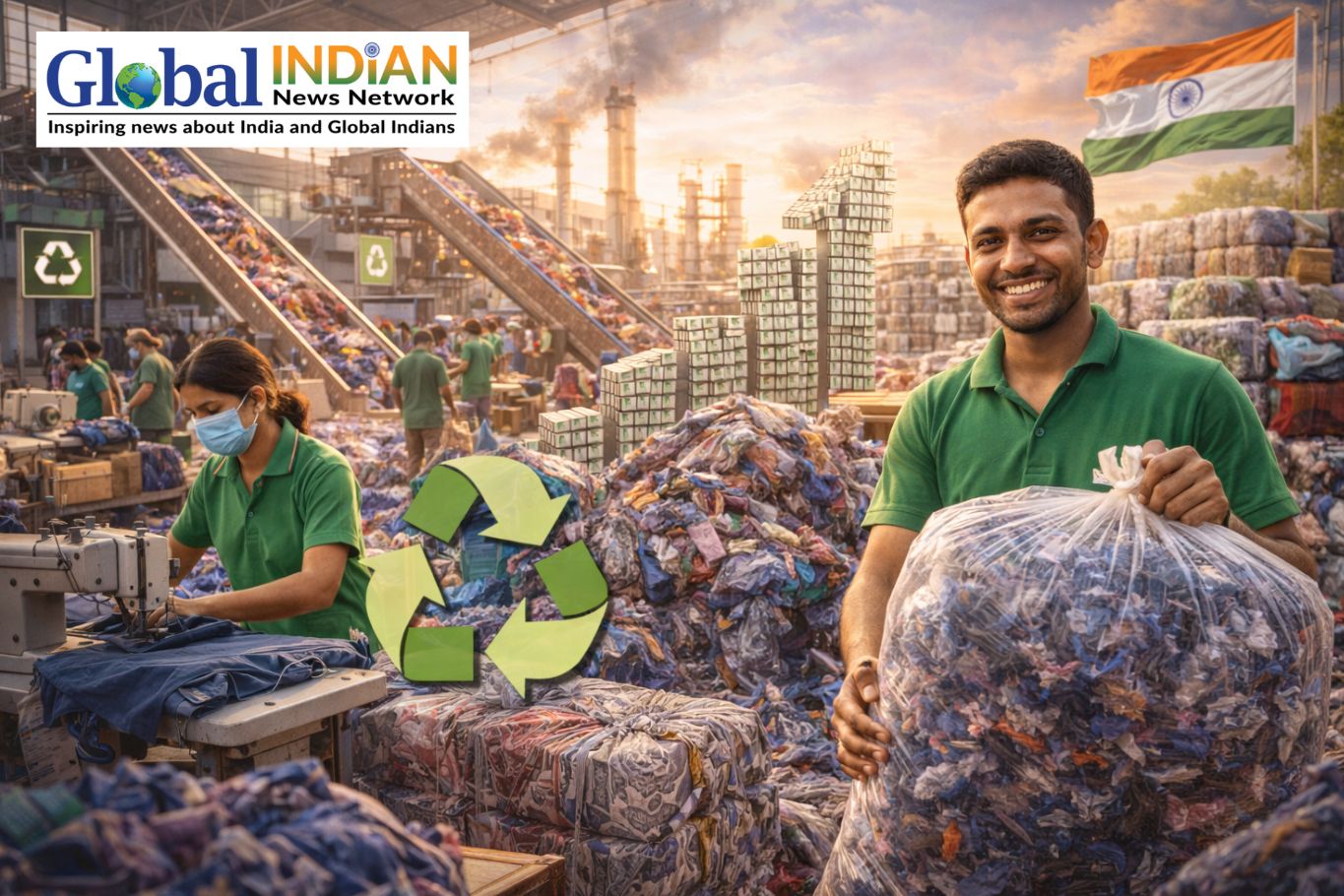
 India’s textile recycling market is poised for significant growth, with forecasts indicating that the sector could reach approximately $3.5 billion by 2030, while creating around 100,000 green jobs, according to a report by the Union Ministry of Textiles. The study, titled “Mapping of Textile Waste Value Chain in India,” offers a detailed evaluation of textile waste generation, available recycling technologies, and opportunities to strengthen circular economy practices across the industry.
The report highlights that India produces nearly 70.73 million tonnes of textile waste each year, underlining the urgent need for effective waste management and recycling infrastructure. Of this total, 42% originates from pre-consumer sources, such as manufacturing offcuts and factory waste, while 58% comes from post-consumer disposal, including old garments and household textiles. Importantly, more than 70% of this waste is already recovered, processed, and redirected into recycling, reuse, or upcycling channels, demonstrating the robustness of the country’s textile recovery networks.
The analysis identifies key recycling clusters, with Panipat emerging as a central mechanical textile recycling hub that handles waste from multiple production zones. Expanding such recycling facilities closer to the points of textile waste generation could increase operational efficiency and reduce transportation costs. Currently, around 95% of pre-consumer textile waste is recycled, while 55% of post-consumer material is diverted from landfills through organized collection and sorting systems.
These recycling systems provide employment opportunities for approximately 4 to 4.5 million individuals, with women forming a significant part of the workforce in collection and sorting operations. The report emphasizes that by improving recycling processes, adopting advanced technologies, and promoting circular production systems, India has the potential to become a global leader in sustainable textile manufacturing. Enhanced infrastructure and innovation in recycling will not only reduce environmental impact but also contribute to economic growth and the development of a skilled green workforce.