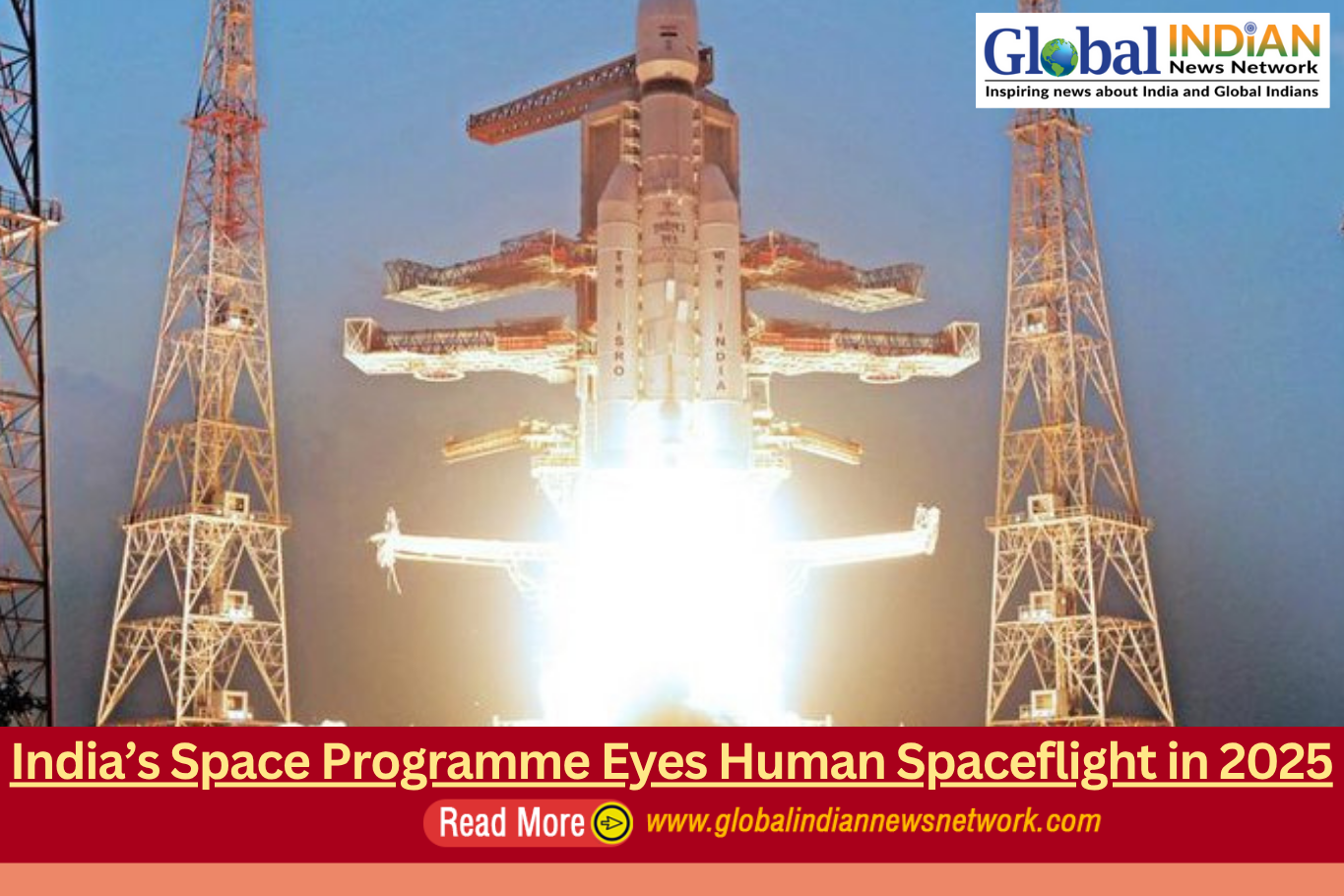
 India’s space ambitions continue to surge, marked by the successful launch of a 4,400-kg communication satellite — one of the heaviest ever placed into orbit by the country, according to a report.
The feat highlights the technological advancements achieved since India entered the space age with the launch of Aryabhata in 1975, placing ISRO firmly among the world’s leading spacefaring nations.
Over the decades, ISRO has developed a robust and diversified launch capability through vehicles such as the PSLV, GSLV, and LVM3. According to a report by Times of Oman, the upcoming Small Satellite Launch Vehicle (SSLV) is expected to further strengthen India’s global position in the small-satellite market.
India has already launched 354 foreign satellites from 34 countries, and in 2017, ISRO set a world record by launching 104 satellites in a single mission.
After the success of Chandrayaan-3, which achieved a historic soft landing near the Moon’s south pole in 2023 — a first for any nation — India’s global stature in space exploration grew significantly. The mission, completed for just $75 million, earned widespread praise from NASA, ESA, and the Australian Space Agency for its affordable yet high-impact approach.
ISRO’s reputation for cost-efficient innovation was further cemented by the Mars Orbiter Mission (Mangalyaan), launched for $74 million. India became the first Asian nation to reach Mars orbit and the first in the world to succeed on its maiden attempt. Planned for six months, the mission provided data for eight years.
The Aditya-L1 mission marked India’s entry into advanced solar science, placing a solar observatory in a halo orbit around Lagrange Point 1. Built at a cost of $46 million, it enabled uninterrupted observation of the Sun.
India is now preparing for its most ambitious mission yet — Gaganyaan, the nation’s first human spaceflight, targeted for late 2025. An unmanned test flight is scheduled by the end of this year. The mission has drawn international appreciation, with French astronaut Thomas Pesquet describing it as “extremely impressive” and expressing his desire to fly alongside an Indian astronaut in the future.
With each milestone, India strengthens its position as a global leader in affordable and advanced space exploration, inspiring developing nations and reshaping the future of space travel.