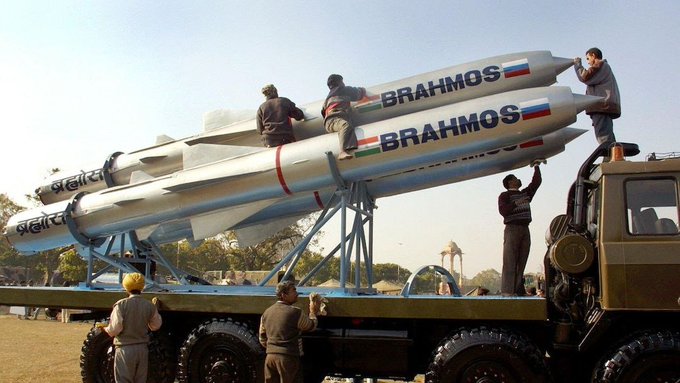
In one of the boldest and most strategically complex counter-offensive moves in recent years, India deployed its BrahMos supersonic cruise missiles to target and destroy critical Pakistani air bases during the second phase of the Sindoor Operation. Supported actively by other branches of the armed forces, the Indian Air Force successfully hit 11 out of Pakistan’s 12 air bases scattered throughout the country, severely damaging the Chinese-supported air defense networks.
According to defense sources quoted by ANI, approximately 15 BrahMos missiles were precision-launched, striking vital military infrastructure and effectively neutralizing Pakistan’s air strike capabilities. Alongside the BrahMos, the Indian forces also deployed Scalp missiles mounted on Rafale fighter jets to enhance the operation’s impact. This mission marked the BrahMos missile system’s first active combat deployment, where its exceptional precision and destructive power exceeded expectations, crippling key Pakistani air assets and defense command centers.
The Indian Air Force’s tactic began with deploying unmanned decoy drones disguised as fighter jets, triggering Pakistani radars and air defense systems like the HQ-9 missile launchers to reveal their positions. Once exposed, Indian forces employed loitering munitions, including Israeli Harop drones, to dismantle Pakistan’s air defense grid effectively.
Following this breach, India launched a concentrated missile assault involving BrahMos, Scalp, Rampage, and Crystal Maze missiles from its Western and Southwestern Air Commands. These strikes critically damaged runways, fortified shelters, and command hubs, significantly diminishing Pakistan’s ability to respond. Despite Pakistan’s attempts to retaliate using ballistic and cruise missiles and unmanned combat vehicles, India’s combination of Russian S-400, MRSAM, and Akash missile defenses, along with older systems, successfully intercepted these attacks.
The intensity of India’s offensive forced Pakistan to relocate many aircraft to safer rear bases and led to the loss of valuable assets, including UAVs and an airborne early warning system. The damage was so severe that Pakistan abandoned plans for further counterattacks and, through a call from its DGMO to the Indian counterpart, requested a cessation of hostilities. Subsequently, both nations agreed to pause all military action, leading to a ceasefire understanding.