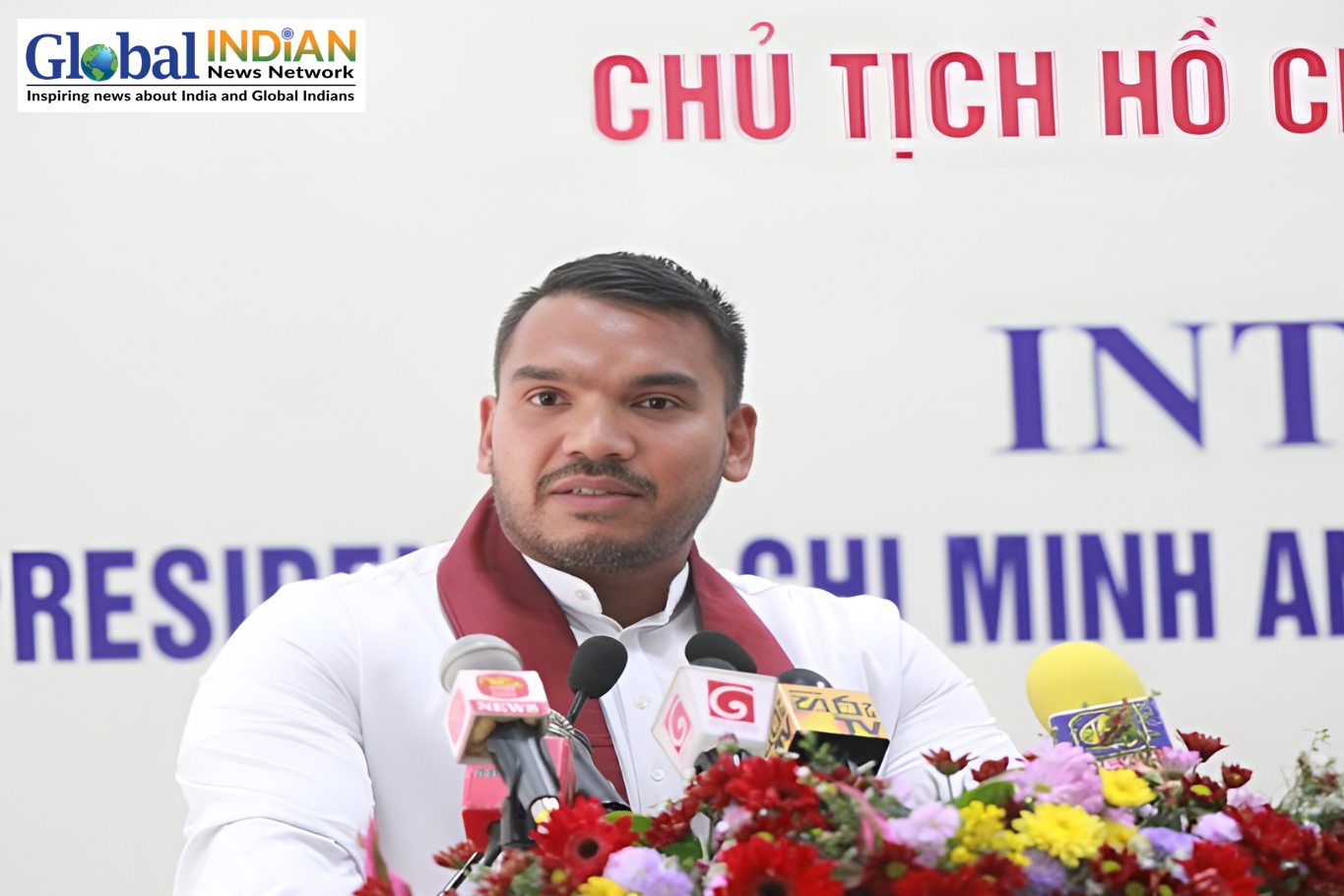
 Sri Lankan Member of Parliament Namal Rajapaksa has emphasised that India’s leadership is central to maintaining long-term peace and stability in the South Asian region, calling for stronger regional cooperation amid evolving global and regional security challenges.
In a statement shared on social media, Rajapaksa said South Asia faces an urgent need for greater regional coherence as several countries in the region have experienced political turmoil, public unrest, and changes in government in recent years. He noted that addressing these challenges requires a collective commitment to counter extremism, prevent political violence, and safeguard minority rights.
Highlighting India’s role, Rajapaksa said the country is well-positioned to provide leadership that can help the region respond effectively to shared challenges and emerging crises. He added that regional unity would allow South Asia to project greater influence on the global stage while ensuring long-term peace and stability.
Rajapaksa also pointed to upcoming elections in Bangladesh and Nepal as an opportunity to reaffirm democratic legitimacy through free and fair polls, which he said would further strengthen regional security.
India’s engagement with Sri Lanka has intensified in recent months, particularly following the devastation caused by Cyclone Ditwah. External Affairs Minister S. Jaishankar visited Colombo and conveyed Prime Minister Narendra Modi’s message of solidarity, reaffirming India’s role as a first responder in the region.
During the visit, India announced a reconstruction package of USD 450 million for Sri Lanka, covering restoration of critical infrastructure, housing, healthcare, education, agriculture, and disaster preparedness. Indian officials have reiterated that the assistance reflects the deep bond between the two nations and India’s commitment to Sri Lanka’s recovery and long-term stability.
India’s sustained diplomatic engagement and humanitarian support underscore its growing role as a stabilising force in South Asia, reinforcing calls for stronger regional cooperation and collective security.