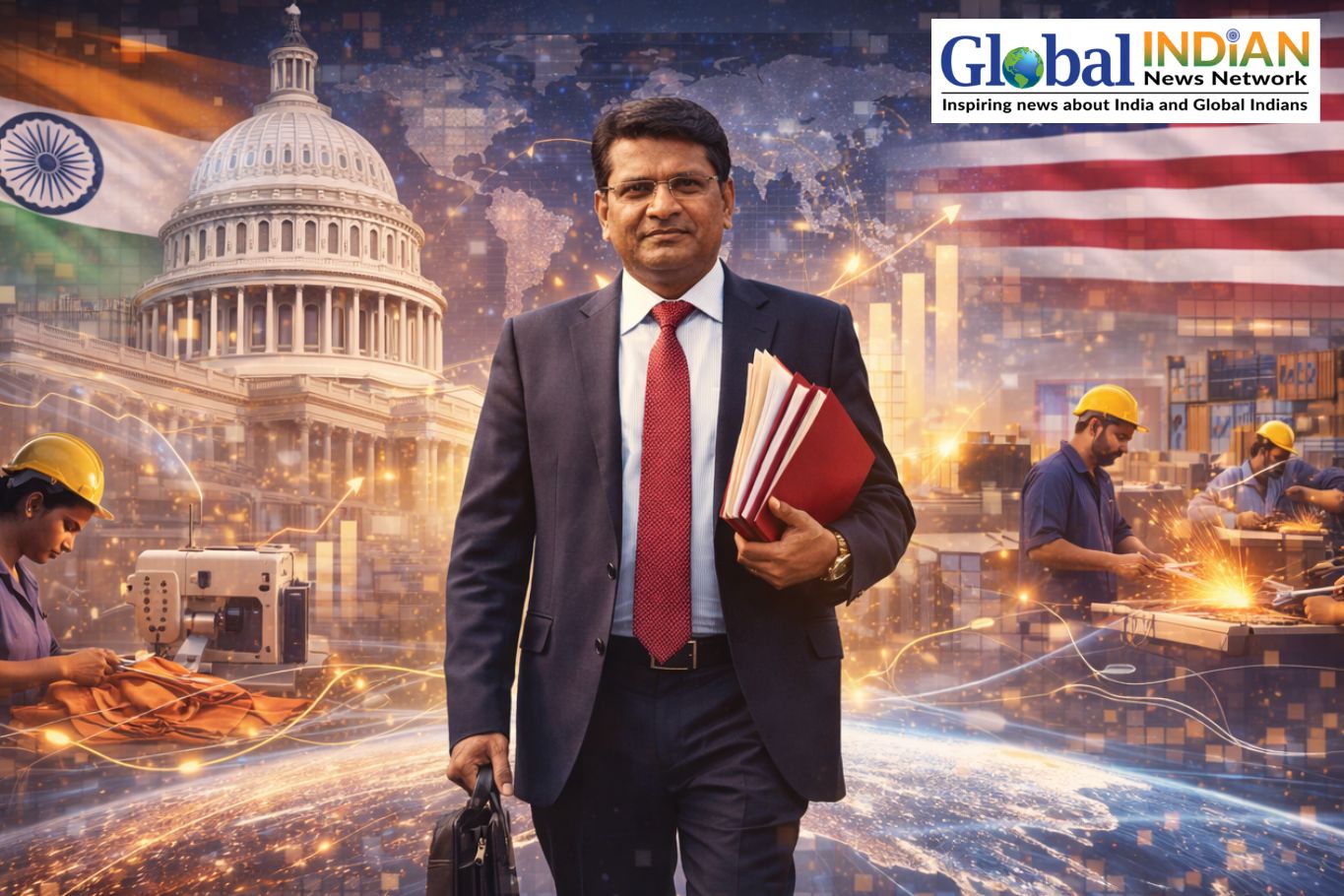
 India’s chief negotiator and Special Secretary in the Department of Commerce, Rajesh Agrawal, announced that the India-US trade discussions are advancing toward formalising a legal agreement. Following a series of virtual engagements, Agrawal confirmed that next week he will lead a delegation to Washington to finalise the legal framework for the interim trade deal.
Speaking to the media while releasing January trade data, Agrawal also referenced ongoing India-Canada Free Trade Agreement (FTA) negotiations, stating that teams are working to finalise the terms of reference. Earlier this month, he had indicated that India aims to sign the interim trade deal with the United States before the end of March.
Agrawal explained that the joint statement released by India and the US outlines the broad contours of the agreement, which now needs to be converted into a formal legal document. He expressed cautious optimism regarding the timeline, noting that while drafting a mutually satisfactory legal framework may take time, March remains the expected target for completion.
Highlighting the sectors poised to gain, Agrawal emphasised India’s competitive edge in labour-intensive industries. With the US being a key market for these sectors, the framework is expected to enable sustained growth and market access without obstacles. Addressing concerns about the 18% tariff ceiling, he pointed out that other competing countries maintain tariffs above this level and assured that Indian exporters will retain strong market competitiveness.
On sensitive sectors such as dairy, Agrawal reaffirmed India’s commitment to safeguarding domestic interests. He noted that India has consistently protected critical sectors in its recent trade agreements and has employed mechanisms like Tariff Rate Quotas (TRQ) to limit market access where necessary, ensuring minimal disruption to farmers and the domestic ecosystem.
Agrawal further mentioned that stakeholders and exporters have welcomed the interim agreement. Businesses appreciate the balance of reciprocal tariffs and recognise the positive implications for India’s exports. Overall, he conveyed confidence that the agreement supports India’s trade objectives and does not pose major risks to sensitive sectors.