India is no longer a peripheral player in the Indo-Pacific but is steadily emerging as a central force shaping regional stability and prosperity, according to a strategic report. However, the report stresses that India’s growing influence is not guaranteed and must be continuously earned through sustained investments in maritime capabilities, diplomatic engagement, and economic integration.
India’s rise in the Indo-Pacific is being driven by three key factors: the need to counterbalance China’s increasingly assertive regional posture, the opportunity to position itself as a preferred partner for democratic and like-minded nations, and the economic imperative to integrate into global supply chains beyond South Asia.
As the world’s largest democracy and fifth-largest economy, India’s transformation reflects a broader realignment of global power dynamics. New Delhi’s strategic agency and vision are becoming indispensable in shaping the future of one of the world’s most economically vibrant and geopolitically contested regions.
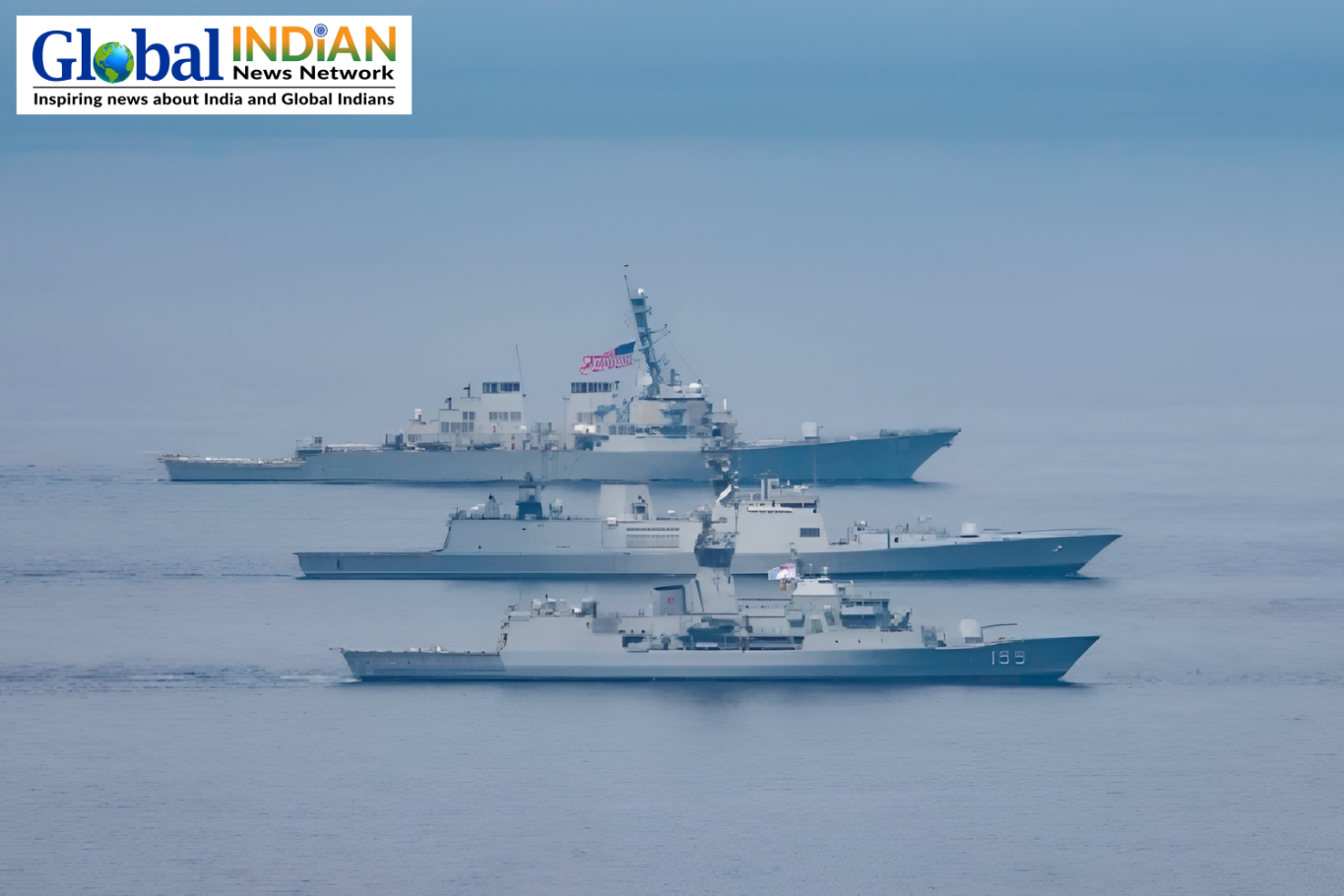
India’s evolving role is clearly reflected in the Quadrilateral Security Dialogue (Quad) with the United States, Japan, and Australia. While participating in the Quad, India has maintained strategic autonomy by avoiding binding military commitments, even as it benefits from enhanced security cooperation, technology transfers, and coordinated regional initiatives.
Maritime strategy forms the backbone of India’s Indo-Pacific vision. Through its Security and Growth for All in the Region (SAGAR) framework, India has reinforced its commitment to freedom of navigation, capacity building for partner nations, and a rules-based international order aligned with the United Nations Convention on the Law of the Sea.
India has also contributed to regional defence architecture through new institutional initiatives. In December, Army Chief General Upendra Dwivedi unveiled the IKIGAI Framework at the third Indo-Pacific Land Forces Summit in Japan, outlining a structured approach to military cooperation across the region. India’s assumption of the chairship of the Indian Ocean Rim Association further underscores its expanding leadership role.
The report cautions that India’s centrality in the Indo-Pacific is not inevitable. It must be sustained through deeper defence partnerships, effective implementation of cooperative frameworks, and careful balancing of ambition with restraint. A New Delhi that successfully aligns strategic autonomy with effective partnerships and economic engagement with security cooperation could define Indo-Pacific governance for decades to come.
India’s growing role reflects not only its own rise but also the region’s search for leadership based on consensus rather than coercion—an approach the report describes as both urgent and achievable.