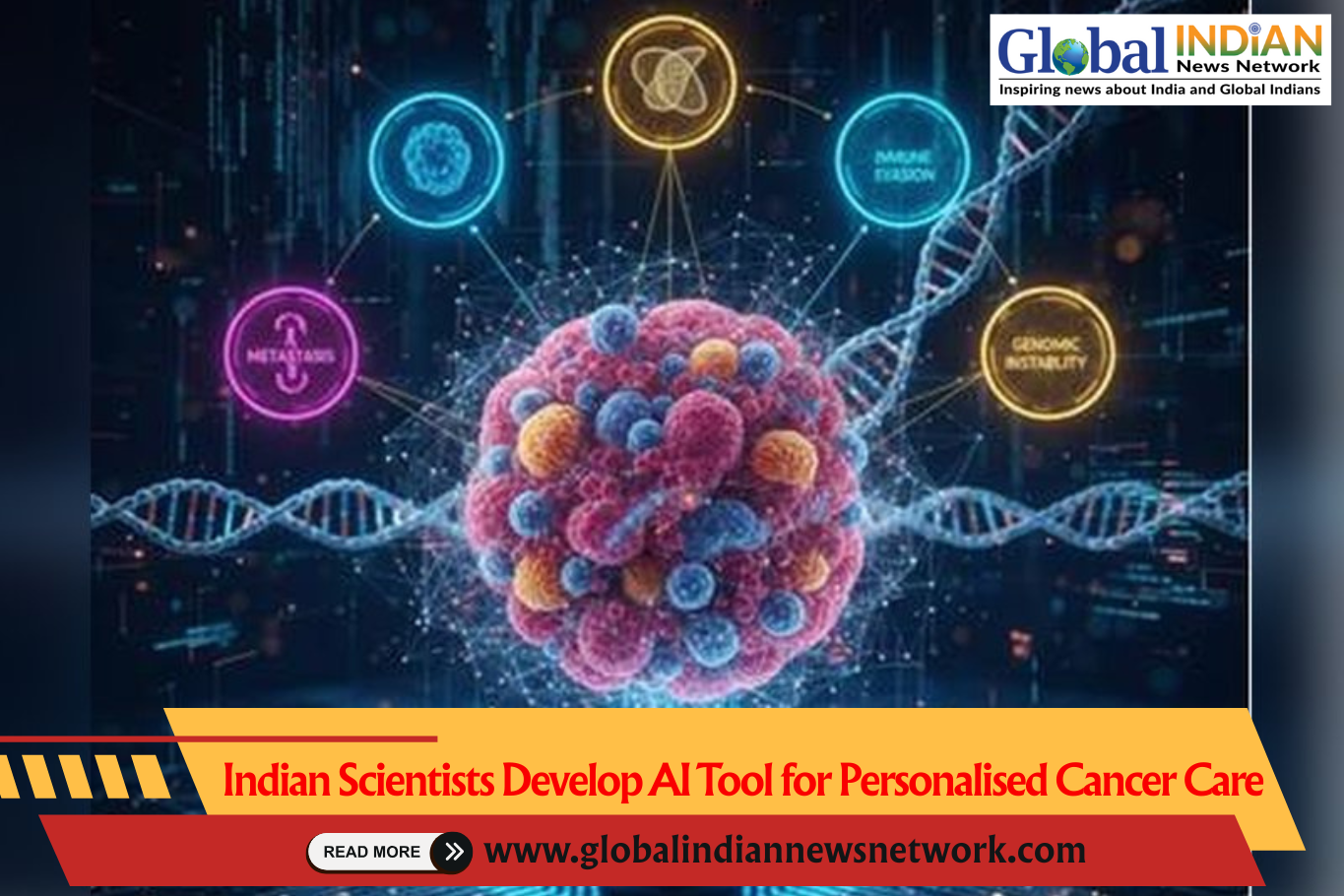
 Indian researchers have unveiled an artificial intelligence framework that offers a transformative way to interpret cancer biology and personalise treatment strategies. The system, developed by the S N Bose National Centre for Basic Sciences in collaboration with Ashoka University, shifts the focus from traditional tumour staging to the molecular processes that drive cancer progression.
The framework, named OncoMark, decodes what scientists describe as the “hallmarks of cancer”—the biological programmes that enable malignant cells to grow, spread, evade immune detection and resist therapy. While staging systems such as TNM provide information on tumour size and spread, they often fail to explain why patients with the same stage can experience markedly different outcomes. OncoMark aims to bridge that gap by analysing the deeper molecular behaviour of cancer.
Researchers used the tool to study 3.1 million single cells from 14 cancer types, creating synthetic “pseudo-biopsies” that model hallmark-driven tumour states. This extensive dataset enabled the AI to learn how hallmarks such as metastasis, genomic instability and immune evasion interact to influence tumour growth and therapy response.
Internal testing showed accuracy levels exceeding 99 per cent, while performance remained above 96 per cent across independent validation cohorts. The framework was further validated on 20,000 patient samples from major global datasets, demonstrating its broad applicability. For the first time, researchers were able to visualise how hallmark activity intensifies as cancer advances, offering new insight into disease progression.
By identifying which hallmarks are active in a patient’s tumour, OncoMark could guide clinicians toward therapies that directly target those underlying processes. It also has the potential to flag aggressive cancers that may appear less dangerous under conventional staging, enabling earlier and more precise intervention.
The research, published in the journal Communications Biology, marks a significant step toward integrating molecular intelligence into personalised cancer care and could contribute to more effective, patient-specific treatment strategies in the future.