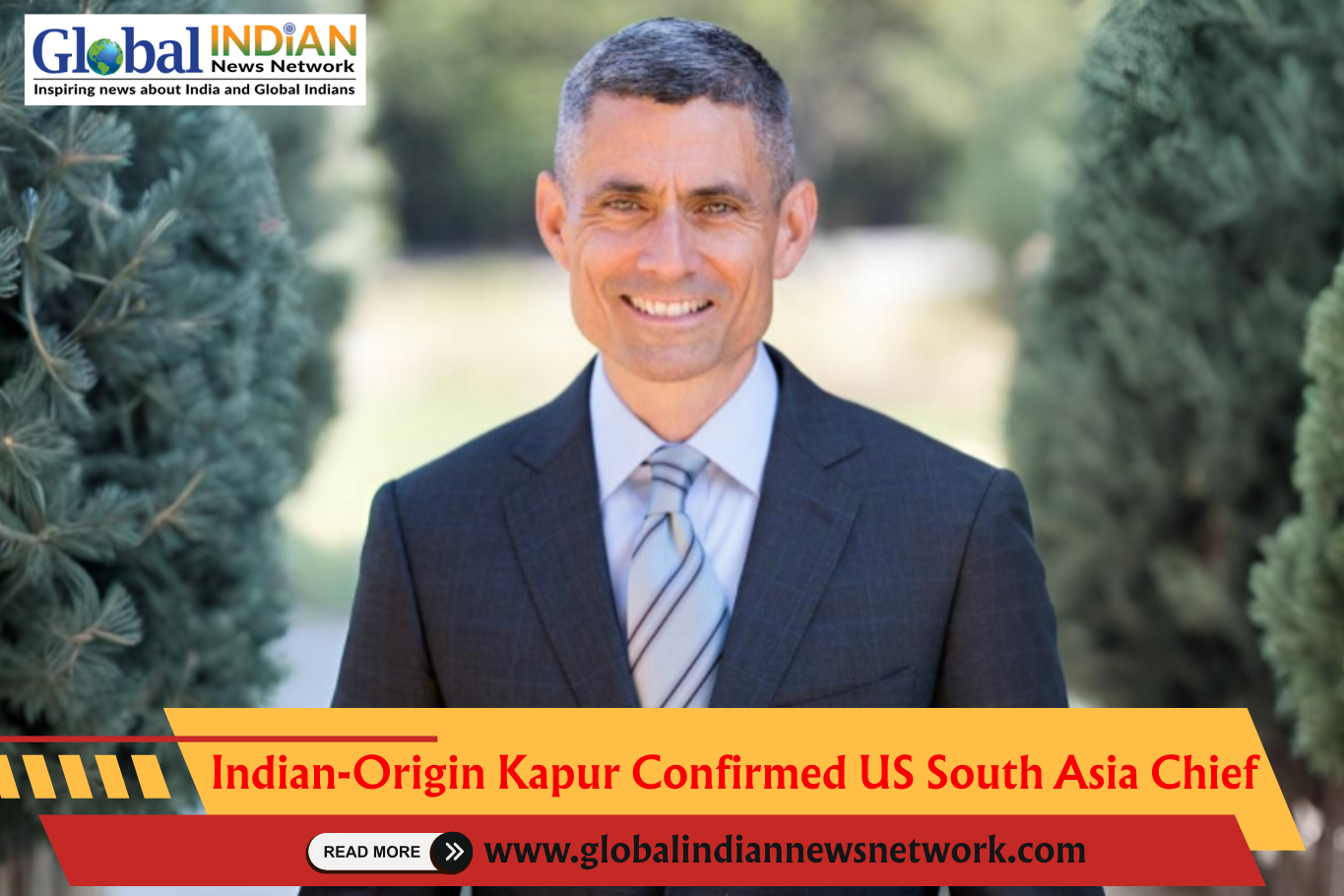
 The US Senate officially confirmed S Paul Kapur, an Indian-American academic, as Assistant Secretary of State for South and Central Asian Affairs, taking over from Donald Lu. His approval came on October 7, even amid the ongoing federal government shutdown. The White House verified the appointment, noting Kapur, based in California, will now oversee America’s diplomatic relations with countries including India, Pakistan, Bangladesh, and Afghanistan. Kapur was one of 107 nominees confirmed in the Senate vote and will play a pivotal role in shaping US policy in the region.
Born in New Delhi to an Indian father and American mother, Kapur has established himself as a leading scholar in South Asian security and international relations. Currently, he serves as a professor at the US Naval Postgraduate School and is a visiting fellow at Stanford University’s Hoover Institution. His extensive academic work focuses on regional security dynamics, nuclear strategy, and US-India relations. Kapur also has prior experience within the State Department’s Policy Planning Staff under the previous Trump administration, contributing to Indo-Pacific strategic planning and bilateral engagement with India.
Kapur holds a PhD from the University of Chicago and earned his bachelor’s degree from Amherst College. His research highlights the deliberate use of jihadist networks by Pakistan as state policy rather than mere instability, advocating for a more assertive US approach toward Islamabad. He is the author of several notable works, including Jihad as Grand Strategy: Islamist Militancy, National Security, and the Pakistani State and Dangerous Deterrent: Nuclear Weapons Proliferation and Conflict in South Asia. Additionally, he co-authored India, Pakistan, and the Bomb: Debating Nuclear Stability in South Asia and co-edited The Challenges of Nuclear Security: US and Indian Perspectives (2024).
Kapur’s analyses have been featured in prominent publications such as International Security, Security Studies, Asian Survey, The Wall Street Journal, and The National Interest, reflecting his authority on regional geopolitics and nuclear security. With his confirmation, Kapur is set to guide US diplomatic strategy and policy engagement across key South and Central Asian nations, reinforcing the United States’ commitment to stability and collaboration in the region.