

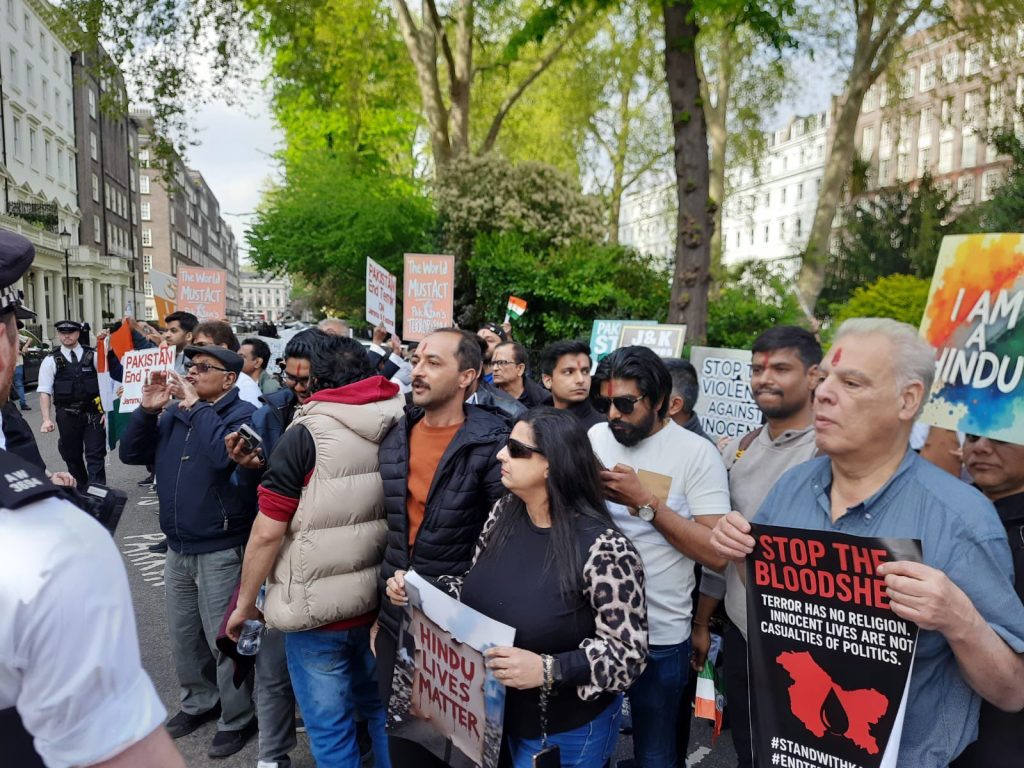
 Indian American communities across the United States have united in strong condemnation of the recent terror strike in Pahalgam, Jammu and Kashmir, which left 26 civilians dead, including several tourists. The attack on April 22 sparked widespread grief and anger throughout the diaspora, prompting multiple organizations to speak out.
Among those leading the response are the Coalition of Hindu Americans in North America (CoHNA), the Foundation for India and Indian Diaspora Studies (FIIDS), and the Kashmir Overseas Association (KOA). These groups labeled the incident as a horrific and cowardly act targeting innocent people, emphasizing the need for international acknowledgment of its religious undertones.
FIIDS has publicly appealed to the US Commission on International Religious Freedom (USCIRF) to break its silence and explicitly denounce the targeted killings of Hindus. The group is urging USCIRF to recognize the religious persecution angle and condemn the attack accordingly.
On the evening of April 22, CoHNA, together with its youth affiliate CoHNA Youth Action Network (CYAN) and student-led Hindu Yuva, organized a candlelight vigil at the University of California, Berkeley. The event, spearheaded by scholar and CoHNA leader Vamsee Juluree, served as a platform for remembrance, reflection, and unity with the victims. Juluree emphasized unity in the face of terrorism and the need to honor the memory of those lost with dignity and resolve.
Expanding their continued advocacy, Hindu Action and the Global Kashmiri Pandit Diaspora have announced a policy event titled “Pakistan’s Proxy War Against Hindus – Global Implications,” set to be held on May 5, 2025, at the Rayburn House Office Building in Washington, DC. It will bring together US lawmakers, policy experts, human rights defenders, and diaspora leaders to discuss the broader consequences of targeted violence against Hindus.
Together, these initiatives mark a significant moment of mobilization among Indian Americans. Through public mourning, advocacy, and policy engagement, they are sending a clear message: terrorism that targets faith communities must be addressed with urgency and resolve by the international community.










1 Comment
coconut creek casino
References:
https://firsturl.de