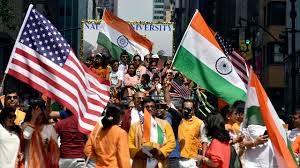
 As of 2023, the Indian-origin population in the United States has reached approximately 5.2 million, making Indian Americans the second-largest Asian ethnicity in the country, according to a Pew Research Center analysis based on recent U.S. Census Bureau and American Community Survey data.
This increase reflects sustained migration and growth over the last two decades. In 2000, the Indian American population stood at 1.8 million—today, it has grown by 174%. Immigration plays a central role, as the Indian immigrant population in the U.S. grew from 1.3 million to 3.2 million. Although their share fell from 73% to 66%, most have resided in the U.S. for over ten years, with more than half now holding citizenship.
Geographically, Indian Americans are highly concentrated in certain states. California leads with about 960,000 Indian-origin residents, followed by Texas (570,000), New Jersey (440,000), New York (390,000), and Illinois (270,000). Major metro areas such as New York City, Dallas, and San Francisco are home to substantial Indian American populations.
The median age of the Indian American community is 34.2 years, which is nearly identical to the average for Asian Americans overall. Among immigrants, the median age is 40.9, while U.S.-born Indian Americans have a much younger median of 13.4 years.
In terms of language, 84% of Indian Americans aged five and up are proficient in English. Around 28% speak only English at home, while 56% use another language but report strong English skills. Hindi, Telugu, Gujarati, and Tamil are among the most commonly spoken languages.
Indian Americans continue to excel educationally, with 77% of adults aged 25 and older holding at least a bachelor’s degree—well above the Asian American average of 56%. Economic performance is also robust, with a median household income of $151,200 and median individual earnings of $85,300. Full-time workers earn a median of $106,400 annually.
Marriage rates are high, with 70% of Indian American adults married. Homeownership is on par with the broader Asian American community at 62%, though it varies slightly between immigrant (63%) and U.S.-born (54%) households. The poverty rate remains low at 6% across both groups.
In terms of religion, nearly half of Indian-origin adults identify as Hindu, while 15% are Christian and another 15% report no religious affiliation—reflecting a diverse and multifaceted community.
As the population grows, Indian Americans are increasingly shaping the cultural, economic, and professional landscape of the United States.