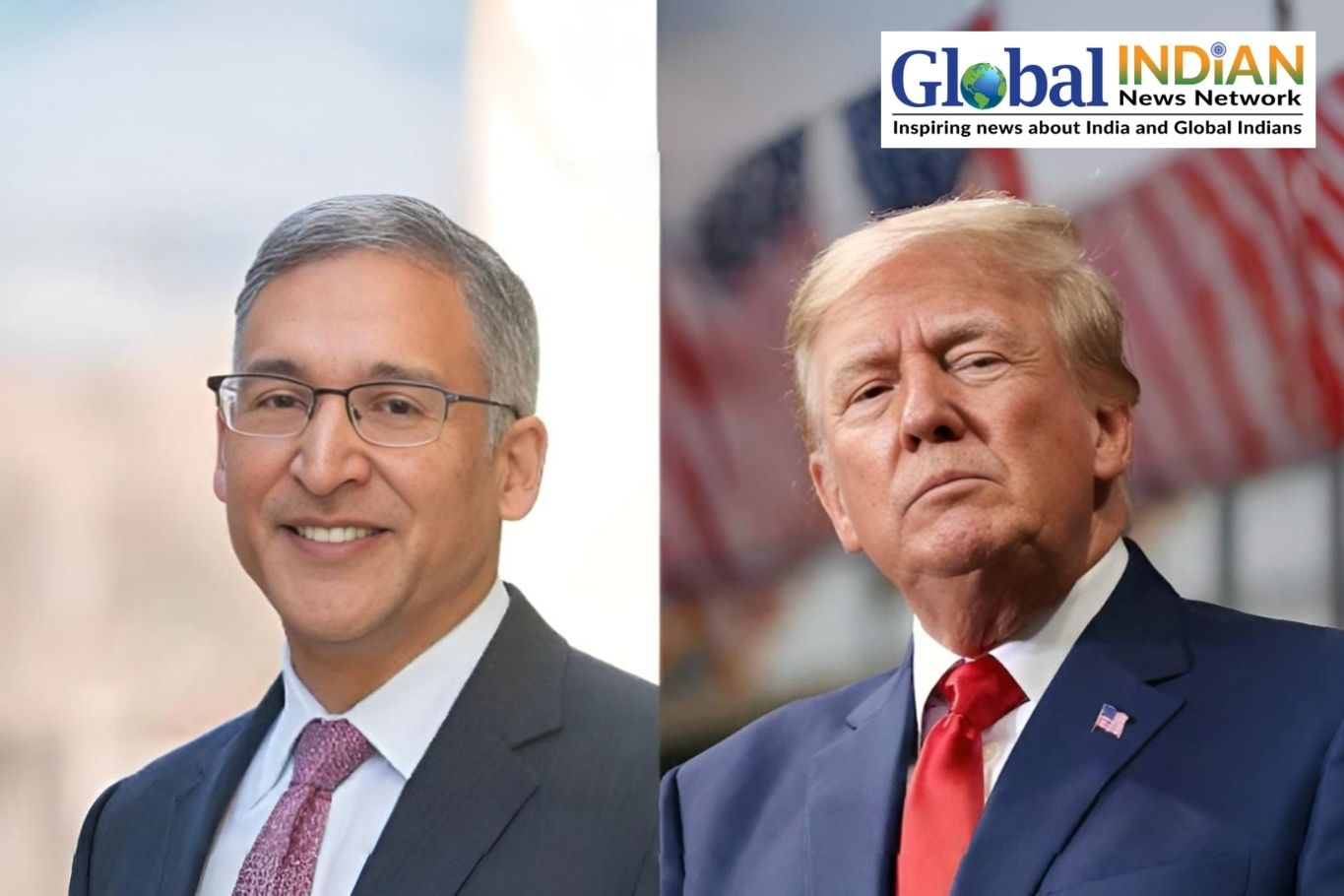
 Prominent Indian-American lawyer Neal Katyal has raised serious legal questions about President Donald Trump’s decision to impose a 15 per cent global tariff. Katyal highlighted a potential conflict with earlier positions taken by the Department of Justice (DOJ) regarding the same statutory authority.
In a post on X, Katyal noted that the administration’s reliance on Section 122 of the Trade Act of 1974 may be legally flawed. He cited the DOJ’s previous statement to the Supreme Court that Section 122 “does not have any obvious application” where the President cited trade deficits, which differ from balance-of-payments deficits. This prior stance makes the current tariff invocation problematic.
This scrutiny follows a landmark Supreme Court ruling that struck down most of Trump’s earlier broad-based tariff measures. In a 6-3 decision, the Court ruled that the executive branch had exceeded its authority under the International Emergency Economic Powers Act (IEEPA) of 1977. The Court reaffirmed that Congress holds primary authority to impose taxes.
After the ruling, Trump initially announced a 10 per cent global tariff under Section 122, describing it as a temporary import surcharge for up to 150 days to address balance-of-payments deficits. He later raised it to 15 per cent, claiming the move was legally tested and effective immediately. On Truth Social, Trump criticised the Supreme Court’s decision and said the administration would determine legally permissible tariffs in the coming months.
Katyal argued that if the administration wants sweeping tariffs, it must follow constitutional procedures by seeking congressional approval. The core legal dispute involves whether trade deficits can be treated as balance-of-payments deficits, a point previously clarified by the DOJ. Economist Gita Gopinath supported Katyal’s view, noting the distinction aligns with basic international economic principles.
The latest tariff announcement coincides with ongoing US-India trade developments. On February 7, both countries agreed to an Interim Framework to facilitate mutually beneficial trade, including reciprocal tariff adjustments. India’s Commerce Ministry has stated it is reviewing the implications of the Supreme Court ruling and the new tariffs for potential impact on bilateral trade.