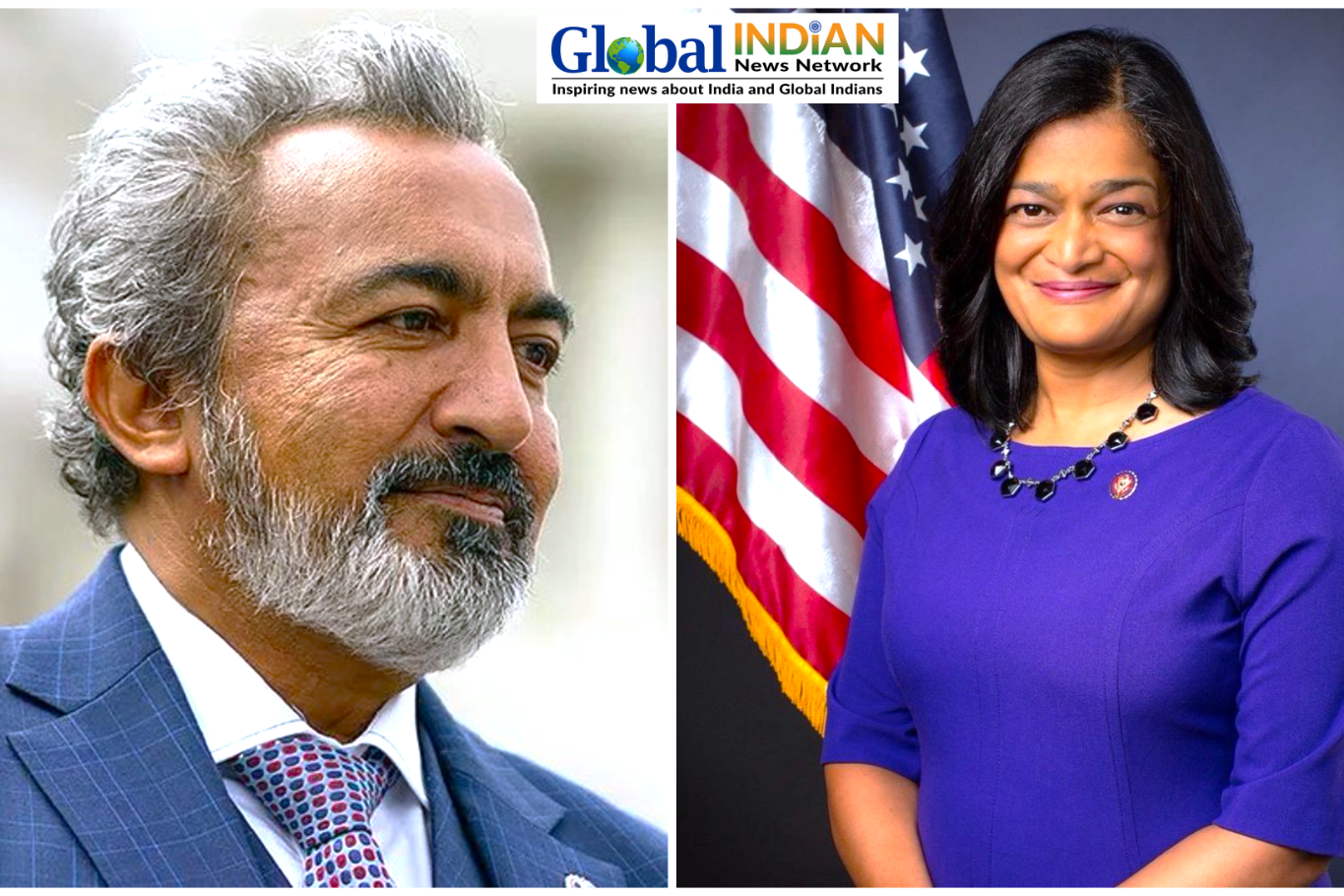
 Two of the most prominent Indian American voices in the U.S. Congress—Representative Ami Bera and Representative Pramila Jayapal—delivered some of the most forceful and substantive remarks during a House Foreign Affairs Subcommittee hearing on the US-India strategic partnership. Both lawmakers pushed for a steadier, more principled, and aspiration-driven roadmap for the relationship between Washington and New Delhi.
Bera, a California Democrat and one of the longest-serving Indian American members in Congress, emphasized that support for India spans administrations and political parties. He pointed to a bipartisan resolution recently introduced by 24 lawmakers, outlining three decades of U.S. strategic engagement with India—from the Clinton era through the administrations of Bush, Obama, Trump, and now Biden. The underlying message, he said, is unchanged: the United States and India share a desire for stability, peace, and prosperity.
Reflecting on his recent visit to India, Bera said he sensed a more confident strategic alignment taking shape. After conversations with Indian officials, business leaders, and military commanders, he noted that India increasingly recognizes where its long-term interests lie. While New Delhi must manage its tense relationship with China, Bera argued that India now sees significant advantages in deeper alignment with Western partners, particularly the United States and Europe. He also noted India’s openness to multinational investment and the strengthening of secure supply chains.
On defense ties, Bera highlighted the expanding maritime cooperation in the Indian Ocean. He described interactions with the Western Naval Command and urged both countries to broaden joint training and exercises to safeguard navigation routes in a contested region.
He also criticized tightening visa restrictions, particularly the ceiling that limits access to H-1B visas—a cap he said unfairly constrains U.S. companies. He called for a new visa pathway enabling scientists and engineers from both countries to move freely, essential for progress in AI, biotech, public health, and advanced manufacturing.
Jayapal, the first Indian American woman elected to Congress, spoke from personal experience as someone who once navigated student and H-1B visas herself. She warned that restrictive immigration rules and escalating tariffs—now adding a cumulative burden exceeding two percent on many Indian goods—are harming workers, startups, and century-old businesses in her district. She also expressed concern about rising anti-Indian bias and emphasized the major economic and scientific contributions of Indian Americans.
Both lawmakers underscored that the future of the US-India partnership must blend strategic cooperation with openness, mobility, democratic values, and the lived experiences of millions of Indian Americans who form a “living bridge” between the two nations.