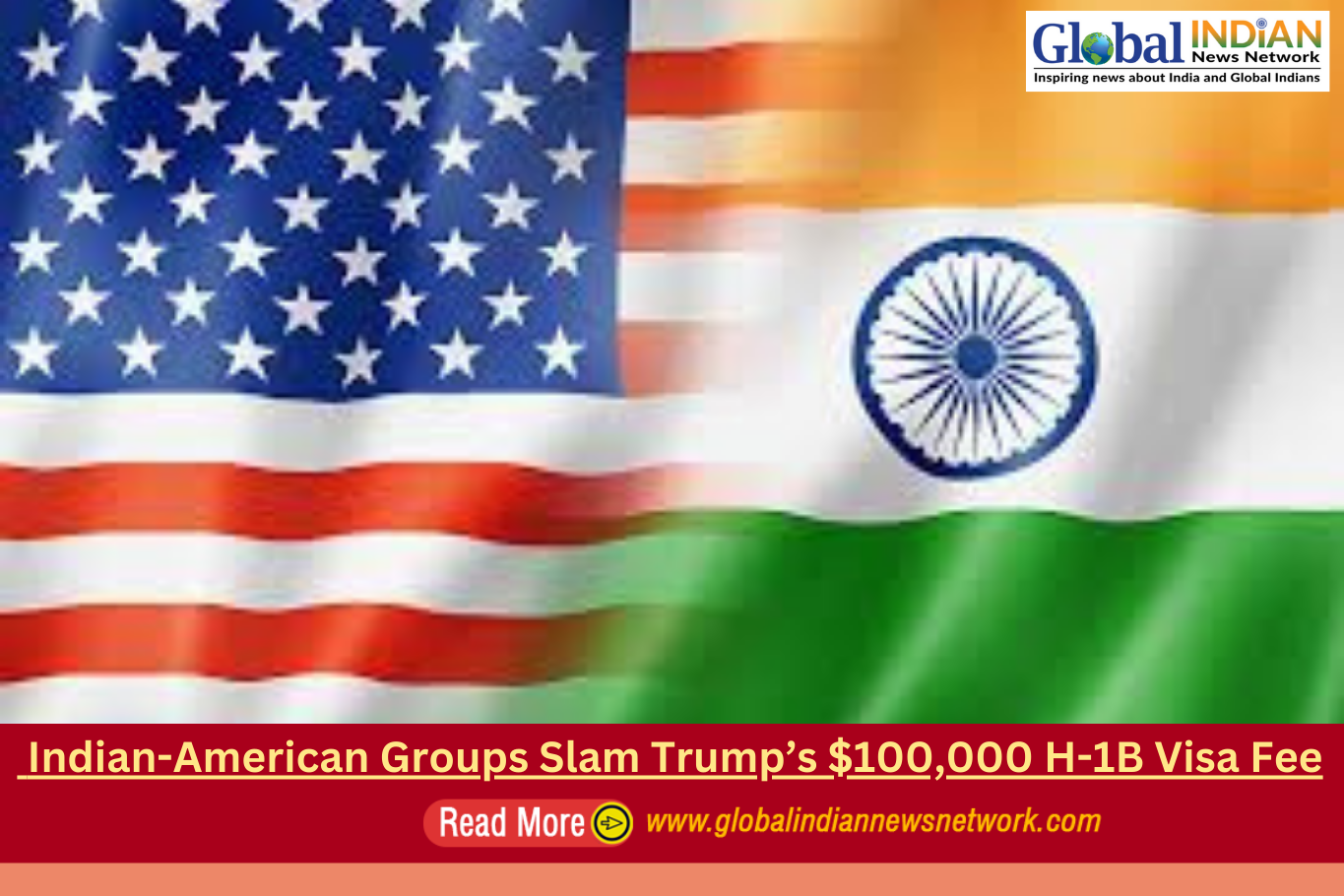
 Indian-American organisations have strongly criticised President Donald Trump’s recent order imposing a one-time $100,000 fee on H-1B visas, calling it a reckless and xenophobic move that threatens both America’s economy and immigrant communities.
The Trump administration announced the measure on September 19, 2025, sparking widespread concern among foreign professionals and families already dealing with emergencies abroad. Indian American Impact, a leading advocacy group, described the decision as a deliberate attempt to weaponise immigration rather than protect American jobs.
“This isn’t about safeguarding employment opportunities—it’s about pushing a xenophobic agenda,” said Chintan Patel, Executive Director of Indian American Impact. He added that the policy risks separating families, destabilising careers, and weakening communities, all while sabotaging America’s global competitiveness.
The group warned that the move places a heavy burden on Indian-American professionals, who make up the majority of H-1B visa holders, and undermines sectors that rely on skilled immigrant labour. “Immigrants have always been America’s greatest strength,” Patel noted, urging policies that welcome talent rather than penalise it.
Immigration attorney Navneet Chugh also highlighted India’s crucial role in the US talent pipeline. With over 1.5 million engineering graduates each year, India has become a global talent factory. Indians account for about 72% of approved H-1B visas, filling vital roles in STEM fields such as AI, engineering, quantum computing, and software development—areas where domestic supply lags behind demand.
Chugh stressed that H-1B workers contribute immensely to the US economy, injecting around $86 billion annually through wages and consumption. They also pay more than $24 billion in federal and state taxes, plus $25 billion into Social Security and Medicare—funds many never claim because they return to India before qualifying for benefits. “This is a hidden subsidy immigrant workers provide to US retirees,” he said.
The policy also risks damaging US-India relations at a time when Washington needs New Delhi to counterbalance China’s rise. While China is aggressively investing in talent retention, the US risks alienating one of its strongest allies by creating barriers for Indian professionals.
Even academic institutions are feeling the pressure. A Harvard Crimson report noted that with over 100 new H-1B petitions approved each year, Harvard could face more than $10 million annually in new visa fees. Although the Trump administration clarified that the $100,000 charge applies only to new applicants and not current visa holders, universities and businesses remain concerned about long-term implications.
Critics warn that the decision could derail careers, disrupt innovation, and destabilise communities across the country. As Patel put it: “The America we believe in embraces talent, keeps families together, and builds shared prosperity. This order does the opposite.”