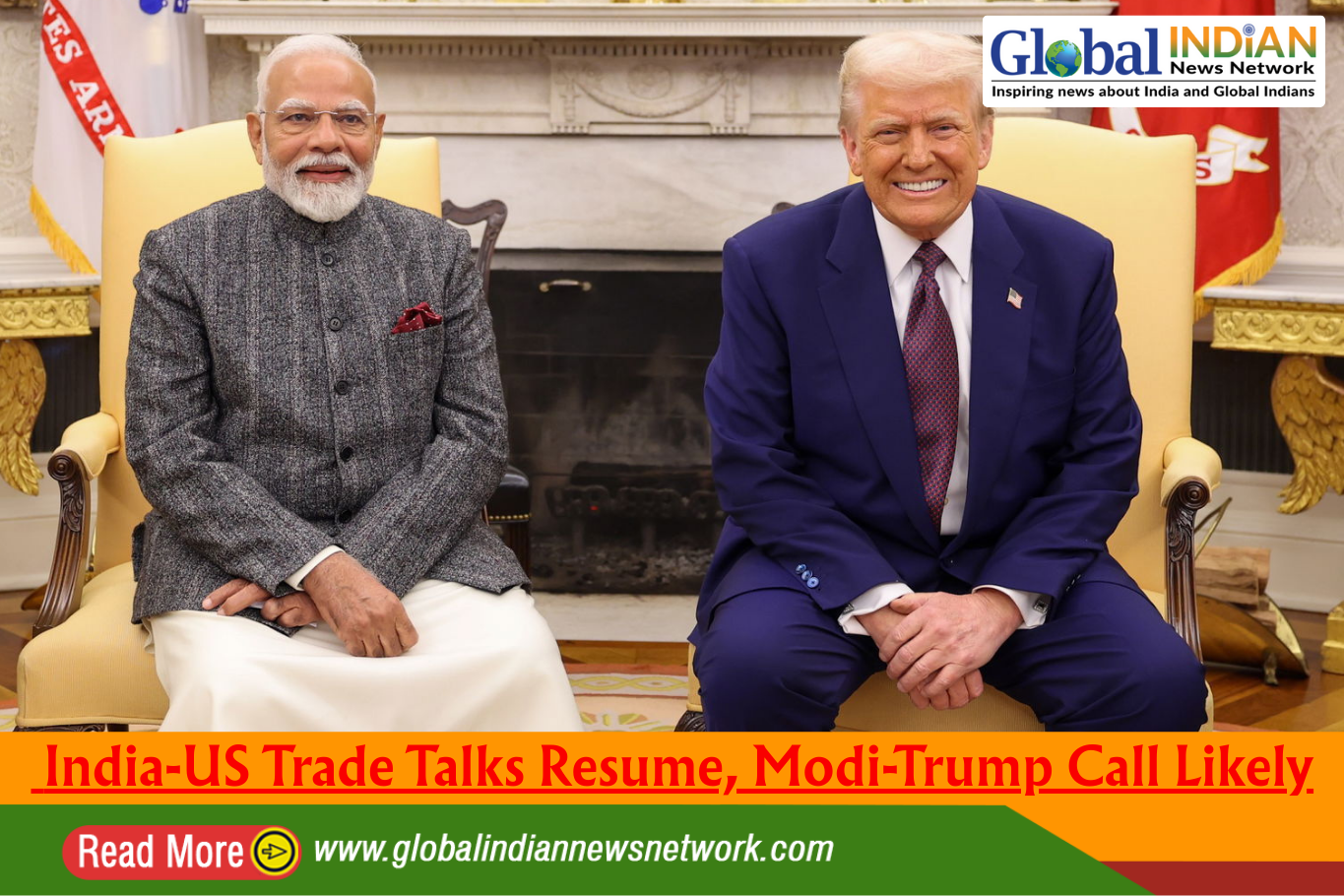
 India and the United States appear to be entering a new phase of dialogue as signs of easing tensions emerge in their strained trade relationship. Chief trade negotiator Rajesh Agarwal is preparing to travel to Washington next week for fresh discussions with American officials, even as Prime Minister Narendra Modi and US President Donald Trump are expected to hold a phone conversation soon.
The renewed talks come after months of friction sparked by Washington’s decision to impose 25% tariffs on Indian goods in retaliation for India’s ongoing imports of Russian oil. These duties were later raised to 50%, further intensifying trade tensions and complicating bilateral ties.
According to reports, Agarwal’s visit is aimed at finding areas of agreement, although it remains unclear whether Washington will consider tariff reductions. Sources described the overall situation as “fluid,” but recent gestures of goodwill from both capitals suggest a thaw could be underway.
On Wednesday, Trump struck a conciliatory tone on Truth Social, saying, “I look forward to speaking with my very good friend, Prime Minister Modi, in the upcoming weeks. I feel certain there will be no difficulty in coming to a successful conclusion for both of our great countries.” Modi responded warmly on X, highlighting the strength of India-US ties and expressing confidence that trade negotiations would unlock the “limitless potential” of the partnership.
Analysts point to the Shanghai Cooperation Organisation (SCO) summit in Tianjin as a factor behind Washington’s shift. There, leaders from Russia, India, and China engaged informally, prompting some in pro-Trump circles to reassess the strategic importance of closer relations with New Delhi. Notably, Trump has also toned down earlier comments about India-Pakistan issues, which had previously irritated New Delhi.
Despite these positive signals, challenges persist. Trump has asked the European Union to evaluate tariffs of up to 100% on Chinese imports, with speculation that similar measures could be applied to India. Meanwhile, US officials, including White House adviser Peter Navarro, continue to accuse India of indirectly aiding Moscow’s war effort by purchasing Russian crude.
India, however, has remained steadfast in defending its decisions. Finance Minister Nirmala Sitharaman recently emphasized that New Delhi’s energy imports are driven by domestic requirements and global price stability, not geopolitical agendas. She also revealed that the Reserve Bank of India is gradually reducing its exposure to US Treasuries while boosting gold reserves to diversify holdings.
As Modi and Trump prepare for their expected call, optimism is building that new momentum could emerge in trade negotiations. Yet, the path forward will hinge on how both sides balance tariff disputes, strategic autonomy, and the vital question of energy security.