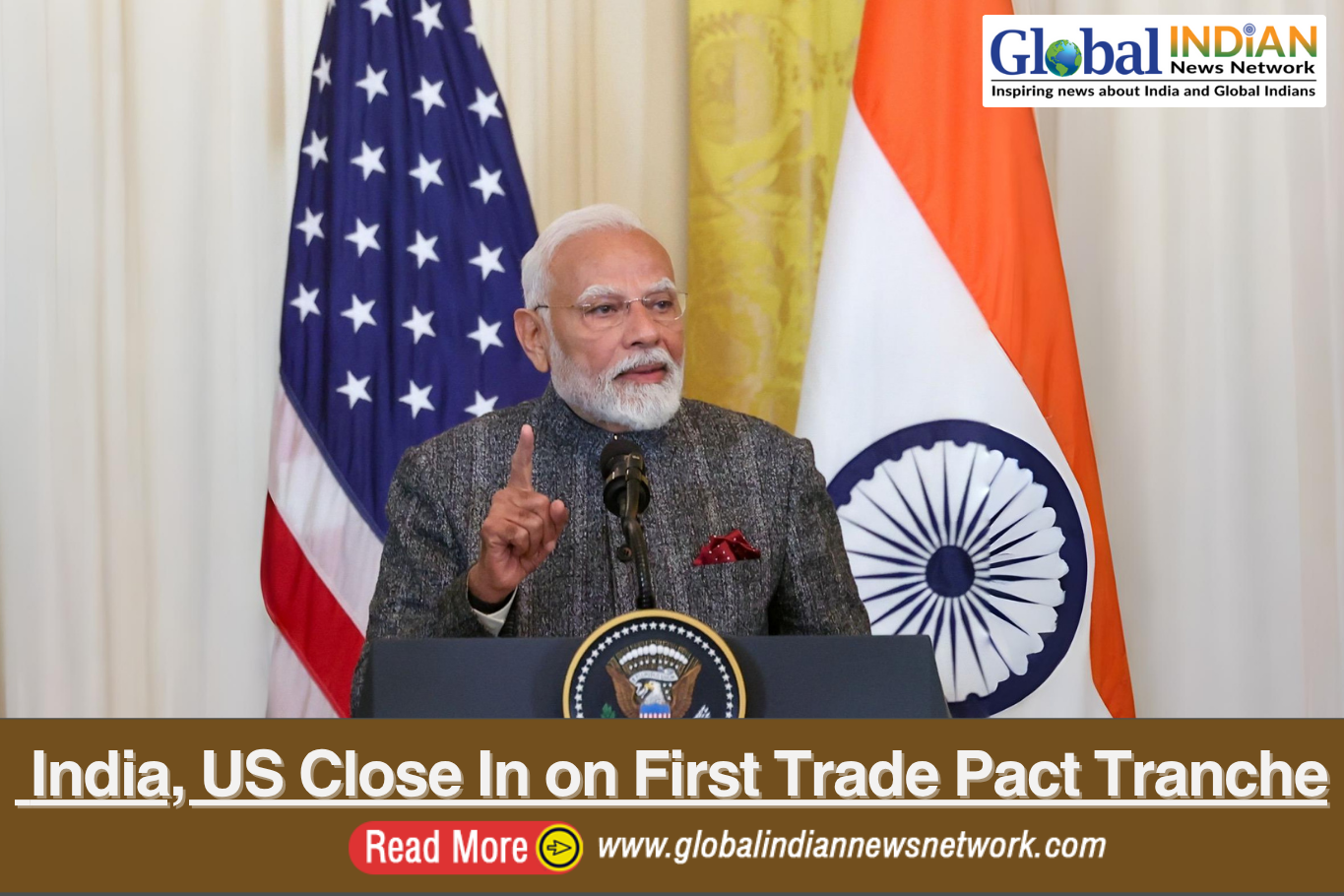
 The first tranche of the proposed India–US bilateral trade agreement is approaching a breakthrough, with both nations working to resolve the steep tariffs currently imposed on Indian goods while also expanding opportunities for American exporters in the Indian market, according to media reports. The United States had earlier imposed two rounds of 25% punitive tariffs—totaling a 50% duty—largely tied to India’s continued purchases of Russian oil.
Negotiators on both sides are now attempting to reshape these levies under a mutually acceptable schedule. An Indian official familiar with the discussions explained that the Bilateral Trade Agreement (BTA) consists of two distinct components: one requiring lengthy negotiation, and another centered on a tariff-adjustment package aimed at restoring balance. “The package dealing with reciprocal tariffs is nearly finalized, and we expect closure soon,” the official said, adding that the agreement must remove the 25% penalty on Indian goods to hold any meaningful value.
The momentum also reflects broader behind-the-scenes diplomacy. India’s state-run oil companies recently secured a one-year deal to import liquefied petroleum gas from the United States in 2026, a move seen as part of an effort to reduce India’s sizable trade surplus with Washington—an issue repeatedly highlighted by President Donald Trump.
Both countries expect to conclude the initial phase of the broader trade pact by the end of 2025. A high-level Indian delegation, led by Commerce Secretary Rajesh Agrawal, traveled to Washington last month for three days of negotiations that concluded on October 17.
The long-term vision behind the pact is ambitious: India and the United States aim to more than double their total trade to $500 billion by 2030, up from the current $191 million. The US continues to push for expanded access for a range of products—including almonds, pistachios, apples, ethanol, and genetically modified crops—while India seeks tariff relief and broader market stability.
For the fourth consecutive year, the US remained India’s largest trading partner in 2024–25, with trade valued at $131.84 million. This accounted for 18% of India’s total goods exports, 6.22% of its imports, and 10.73% of overall merchandise trade. However, high tariffs contributed to an 11.93% drop in India’s merchandise exports to the US in September, falling to $5.46 million, even as imports from the US rose 11.78% to $3.98 million.
President Trump has recently said the two nations are “pretty close” to securing what he described as a “fair trade deal,” noting that tariffs on Indian goods may be reduced “at some point.”