 India secured a commanding seven-wicket victory over Pakistan in the Asia Cup 2025 at Dubai International Cricket Stadium, in a match overshadowed by heightened tensions and historical sensitivities. The game began and ended without the customary handshake between captains, as India’s skipper Suryakumar Yadav and Pakistan’s Salman Agha chose not to greet each other at the toss or after the match.
Yadav remained unbeaten on 47 runs from 37 balls, delivering a composed performance that anchored India’s chase. After the win, he dedicated the victory to the Indian Armed Forces and expressed solidarity with families affected by the Pahalgam terror attack, underscoring the match’s emotional and symbolic significance.
This was the first India-Pakistan encounter since the April Pahalgam incident and subsequent Operation Sindoor, conducted by India in May to target terror infrastructure in Pakistan-occupied Kashmir. The operation and its aftermath added an additional layer of tension and significance to the match.
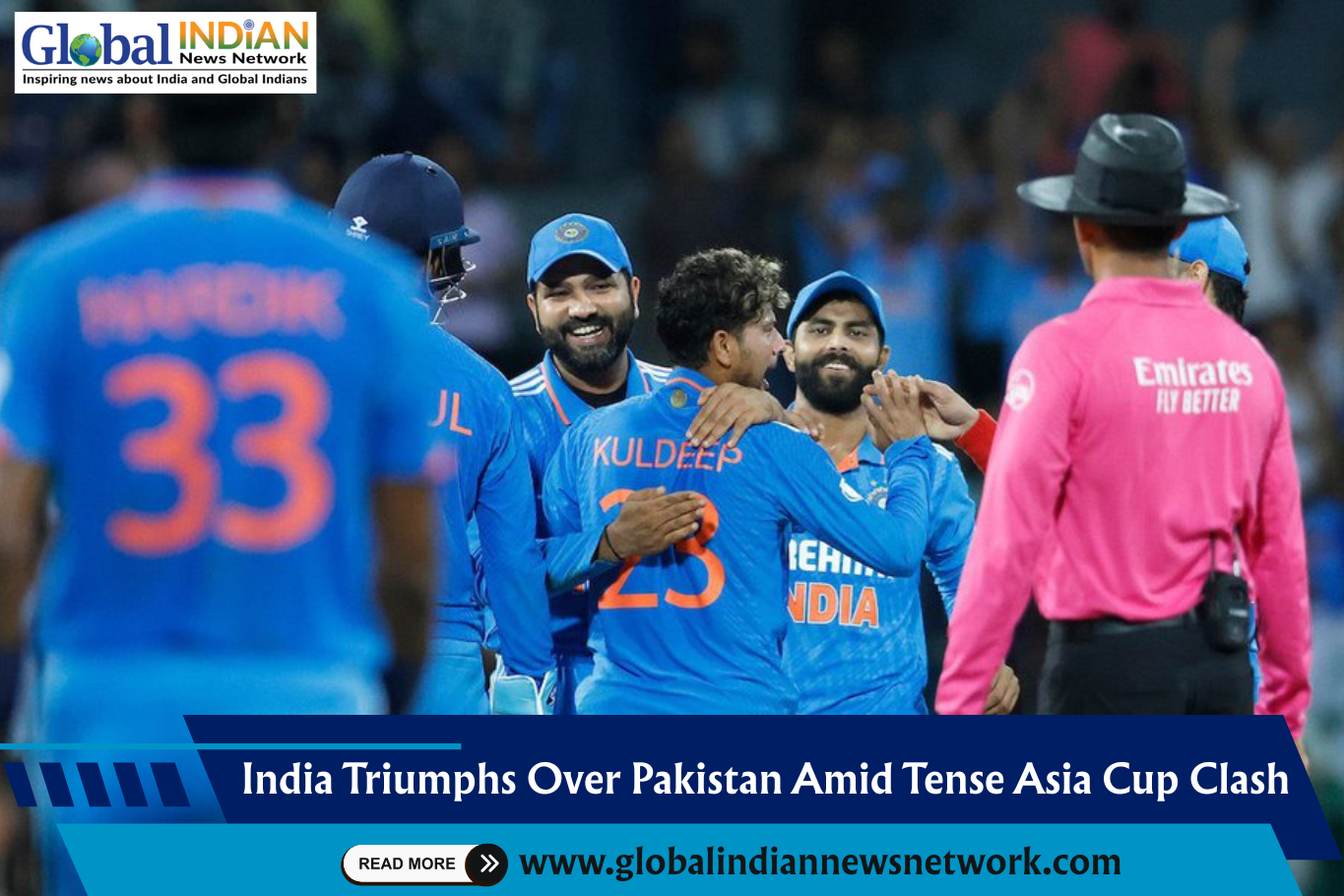
The game itself was one-sided, with India’s spin trio effectively restricting Pakistan to a total of 127 runs. Abhishek Sharma provided a rapid start in the chase, setting the stage for a comfortable Indian victory. Despite the competitive spirit, Yadav instructed his team to decide individually whether to engage with Pakistani players, reflecting sensitivity to the national sentiment while adhering to the tournament’s framework.
On the field, Indian players displayed intense focus and emotional energy, especially in the early overs, celebrating wickets and marginal decisions enthusiastically. Pakistani players, led by Salman Agha, showed determination but were gradually overwhelmed by India’s superior bowling and batting execution.
Among the spectators, fans from both nations mingled amicably, taking selfies, hugging, and celebrating moments together, despite the tense atmosphere on the field. However, some vacant seats were noticeable in the stadium, reflecting the politically charged environment surrounding this high-profile fixture.
While the match lacked the dramatic highlights typical of historic India-Pakistan clashes, the symbolic absence of the handshake captured global attention. The game underscored both India’s cricketing dominance and the continued impact of geopolitical tensions on sporting traditions.