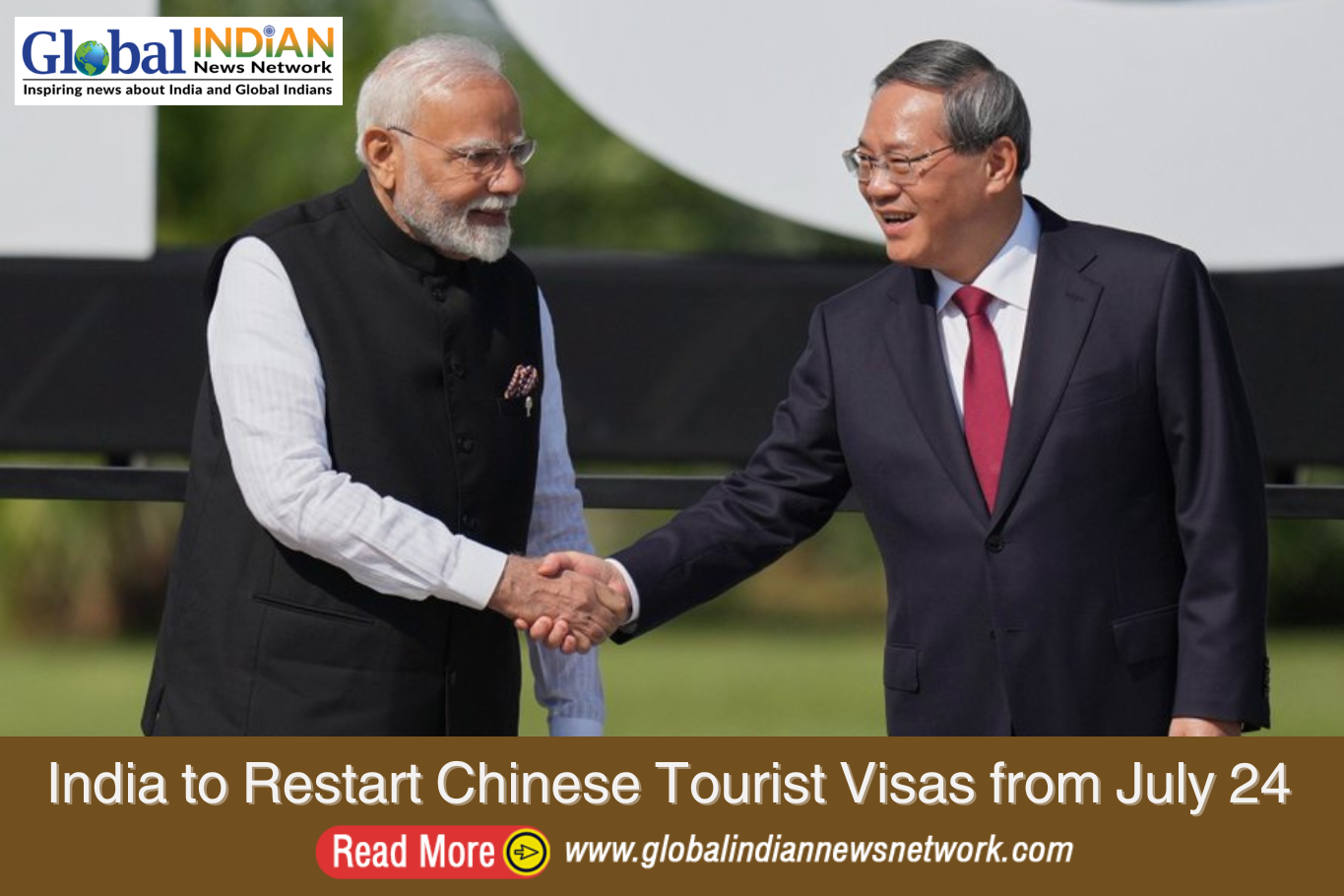
Starting July 24, India will once again issue tourist visas to Chinese citizens, ending a five-year pause. This development, confirmed by the Indian embassy in China on Wednesday, marks a significant move in rebuilding the strained relationship between the two Asian neighbors.
Relations between India and China soured significantly after a violent military confrontation in 2020 along their contested Himalayan frontier. In response, India clamped down on Chinese investments, shut down numerous widely-used Chinese apps, and reduced passenger travel links between the two nations.
China, on the other hand, halted visa issuance to Indian citizens and most foreign travelers during the COVID-19 pandemic. Although it reopened to students and business travelers in 2022, Chinese tourist visas for Indians remained suspended until recently. In March this year, both countries agreed to reinstate direct flights, setting the stage for further steps like this visa resumption.
Diplomatic progress has been steady, with high-level meetings held in 2023—including a notable interaction between Indian Prime Minister Narendra Modi and Chinese President Xi Jinping in Russia last October. These discussions aimed at reducing tensions and gradually restoring bilateral exchanges.
Reacting to India’s announcement, Chinese Foreign Ministry spokesperson Guo Jiakun welcomed the decision. He expressed Beijing’s readiness to maintain open dialogue with New Delhi and to further promote people-to-people contact.
Despite these gestures, unresolved issues remain. The two countries continue to dispute their 2,400-mile shared border, a flashpoint since the 1950s. The most notable military clash occurred in 1962, and since then, negotiations on the boundary have seen limited progress.
India’s foreign minister recently emphasized during a meeting with his Chinese counterpart that troop disengagement and the avoidance of trade restrictions are essential to fully normalize the relationship. He stressed that restoring trust requires addressing ongoing border friction and ensuring peace in contested zones.
By resuming tourist visas, India signals a willingness to de-escalate diplomatic tensions and revive people-level interaction. While it doesn’t erase the complex history between the two nations, it is a step toward renewed cooperation and stability. The move is seen as part of a broader strategy to cautiously rebuild ties while managing sensitive areas of disagreement.