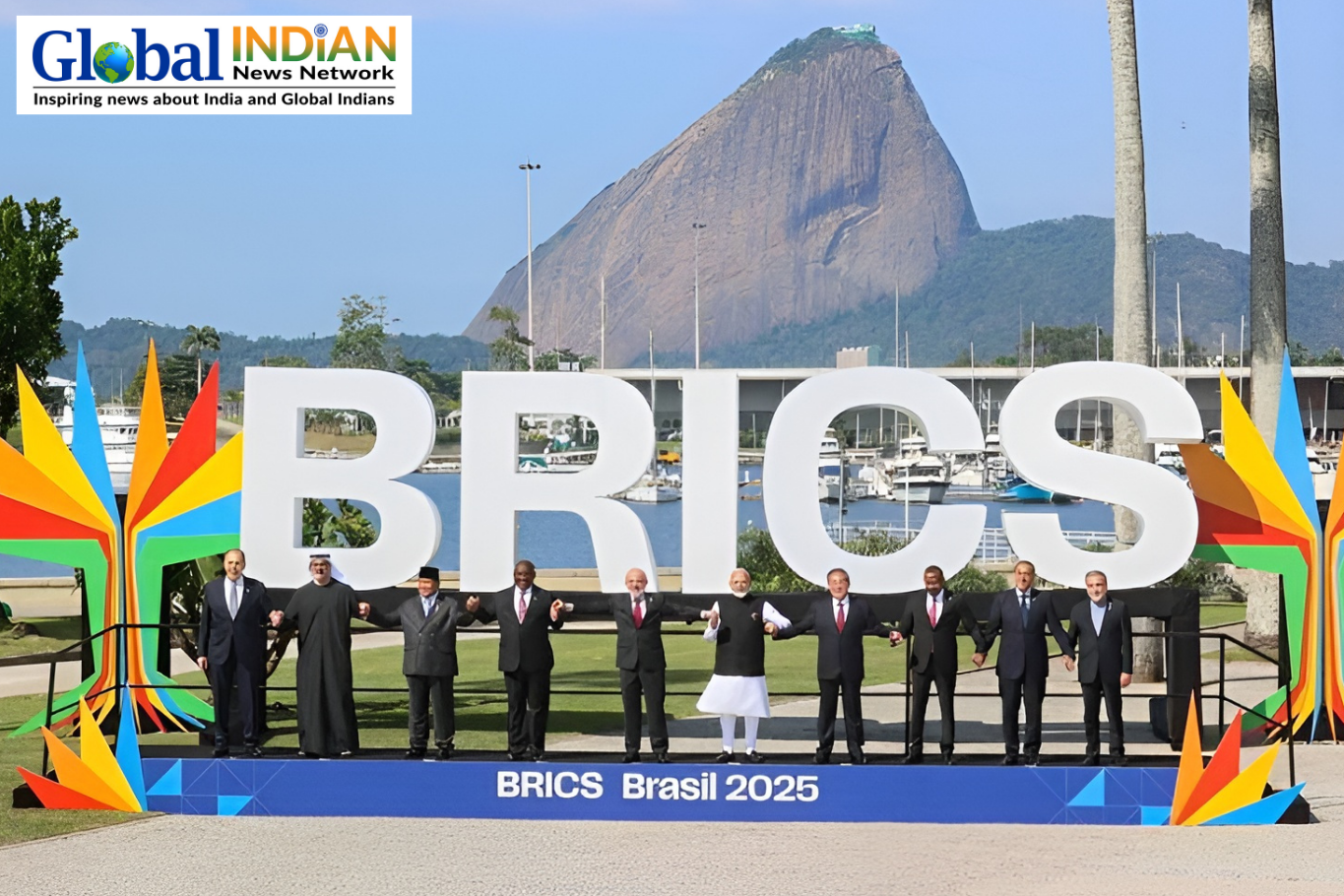
 India is set to assume the chair of BRICS in 2026, leading the expanded bloc during a critical geopolitical phase marked by diverging national interests, rising global ambitions, and pressures from Washington. The country aims to highlight the Global South in its presidency while remaining responsive to global developments and delivering practical outcomes for member nations facing shared challenges.
BRICS, initially formed by Brazil, Russia, India, and China, with South Africa joining shortly after, has grown into a diplomatic counterweight to Western powers. The bloc now includes countries such as Egypt, Ethiopia, Iran, the United Arab Emirates, and Indonesia, collectively representing roughly half of the world’s population and nearly 40 percent of global economic output. In July, Prime Minister Narendra Modi proposed redefining BRICS as “Building Resilience and Innovation for Cooperation and Sustainability,” emphasizing collaboration on issues like climate change, poverty, energy transition, and infrastructure development.
A major initiative under India’s presidency could involve creating an investment guarantee mechanism, operating through the New Development Bank (NDB), aimed at providing emerging economies with financial support independent of Western institutions. Former Indian diplomat Rajiv Dogra highlighted that such a mechanism would allow smaller nations easier access to funding without navigating complicated procedures in Washington.
India also intends to replicate its 2023 G20 strategy by hosting multilateral meetings across multiple cities, promoting international visibility while showcasing India’s leadership role globally. However, steering BRICS through internal dynamics and external pressures will be challenging. Maintaining the bloc’s pro-Global South stance while managing relations with Washington will be crucial.
India’s relationship with China will be particularly significant. Although ties have improved since 2024, lingering mistrust remains, compounded by Beijing’s connections with Islamabad, which New Delhi links to cross-border terrorism. Analysts, however, believe that for BRICS’ collective interests, cooperation is achievable. Additionally, potential US tariffs and threats against moves to replace the dollar as a reserve currency add another layer of complexity. Despite these challenges, India is poised to navigate 2026 strategically, aiming to enhance the influence of the Global South on the world stage.