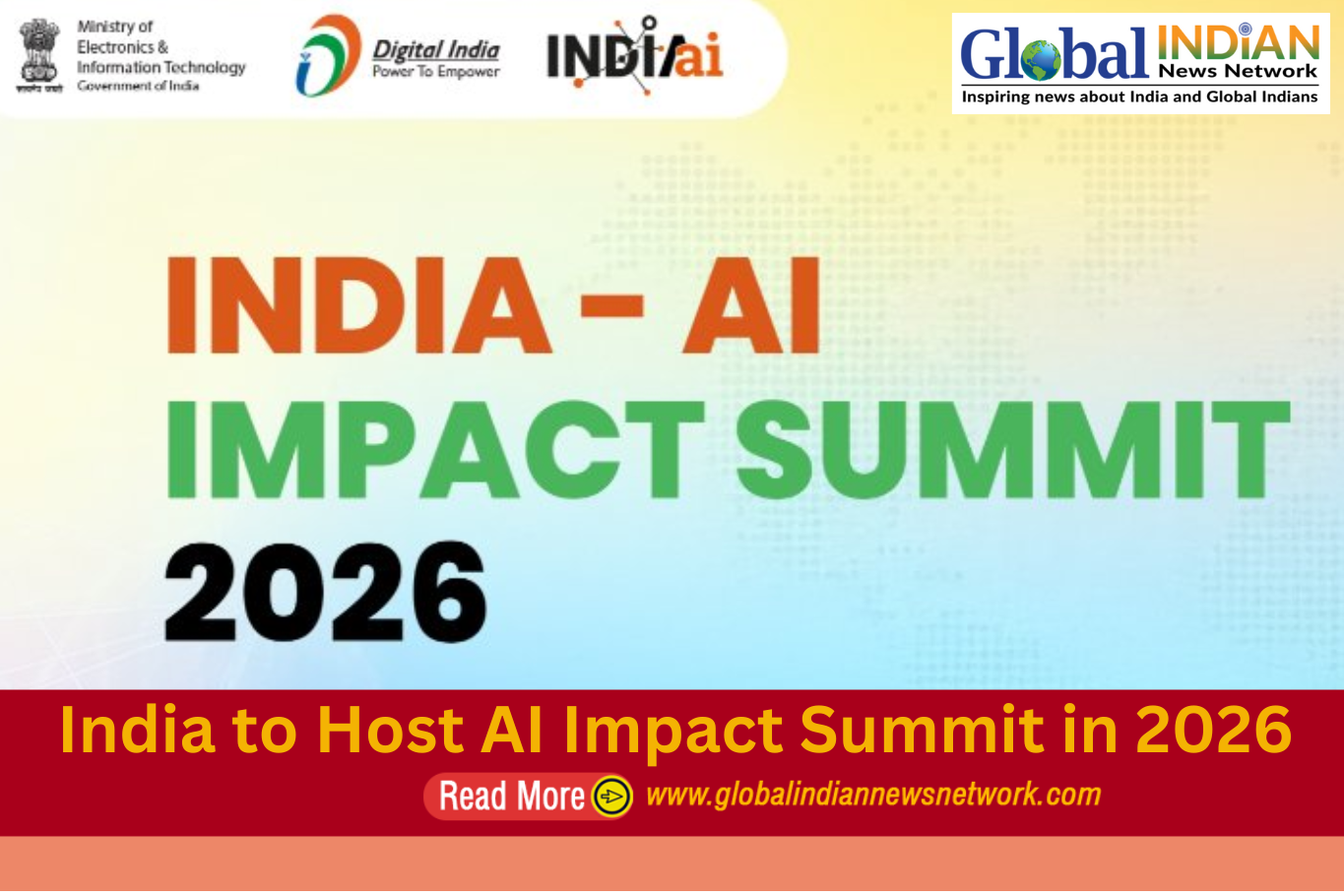
 India is set to host the AI Impact Summit in February 2026, marking a major step in its efforts to democratize Artificial Intelligence (AI) and apply it to real-world issues across vital sectors. This initiative aligns with Prime Minister Narendra Modi’s vision of using AI as a transformative force for public good, with a focus on domains like healthcare, agriculture, climate action, education, and governance.
The summit will spotlight the IndiaAI Mission, a unique blend of regulatory frameworks and technological innovations designed to uphold fairness, safety, and human rights in AI deployment. One major goal is to support homegrown language models that cater to India’s linguistic diversity. So far, four startups—Sarvam AI, Soket AI, Gnani AI, and Gan AI—have been selected to develop open-source foundational models rooted in Indian languages and contexts.
To empower innovation, the government has provisioned over 34,000 Graphics Processing Units (GPUs) via the IndiaAI Compute Portal. These GPUs are being offered at a cost of less than $1/hour, which is nearly one-third of the global average. Small businesses, startups, academic institutions, and government bodies benefit from an additional 40% government subsidy on GPU usage.
The AIKosh platform has made available more than 1,000 domain-specific datasets and 208 AI models, including voice and text-to-speech tools in local languages. In addition, 30 AI-driven projects have been funded under the IndiaAI Application Development Initiative, targeting applications in flood monitoring, disease prediction, soil diagnostics, and inclusive learning tools.
India is also scaling its AI influence globally through the IndiaAI Startups Global Programme, partnering with Station F and HEC Paris to help 10 Indian AI startups expand into Europe.
On the legal front, India ensures responsible AI governance through laws like the Digital Personal Data Protection Act (2023) and IT Rules (2021). Meanwhile, the IndiaAI Safety Institute is leading eight responsible AI projects, addressing issues such as bias mitigation, privacy, deepfake detection, and AI watermarking, reinforcing India’s global leadership in ethical AI innovation.