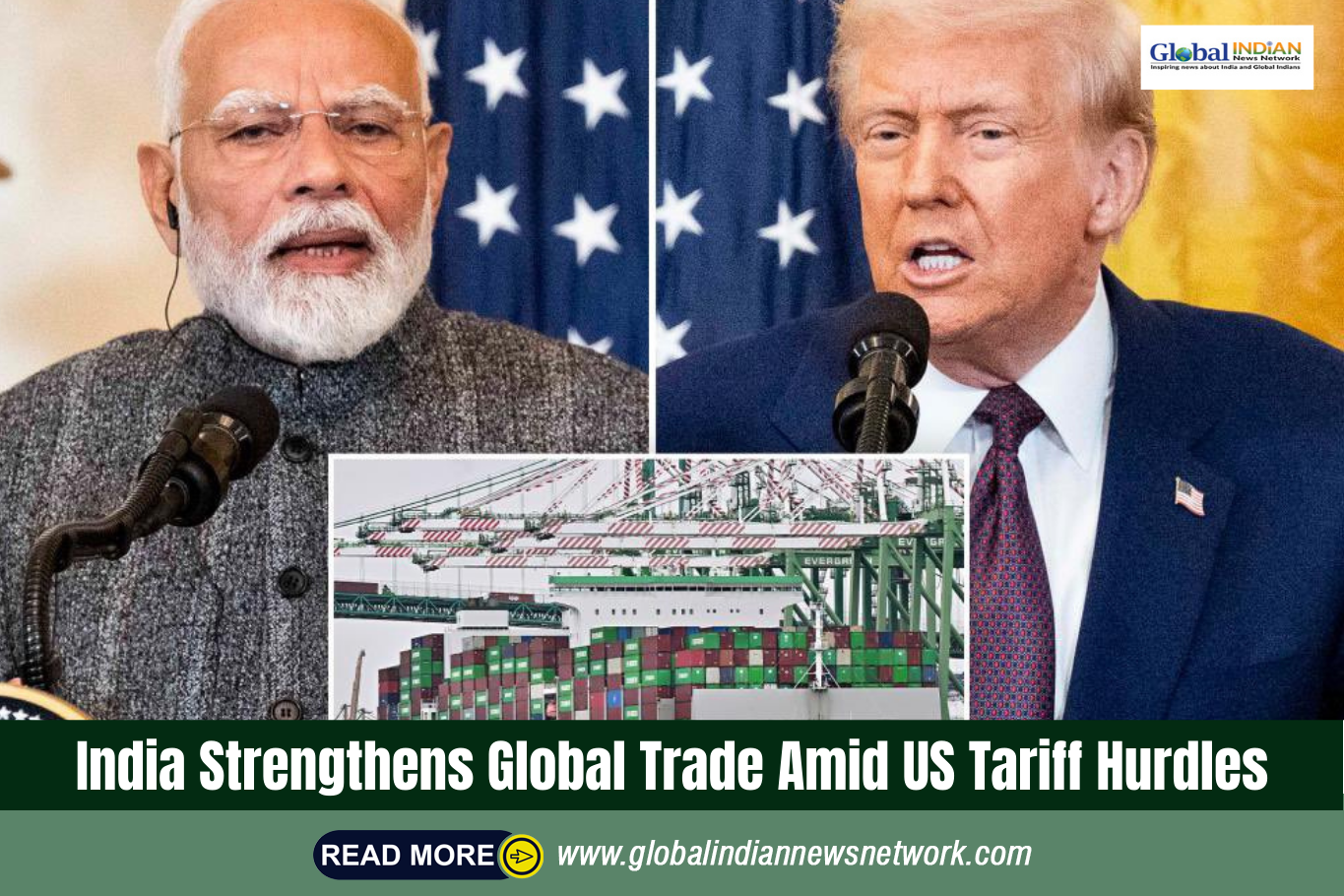
 India is proactively pursuing trade and investment agreements with several countries and economic blocs, even as negotiations with the United States face significant roadblocks. These strategic deals aim to help Indian exporters offset potential losses from US tariffs, both in the medium and long term. Recently, India finalized trade agreements with the UAE, Mauritius, Australia, the UK, and the European Free Trade Association (EFTA), which includes Iceland, Liechtenstein, Norway, and Switzerland.
Progress is also being made in discussions with the European Union, New Zealand, Chile, Peru, the Eurasian Economic Union (EAEU), and Oman. India is simultaneously strengthening trade ties with Russia and Sri Lanka, seeking Japanese investments, and improving economic engagement with China. India and the EU recently concluded the 12th round of trade talks, with the next round scheduled in September, aiming for a final deal by year-end.
India and New Zealand have completed the second round of Free Trade Agreement negotiations, with the next round set for September. Bilateral merchandise trade reached $1.3 billion in 2024-25, marking a 49% increase from the previous fiscal year. With the EAEU, comprising Armenia, Belarus, Kazakhstan, Kyrgyz Republic, and Russia, India has signed the Terms of Reference to initiate FTA talks. The bloc’s combined GDP of $6.5 trillion supports free movement of goods, services, capital, and labor. Trade with the EAEU reached $69 billion in 2024, promising benefits for micro, small, and medium enterprises.
Talks for a Comprehensive Economic Partnership Agreement (CEPA) with Oman, launched in November 2023, are progressing, with bilateral trade exceeding $10 billion in 2024-25, focusing on petroleum and urea. Similarly, India is negotiating CEPA deals with Chile and Peru, targeting investments, digital services, and critical minerals, with Peru offering significant rare earth reserves.
Recent discussions with China ensured supply of rare earth elements, urea, and tunnel boring machines. Meanwhile, India seeks to balance its $58.9 billion trade deficit with Russia due to oil imports. Japan plans a $77 million annual investment in India over 10 years, covering semiconductors, clean energy, AI, and pharmaceuticals. Additionally, India-Sri Lanka trade reached $5.5 billion in FY24, with both sides signing an MoU to boost bilateral commerce.
While these negotiations may take time to translate into concrete deals, immediate support is needed for exporters facing a 50% US tariff.