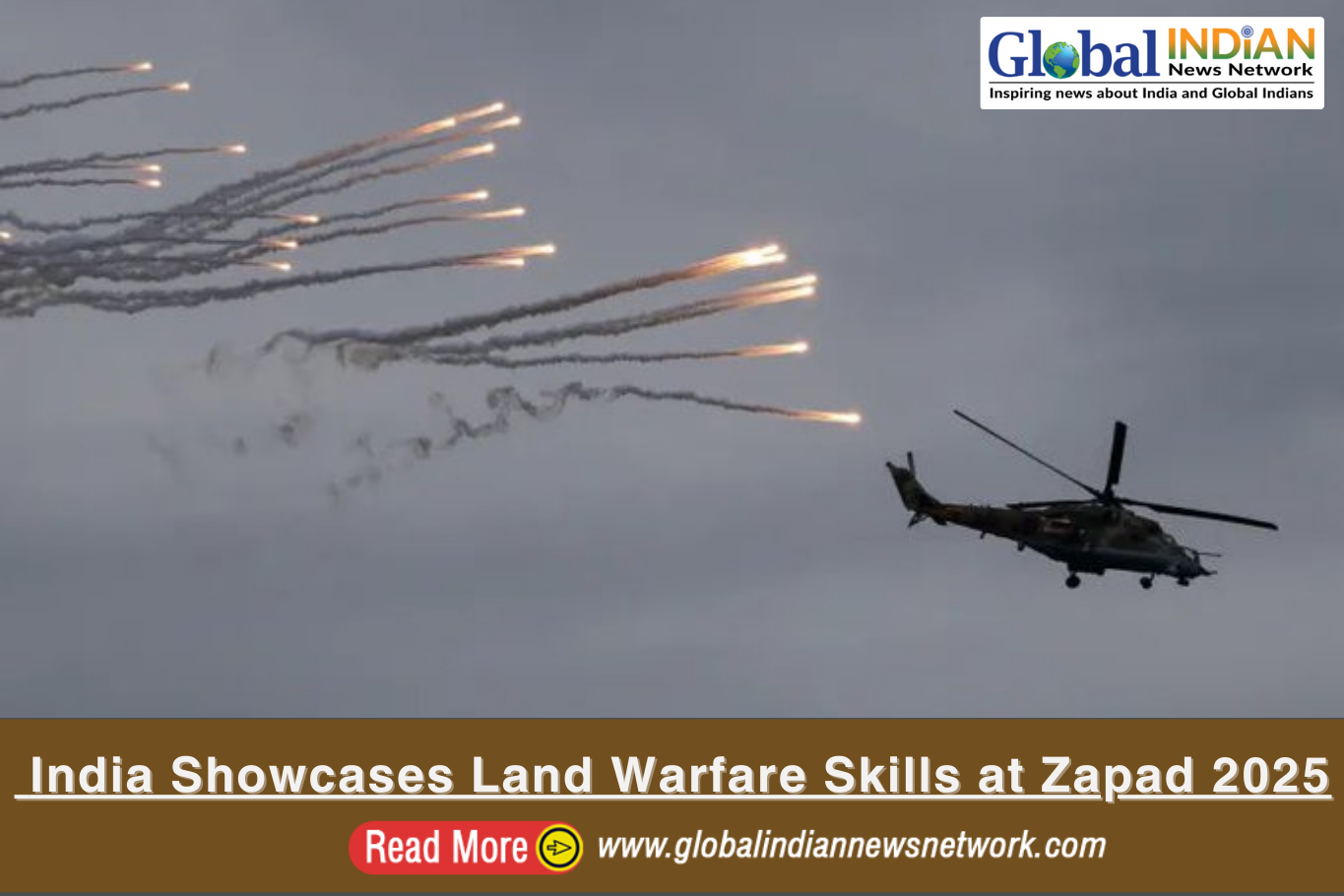
 India has sent a 65-member military contingent to Belarus to take part in Zapad 2025, one of the largest Russian-led joint drills since the Ukraine war began in 2022. The exercises, which included controversial nuclear strike simulations, sparked concern among NATO members already uneasy about instability across Europe’s eastern border.
For New Delhi, however, the focus was less on nuclear scenarios and more on displaying decades of experience in ground combat. The Indian troops participated in training that tested armored mobility, tactical maneuvers, and defensive responses against overwhelming enemy firepower. These drills offered India a platform to demonstrate battlefield proficiency rooted in its long history of operations along difficult terrain and counterinsurgency campaigns at home.
India’s participation also underlined its enduring defense relationship with Russia. Despite moves toward self-reliance under the Aatmanirbhar Bharat program, nearly 60–70% of India’s current arsenal remains of Russian origin. By engaging in Russian-organized war games, Indian soldiers sharpened their skills in operating and integrating these systems within live battle environments. Analysts note that Zapad also reinforced long-standing interoperability between the two forces, a legacy of decades of collaboration stretching back to the Cold War era.
The drills unfolded at a sensitive time for India’s external relations. Washington and Brussels have expressed unease over India’s oil imports from Russia and its willingness to engage in Moscow-led platforms. The European Union’s foreign policy chief recently stressed that cooperation with India must extend to security alignment, cautioning that joint exercises remain a sticking point. NATO’s concerns are further fueled by history: Russia’s invasion of Ukraine in 2022 followed similar exercises in Belarus, and countries like Poland view Zapad 2025 as a troubling signal of possible escalation.
For India, though, the decision was deliberate. By deploying forces to European soil under Russian command, New Delhi reaffirmed its independent stance in global affairs. Commanders used the opportunity to highlight skills in armored maneuvers, artillery coordination, and tactical mobility—capabilities honed through India’s complex land border challenges. Observers note that the Indian Army remains among the most battle-tested globally, making Zapad a stage to display adaptability and combat strength beyond South Asia.
The United States monitored the drills cautiously. While President Donald Trump avoided public comment, officials acknowledged discomfort as Russia and China expand their influence through blocs like BRICS and the SCO—where India is also active. The timing was notable, coinciding with Prime Minister Modi’s recent SCO engagement alongside Vladimir Putin and Xi Jinping.
Ultimately, Zapad 2025 highlighted more than just India’s military skill. It underscored New Delhi’s evolving doctrine of strategic autonomy—building partnerships widely while resisting pressure to conform to any single bloc. In today’s volatile geopolitical climate, India’s ability to showcase both battlefield strength and independent decision-making may prove its strongest message.