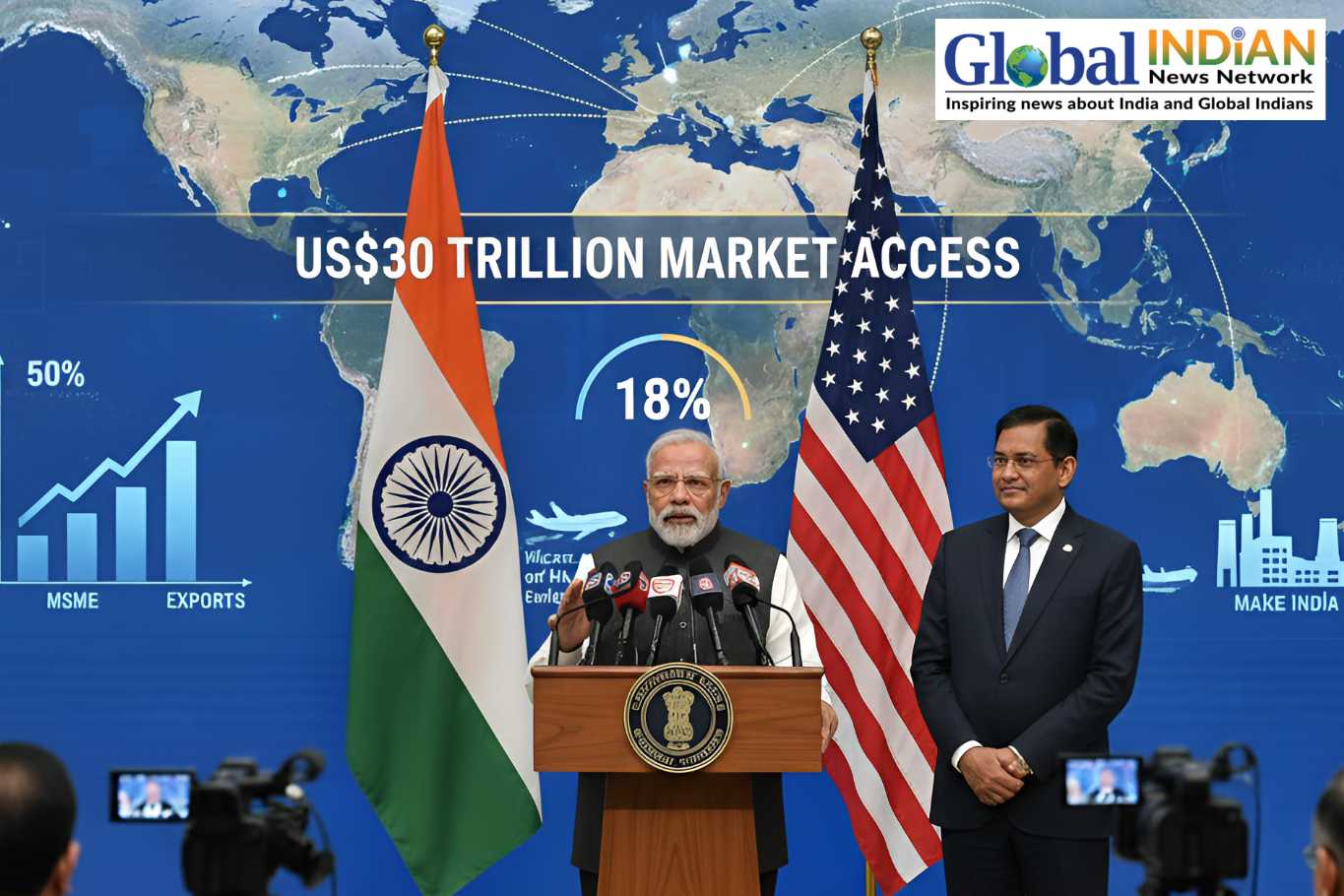
 India has achieved a historic milestone in its trade relations with the United States by signing an interim trade agreement that opens preferential access to a US$30 trillion market for Indian exporters. The announcement, made by Commerce and Industry Minister Piyush Goyal, establishes a framework that significantly reduces the maximum US tariff from 50% to a standard rate of 18%, applied reciprocally. Existing tariffs on goods from other nations are also being adjusted, making Indian products more competitive globally. Comparatively, India’s new average tariff rate is now lower than that of China (35%), Vietnam (20%), and Bangladesh (20%).
Prime Minister Narendra Modi described the agreement as a demonstration of the strong, trust-based partnership between India and the US, highlighting its potential to strengthen economic resilience and promote sustainable growth. He emphasized that this deal is set to benefit a wide spectrum of stakeholders, including farmers, entrepreneurs, micro, small, and medium enterprises (MSMEs), and exporters, by opening new markets and encouraging innovation, investment, and employment.
As part of the broader trade and investment framework, India plans to purchase approximately US$500 billion worth of US goods over the next five years, including energy products, aircraft, technology, and metals. This step aims to deepen bilateral economic integration while fostering robust supply chains and enhancing strategic cooperation.
The interim framework also retains protections for sensitive agricultural products, addressing domestic concerns and ensuring that stakeholders’ interests are safeguarded. The agreement is seen as a forward-looking move that not only reinforces India’s “Make in India” initiative but also positions the country favorably within global trade networks.
By establishing a reduced and competitive tariff structure alongside expanded access to critical US markets, this deal lays the groundwork for strengthened trade flows, closer economic collaboration, and long-term strategic ties between India and the United States. It represents a transformative step in India’s trade policy, aiming to bolster growth across multiple sectors while fostering stronger bilateral relations.