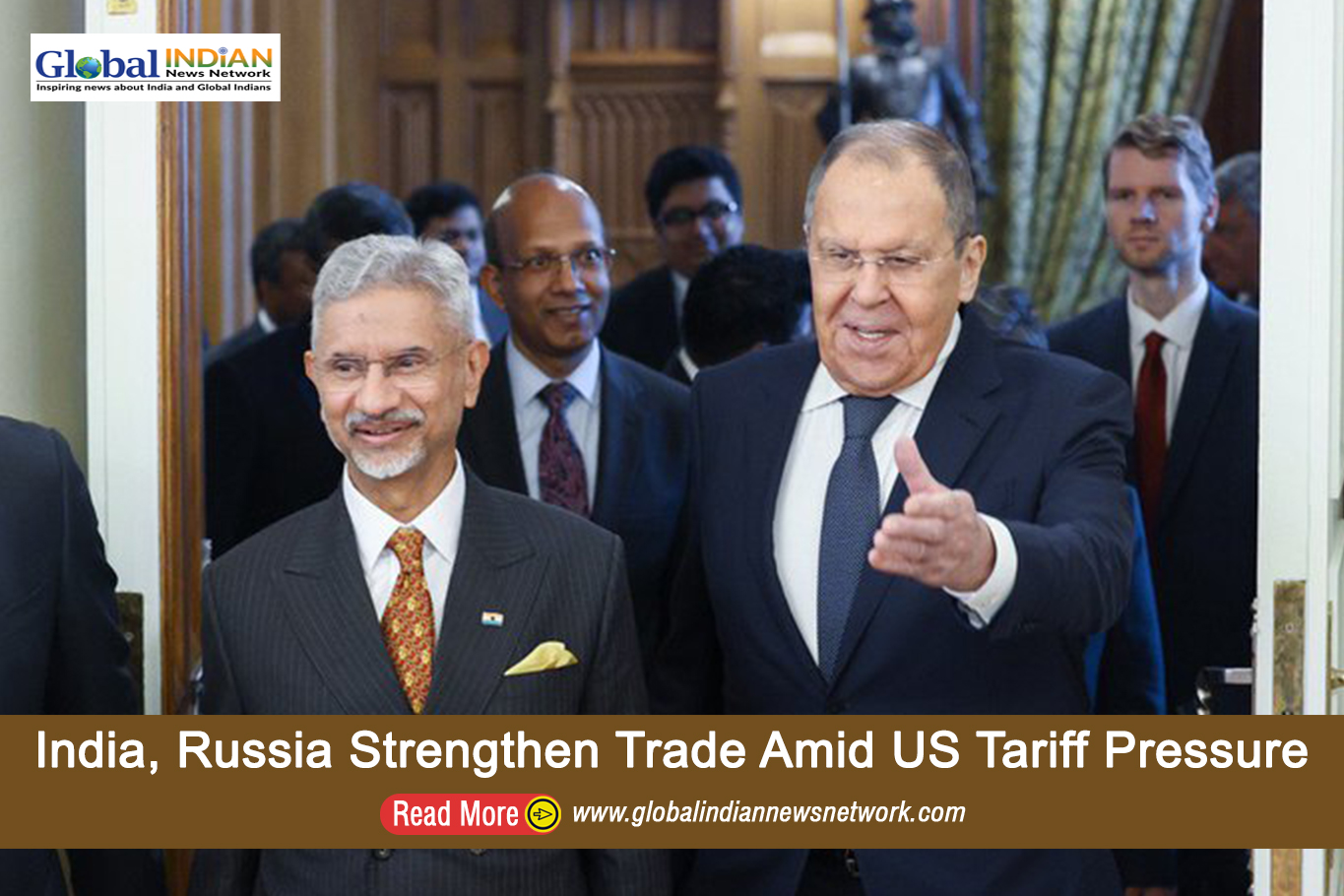
 India and Russia reaffirmed their commitment to strengthen economic and energy partnerships, signaling that recent U.S. tariff threats over Indian purchases of Russian oil are unlikely to weaken their cooperation. The two nations agreed on a roadmap to expand bilateral trade, including boosting India’s exports of pharmaceuticals, agriculture, and textiles to help balance the trade deficit.
Bilateral trade between New Delhi and Moscow reached a record $68.7 billion for the fiscal year ending March 2025, with India’s growing oil imports accounting for a $59 billion trade gap. Indian officials also highlighted plans to send skilled workers in IT, engineering, and construction to Russia to alleviate labor shortages, while Russian authorities confirmed continued shipments of oil to India despite U.S. pressure.
Russian Foreign Minister Sergey Lavrov emphasized that cooperation in hydrocarbons and ongoing Russian oil exports to India were progressing significantly. Both nations also remain committed to joint energy projects in the Russian Far East and the Arctic shelf, reflecting a long-term strategic partnership aimed at regional stability amid global geopolitical challenges.
The U.S. had imposed tariffs of up to 50% on certain Indian goods, responding to New Delhi’s substantial imports of Russian energy. Analysts suggest that the tariff pressure may inadvertently encourage India to deepen its ties with Moscow and pursue broader multilateral collaborations, including potential trilateral discussions with China.
India imported 1.6 million barrels per day of Russian crude in the first half of 2025, up sharply from just 50,000 barrels per day in 2020, making it the world’s second-largest buyer after China. Meanwhile, U.S. criticism focuses on India’s perceived profiteering from discounted Russian oil, contrasting with Washington’s relatively muted stance on China’s longstanding imports.
Despite external pressures, Indian and Russian officials described their relationship as resilient and strategically significant. Both emphasized dialogue, diplomacy, and collaboration as key mechanisms to navigate complex international dynamics, reinforcing a partnership that has been stable since the 1970s and continues to evolve in the face of global economic and political challenges.