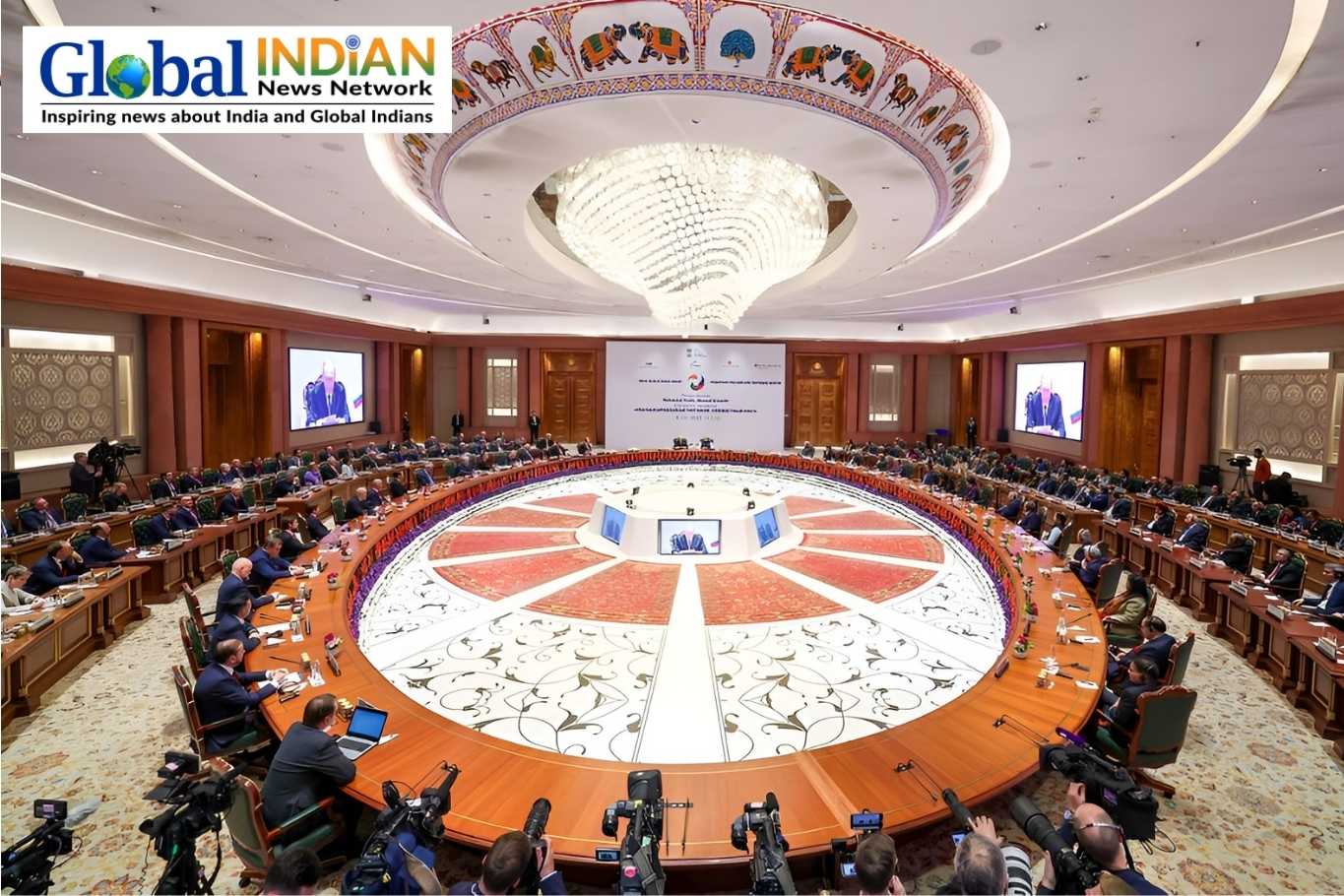
 Indian and Russian business leaders, along with government officials, convened in Moscow last week to strengthen economic ties amid global geopolitical uncertainty and economic disruptions. This dialogue follows the December summit in Delhi between Prime Minister Narendra Modi and Russian President Vladimir Putin, which laid the groundwork for enhanced bilateral business cooperation.
According to South Africa’s Independent Online, India has become a critical economic partner for Russia, particularly through crude oil purchases, providing a financial lifeline to a nation facing international sanctions and isolation aimed at weakening its economy. The meeting centered on boosting investments, developing new financial instruments, and launching collaborative projects across sectors.
The article highlights the complexities of this partnership. Russia remains heavily sanctioned and engaged in a prolonged conflict in Ukraine, while India faces potential threats from the US, including tariffs of up to 500%, if it continues purchasing Russian oil. Additionally, Western Europe has applied diplomatic pressure for India to curb its Russian energy imports. These challenges underscore the high stakes of the India-Russia relationship in today’s global landscape.
India’s robust domestic market is closely tied to Western economies, with the US and EU being key trading partners. These regions provide crucial investment, technology, and access to financial markets that drive India’s growth. Furthermore, global supply chains are increasingly viewing India as an alternative to China, leveraging its young workforce and positioning the country as a potential global manufacturing hub.
The article concludes that India must carefully navigate its ties with Russia to avoid triggering sanctions from Western nations. Such sanctions could impact trade, foreign direct investment, and India’s trajectory toward becoming the world’s third-largest economy. The India-Russia partnership thus remains a strategically significant and delicate balancing act, reflecting broader shifts in global economic and geopolitical dynamics.