 India’s real estate industry is projected to reach US$ 970 billion by 2030, according to a joint study conducted by KPMG and the National Real Estate Development Council (NAREDCO). This marks more than a threefold increase from an estimated US$ 290 billion market in 2025, highlighting the sector’s rapid expansion across residential, commercial, and industrial segments. The growth trajectory aligns with India’s long-term vision of emerging as a developed economy by 2047.
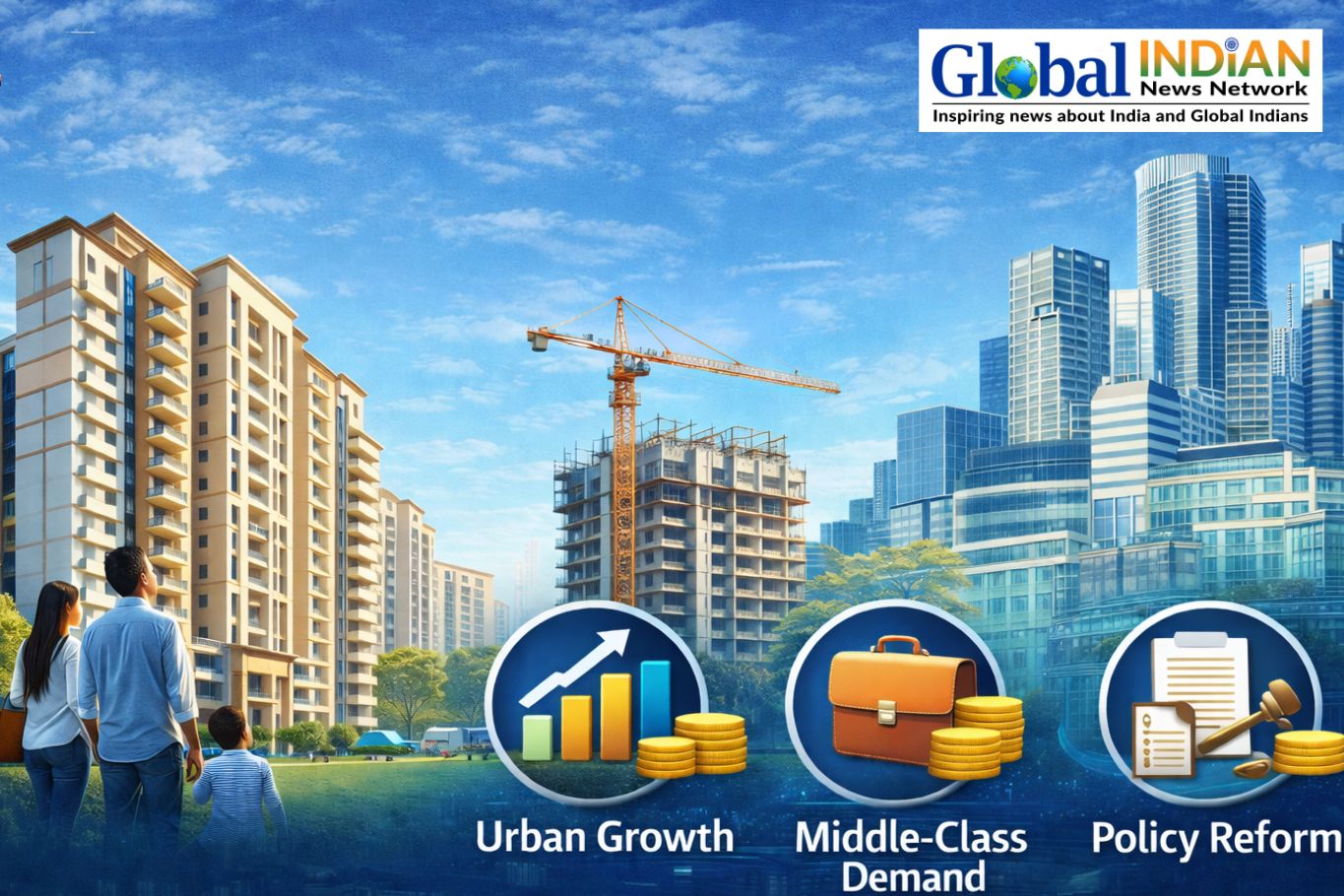
Several factors are expected to drive this surge in real estate. Rising urbanization, higher disposable incomes, policy reforms, and growing institutional investment are all contributing to increased demand. Regulatory measures, including the Real Estate Regulation and Development Act (RERA) and the implementation of the Goods and Services Tax (GST), have enhanced sector transparency and strengthened investor confidence, encouraging further participation in the market.
The rising number of middle-income urban households is fueling demand for organized housing, particularly in metropolitan areas. This shift is not only supporting residential growth but also stimulating expansion in commercial and industrial properties. Over the long term, the real estate sector is expected to continue generating employment opportunities, contributing to infrastructure development, and fostering growth in connected industries such as cement, steel, and construction materials.
As the sector’s contribution to India’s GDP increases, real estate is becoming a key engine of economic growth. Its influence extends beyond direct employment, driving investments across multiple sectors and reinforcing India’s broader economic development objectives. With sustained urban growth and supportive policy measures, the real estate industry is poised to remain a cornerstone of India’s economy in the coming decade.