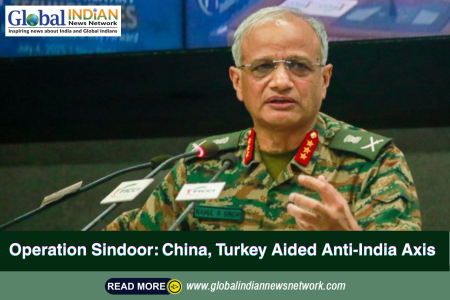
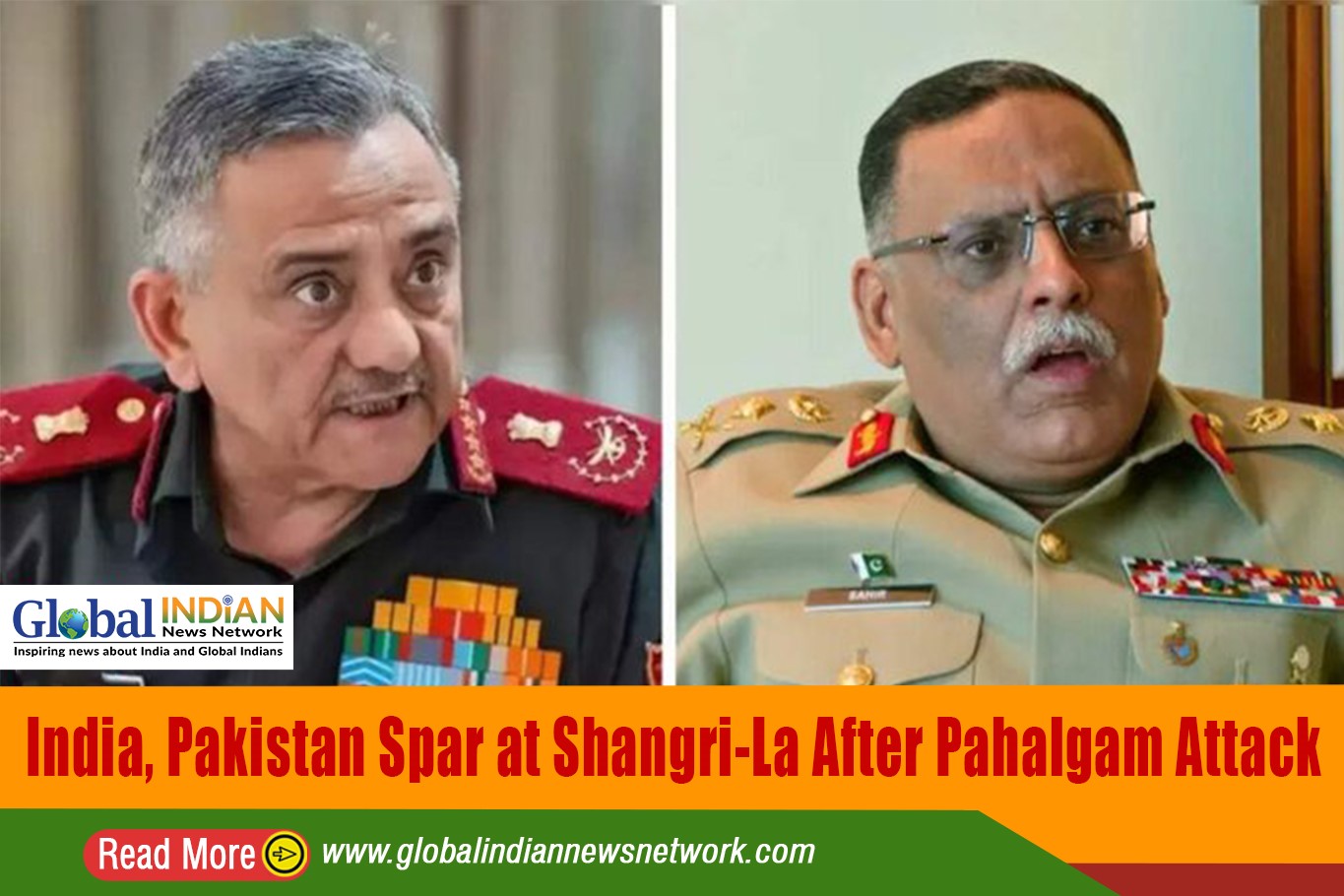
 During the Shangri-La Dialogue held in Singapore, top military officials from India and Pakistan presented contrasting views, underscoring the enduring tensions between the two countries following last month’s brief military engagement and Operation Sindoor. India’s Chief of Defence Staff, General Anil Chauhan, highlighted the Operation Sindoor conducted from May 7 to 10, which targeted nine terrorist locations in Pakistan and Pakistan-administered Kashmir. He emphasized that India has established a strict new policy of zero tolerance toward terrorism, stating that after facing proxy terrorism for over two decades, this operation clearly signals India’s unwillingness to accept such aggression any longer.
He hoped the operation would serve as a “lesson” to India’s adversaries following the April 22 terrorist attack in Pahalgam that killed 26 people.
In a parallel session, Pakistan’s General Sahir Shamshad Mirza cautioned that lowering thresholds in regional conflict could lead to unpredictable consequences. “Strategic stability is at risk,” he said. “If cities become targets before international intervention, irreparable damage may occur.”
General Mirza also acknowledged Pakistan’s domestic battle with terrorism, particularly involving threats from Taliban-ruled Afghanistan. He added that terrorism has cost us tens of thousands of lives and hundreds of billions of dollars.
Meanwhile, both countries have launched diplomatic offensives. India dispatched seven multi-party delegations to over 30 countries, including UN Security Council members, to clarify its position on counter-terrorism and Operation Sindoor. Congress leader Salman Khurshid described the initiative as a groundbreaking and inventive approach to international engagement.
Pakistan is expected to start its own diplomatic effort beginning June 2.
Despite the intensity of the 96-hour military exchange, nuclear escalation was ruled out. Both nations showcased advanced weaponry—India’s Rafale jets and Pakistan’s J-10Cs—with reported use of drones, cyber tools, and precision-guided missiles.
While tensions remain high, both sides agreed that modern warfare now involves AI, electronic warfare, and digital tools rather than traditional nuclear deterrents. General Mirza stated, “The tools of future conflict are changing. Nukes were never considered.”