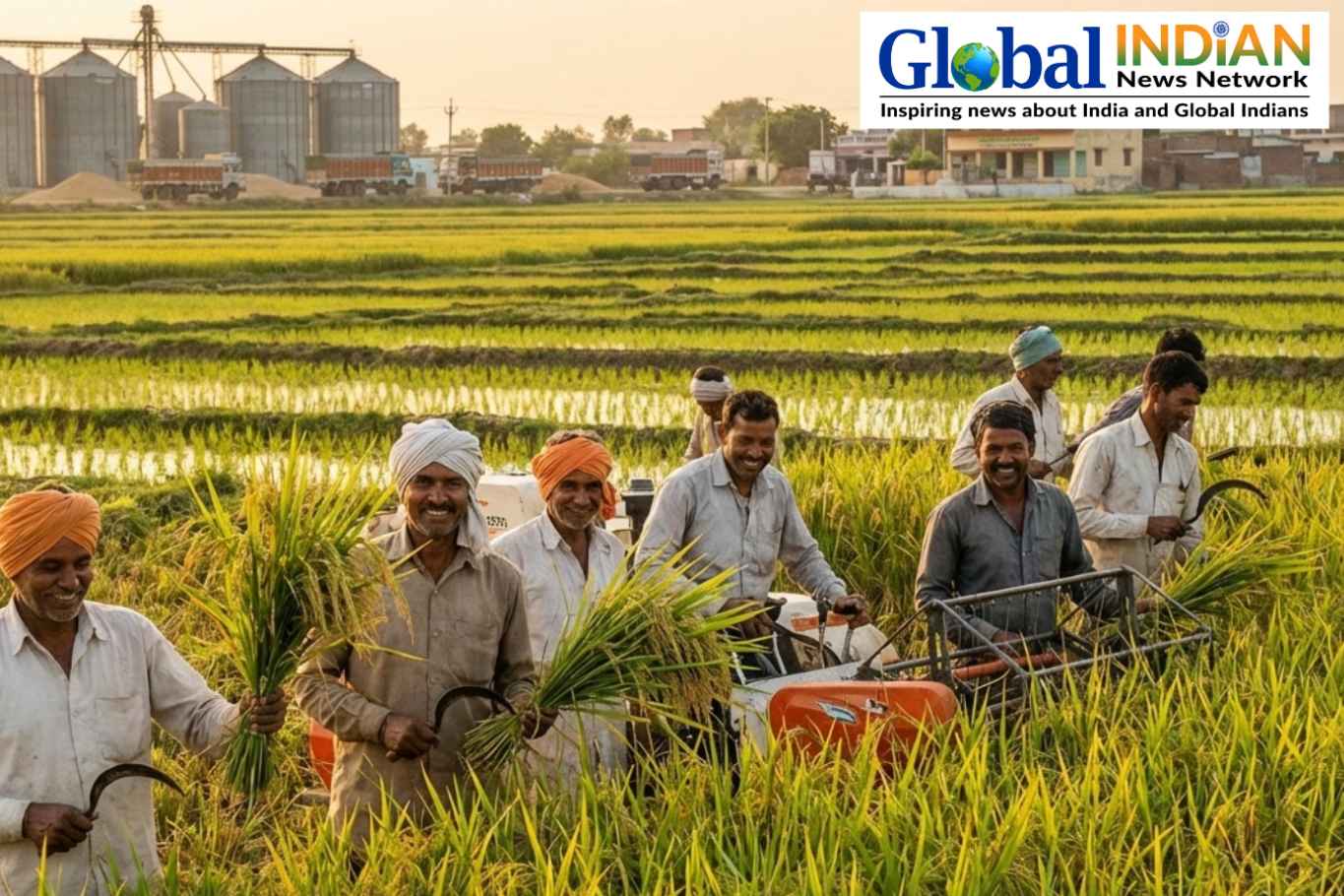
 India marked a historic milestone in 2025 by emerging as the world’s largest rice-producing nation, overtaking China for the first time. Union Agriculture Minister Shivraj Singh Chouhan announced that India produced a record 150.18 million tonnes of rice during the year, surpassing China’s output of 145.28 million tonnes. The achievement reflects the steady transformation of India’s agricultural sector from food scarcity to global leadership in grain production and exports.
The minister attributed the milestone to sustained policy reforms, farmer-centric initiatives, and the adoption of modern agricultural practices. India now holds the single largest share of global rice production, reinforcing its ability to meet rising domestic consumption while expanding its footprint in international markets. The development also highlights the resilience and efficiency of India’s farming ecosystem amid changing climate and market conditions.
As part of efforts to further boost productivity, Chouhan unveiled 184 newly developed seed varieties covering 25 different crops at an event in New Delhi. These high-yielding and climate-resilient seeds were developed by the Indian Council of Agricultural Research in partnership with agricultural universities and seed companies. The initiative aims to improve crop performance, reduce risk for farmers, and raise farm incomes across diverse regions.
The government emphasized that timely distribution of these improved seed varieties is critical to ensuring farmers fully benefit from scientific advancements. Officials stressed that faster seed multiplication and delivery will play a key role in sustaining production gains and strengthening foodgrain reserves.
Beyond rice, the agriculture ministry reiterated the importance of diversifying crop production. Chouhan called for increased focus on pulses and oilseeds to reduce import dependence, improve soil health, and create more stable income opportunities for rural communities. Diversification, he noted, is essential for long-term sustainability and balanced agricultural growth.
Strong foodgrain stocks combined with improved seed technology are expected to enhance India’s competitiveness in global rice trade. This growing export capacity not only supports farmer prosperity but also contributes directly to national economic growth.
India’s rise as the world’s leading rice producer underscores the impact of science-led farming, policy consistency, and institutional collaboration. As productivity continues to improve, the country is positioned to play a central role in ensuring global food security while strengthening livelihoods across its vast agricultural landscape.