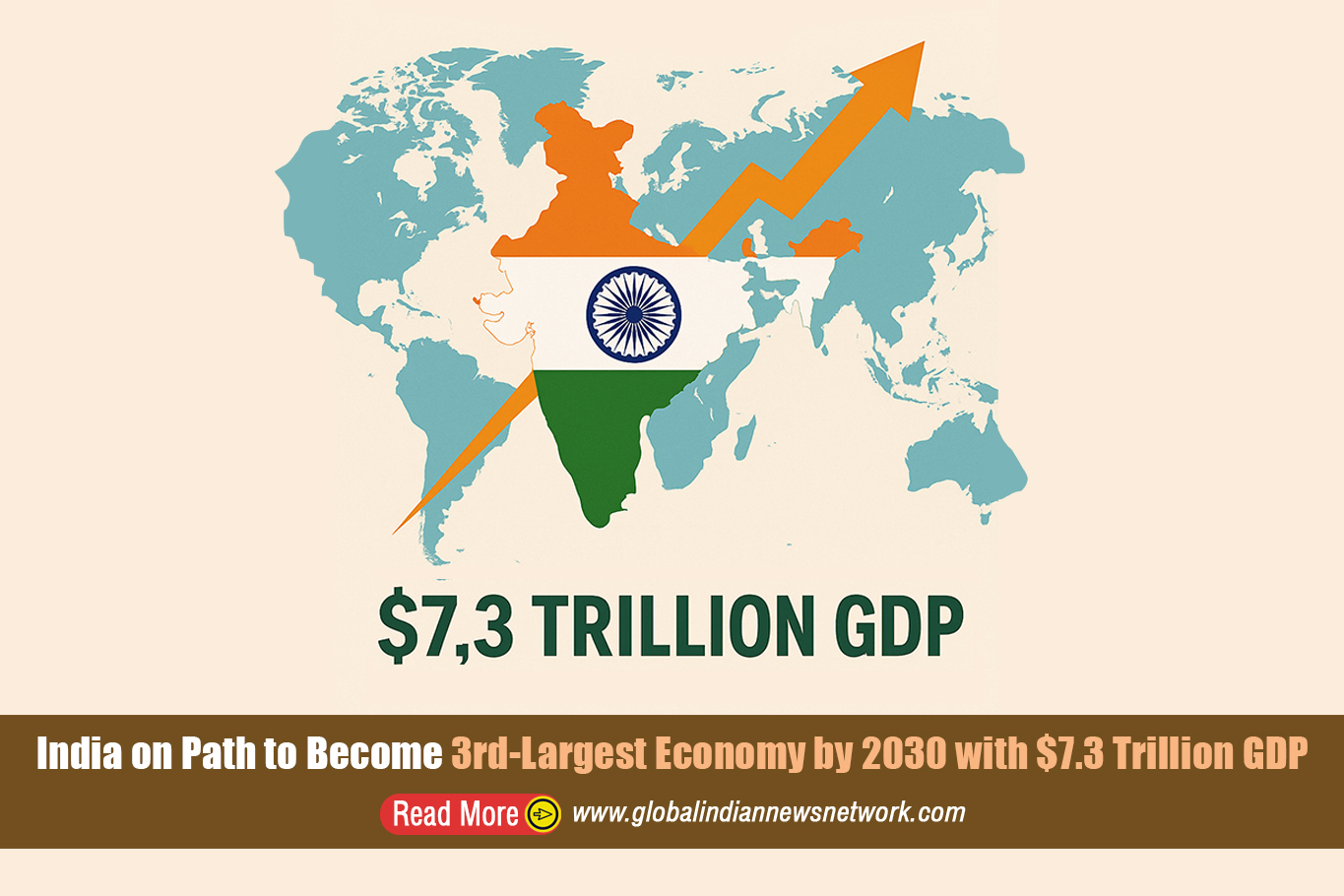
 India, currently the world’s fourth-largest economy, is steadily moving toward becoming the third-largest by 2030, with projections placing its GDP at US $7.3 trillion.
Recent economic indicators highlight strong momentum. In the second quarter of FY 2025-26, India’s real GDP grew by 8.2%, a sharp rise from 5.6% in the same period last year. Growth in the first quarter also remained robust at 7.8%, compared with 6.5% in the previous financial year.
The expansion has been broad-based across sectors. The primary sector recorded a growth rate of 3.1%, the secondary sector expanded by 8.1%, and the tertiary (services) sector surged by 9.2% during Q2. For the first half of FY 2025-26, overall real GDP growth stood at 8.0%, significantly higher than the 6.1% recorded in H1 of FY25.
Inflation has also eased dramatically, supporting macroeconomic stability. CPI-based inflation in October 2025 dropped to 0.25% year-on-year, the lowest level in the current series. This sharp decline has created room for stable monetary policy and has strengthened the foundation for sustained growth.
According to the official statement, India’s accelerating economic trajectory is driven by structural reforms, rapid digitalisation, inclusive development initiatives, and deeper global economic integration. These factors are enabling the country to push forward toward its long-term economic goals.
Global institutions share this optimistic outlook. Forecasts from international rating agencies suggest that India is on track to surpass major advanced economies by 2030, powered by its expanding middle class, rising consumption levels, and ongoing economic reforms.