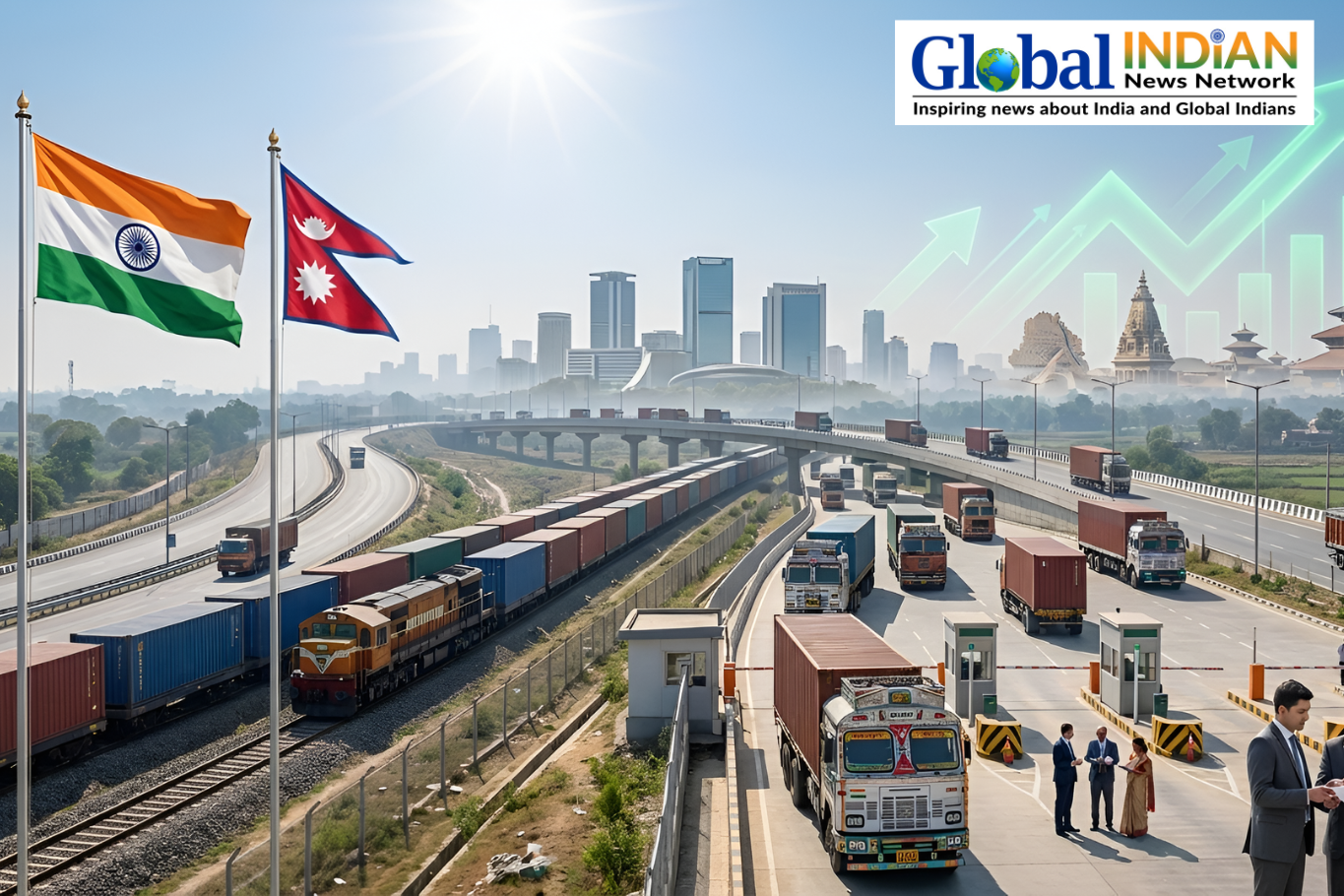
 India and Nepal’s economic partnership is poised for a new phase of growth, with bilateral trade projected to double by 2030, driven by stronger business linkages and sustained investment flows, according to Nepalese media reports. Trade between the two nations continues to reflect deep-rooted interdependence, with India accounting for over 64% of Nepal’s total trade. In fiscal year 2024–25, bilateral trade reached around USD 8.7 billion, confirming India’s position as Nepal’s largest trading partner.
India’s exports to Nepal totaled nearly USD 7.4 billion, led by petroleum products, machinery, vehicles, pharmaceuticals, food items, and construction materials that are essential for Nepal’s consumption and infrastructure development. Meanwhile, Nepal exported close to USD 1.3 billion worth of goods to India, including electricity, agricultural products, iron and steel, and manufactured items. This trade structure highlights significant opportunities for diversification and value addition, supporting balanced growth in Nepal’s export portfolio.
Investment flows further strengthen the bilateral relationship. Indian firms represent the largest source of foreign direct investment (FDI) in Nepal, contributing roughly 30–35% of total FDI. Cumulative Indian investment in Nepal is estimated at USD 750–800 million, with operational investments of approximately USD 670 million across more than 150 ventures. These investments cover critical sectors such as hydropower, manufacturing, banking, insurance, telecommunications, cement, tourism, education, and hospitality, underpinning Nepal’s industrialisation and service sector expansion.
India’s role in Nepal’s hydropower sector has been transformative, combining capital and technology with assured power off-take arrangements. This has enhanced Nepal’s energy security while generating returns for Indian companies. Indian financial institutions have deepened Nepal’s banking and insurance sectors, while joint ventures in manufacturing and tourism have created employment and local value.
Energy cooperation is now a cornerstone of bilateral ties. Nepal, with over 40,000 MW of economically viable hydropower potential, exported around USD 130 million in electricity to India in FY 2024–25. Long-term agreements aim to increase exports up to 10,000 MW over the next decade. This partnership provides Nepal with stable revenue streams and supports India’s clean energy transition, while positioning India as a key transit hub for regional electricity trade, further integrating the two economies.