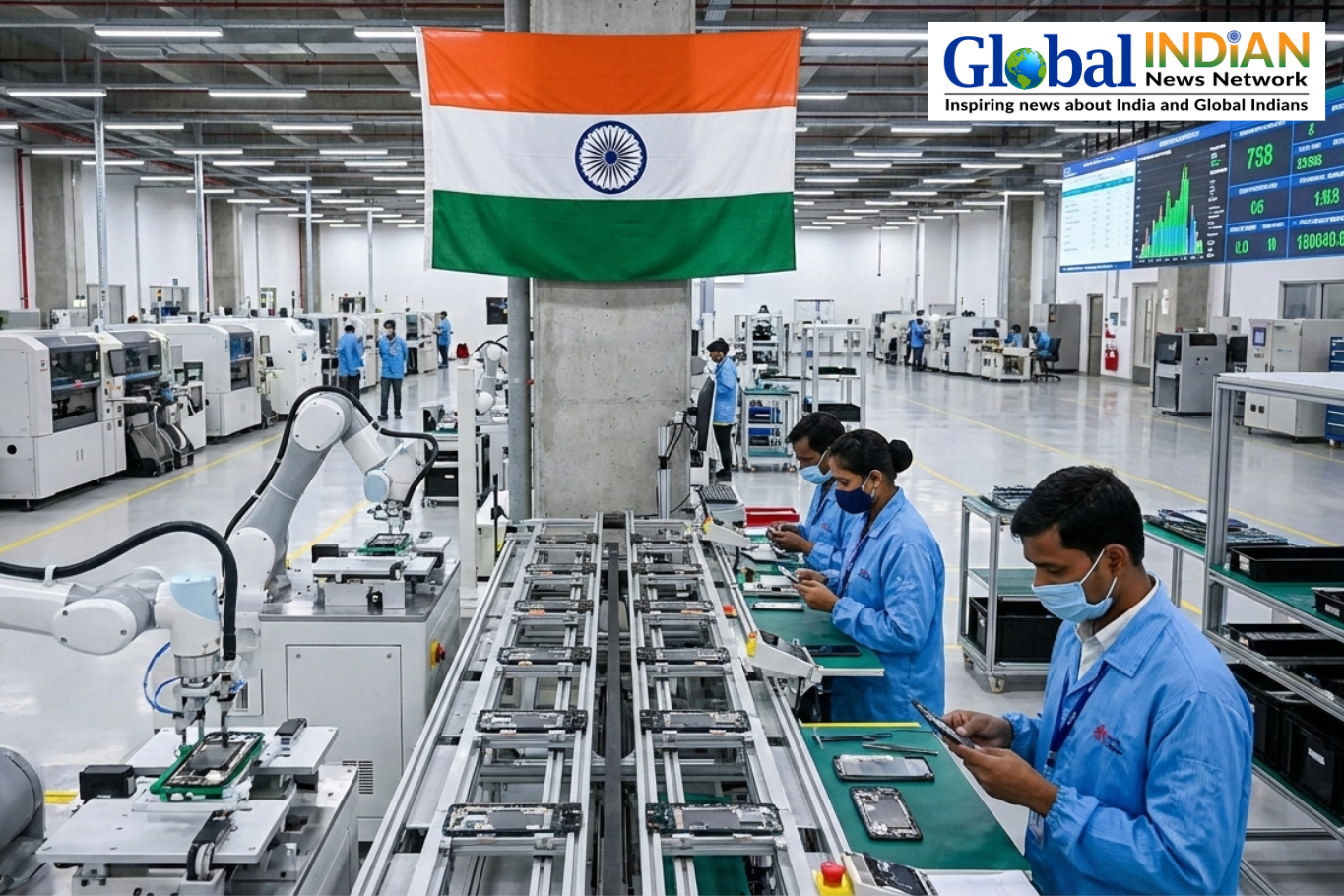
 India’s mobile phone manufacturing industry is on track to achieve a major milestone, with total production expected to reach seventy-five billion dollars by the end of the current fiscal year, according to estimates from the India Cellular and Electronics Association. Exports alone are projected to cross thirty billion dollars, reflecting the country’s growing importance in the global smartphone supply chain.
This rapid expansion is largely attributed to India’s steadily strengthening manufacturing base. Government-backed initiatives, particularly the Production-Linked Incentive program for mobile phones, have played a crucial role in scaling up domestic capabilities. The scheme has encouraged leading global smartphone brands and component manufacturers to expand their operations in India, turning the country into a preferred manufacturing destination.
Industry leaders believe the conclusion of the PLI program in March 2026 will represent a turning point for the sector. According to ICEA, this phase will mark a shift from rapid capacity expansion to consolidation, with companies focusing more on efficiency, scale, and competitiveness. The next stage of growth is expected to be driven by deeper integration across the electronics value chain rather than just assembly operations.
India’s broader electronics ecosystem is also evolving in parallel. Programs such as the Electronics Component Manufacturing Scheme are supporting the local production of key parts, reducing reliance on imports. In addition, recent approvals related to semiconductor projects are helping build a more complete and resilient supply chain. These developments are aligned with industry demand for a wider range of domestically manufactured components.
By the end of FY26, experts estimate that India could produce close to three hundred million mobile phone units annually. Export momentum is expected to remain strong, with projections suggesting that by 2025, nearly one in every four smartphones manufactured in India will be shipped overseas. Higher average selling prices and rising demand from major markets, especially the United States, are key factors supporting this trend.
As manufacturing volumes and export capacity increase, India’s position in the global electronics market continues to strengthen. The country is gradually moving up the value chain, from basic assembly toward more advanced manufacturing and component integration. This transformation not only enhances India’s competitiveness but also makes it more attractive to long-term global investment.
Overall, the projected seventy-five billion dollar production figure highlights how policy support, global demand, and ecosystem development are collectively reshaping India into a leading hub for mobile phone manufacturing and exports.