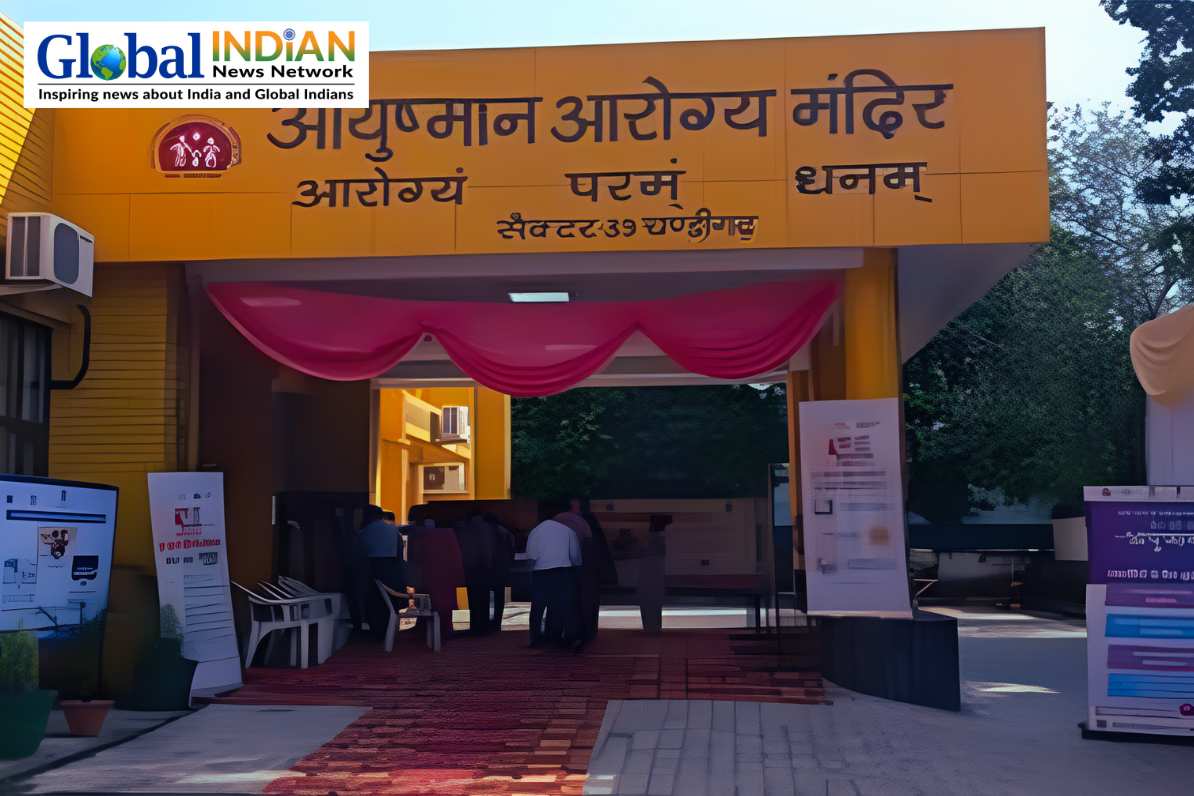
 India is making some of the most forward-looking investments in the global healthcare sector by strengthening the Ayushman Bharat Digital Mission and rolling out the Future Health Districts programme, according to experts speaking at the World Economic Forum’s annual meeting.
The Ayushman Bharat Digital Mission has emerged as the cornerstone of India’s efforts to build a unified national digital health ecosystem. Since its launch, the initiative has enabled hundreds of millions of citizens to access digital health services through unique health identities, while integrating hospitals, clinics, laboratories, insurers, and healthcare professionals onto a common interoperable platform.
Complementing this effort, the Future Health Districts programme has been launched as a collaborative initiative between India and the World Economic Forum. Designed as a real-world testing ground, the programme supports the implementation and scaling of the digital health architecture envisioned under the Ayushman Bharat framework, allowing innovation to be tested across districts before nationwide adoption.
Experts highlighted that the scale achieved under the digital health mission is unprecedented, with hundreds of millions of health records securely linked and an expanding network of registered healthcare providers and facilities. The interoperable design of the system enables healthcare entities to integrate once and connect seamlessly across the ecosystem, reducing fragmentation and improving efficiency.
The approach has also delivered substantial cost savings. Traditional custom technology integrations often require significant investment in software development, manpower, testing, and oversight. By contrast, a single certified integration under the national digital framework replaces multiple bespoke systems, allowing resources to be redirected toward improving clinical care, strengthening cybersecurity, and enhancing citizen engagement.
Large hospital networks, diagnostic chains, and integrated care providers have already benefited from reduced duplication of information technology infrastructure and lower long-term maintenance costs. Experts noted that such efficiencies are critical for both public and private healthcare systems operating at scale.
The broader lesson, according to health and policy leaders, is that sustained investment in interoperable digital systems, preventive healthcare, and digital capacity can generate long-term economic and social returns. India’s healthcare transformation, anchored in digital public infrastructure, is increasingly being viewed as a global model for inclusive, scalable, and cost-effective health system reform.