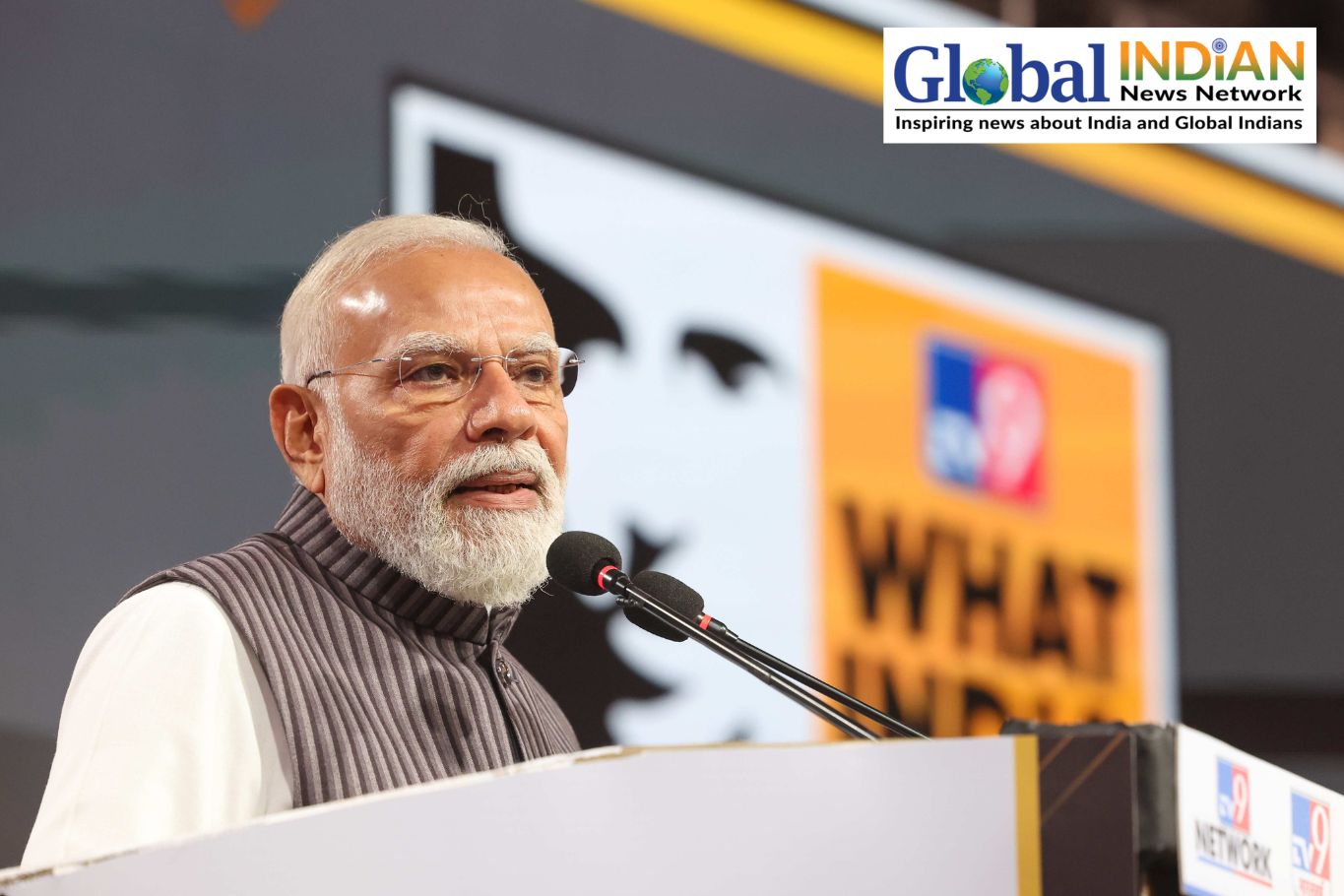
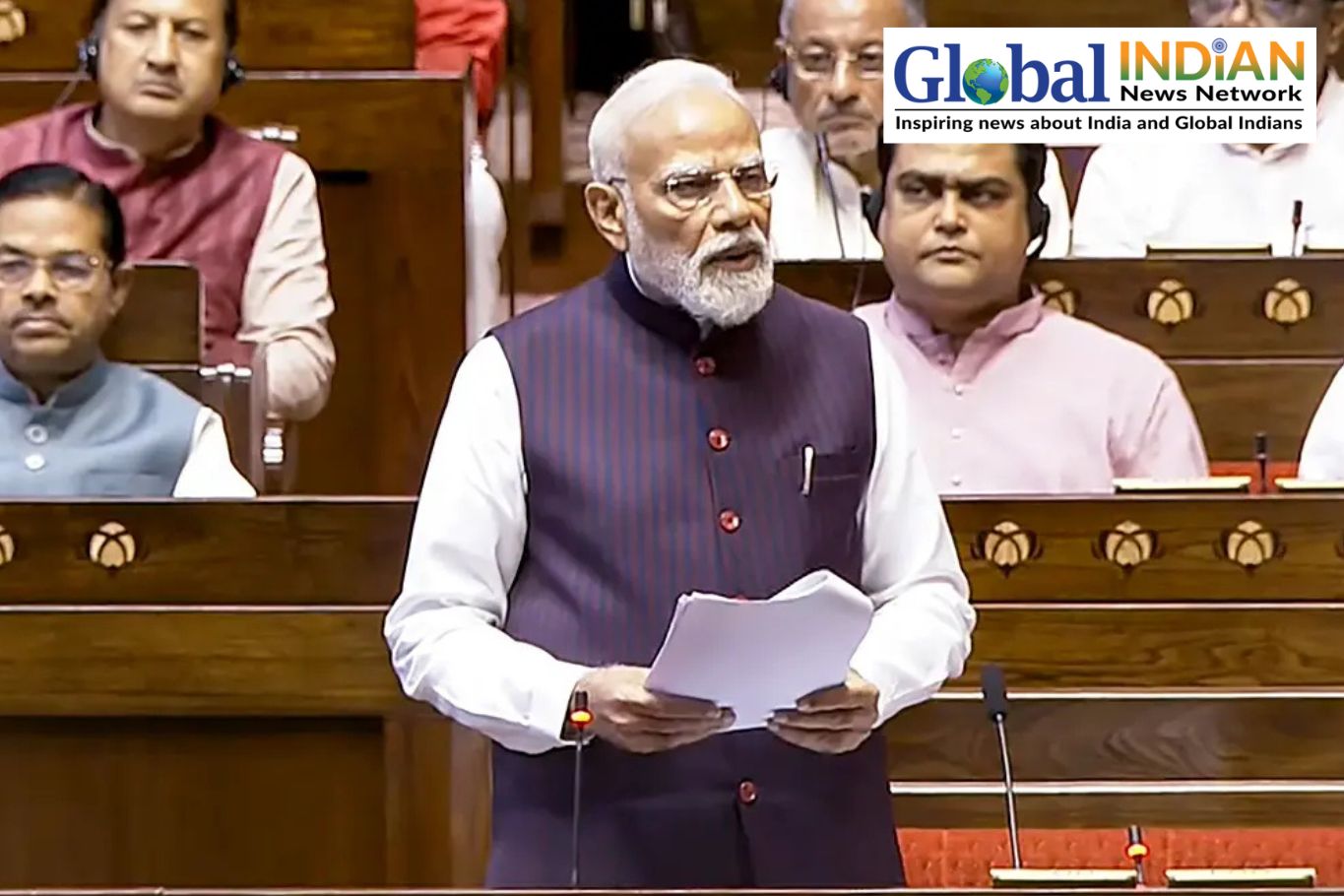
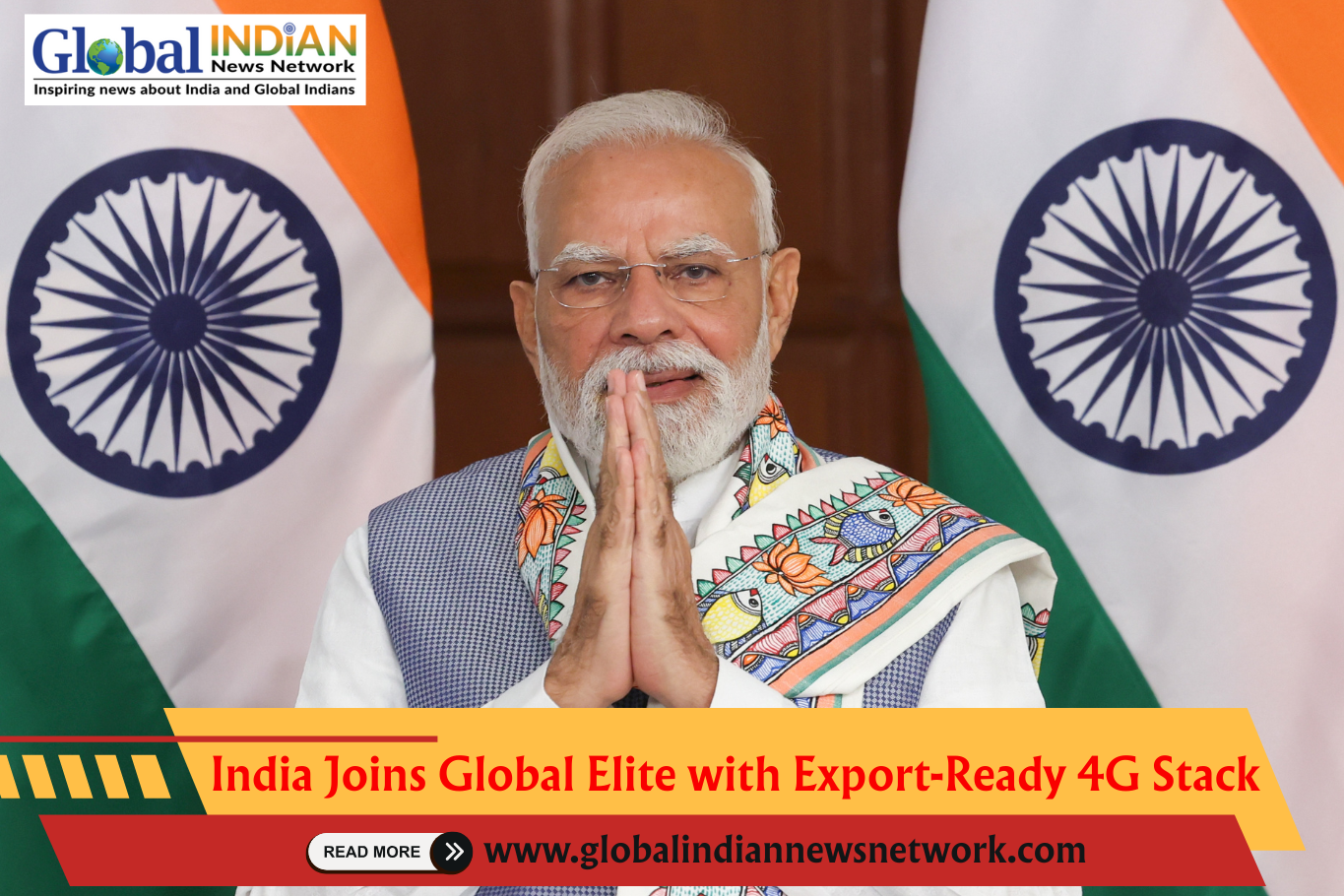
 India has entered an exclusive group of five nations to have successfully created and prepared a homegrown 4G technology stack for global exports. Prime Minister Narendra Modi made this announcement during the inauguration of the India Mobile Congress (IMC), calling it a landmark achievement in India’s pursuit of technological self-reliance. The Prime Minister emphasized that the new 4G stack will provide faster internet speeds, stable connectivity, and improved service quality, enhancing the nation’s digital strength and global competitiveness.
Reflecting on India’s journey from its early 2G challenges to complete 5G coverage, Modi said that digital connectivity has now become essential to daily life across the country. He noted that since 2014, mobile phone production has expanded 28 times, exports have surged 127 times, and the electronics manufacturing sector has grown sixfold. Highlighting India’s potential as a global technology leader, Modi said that the country’s manpower, mobility, and mindset make it an innovation hub. He urged global investors to explore opportunities in semiconductors, electronics, and startups, supported by initiatives like the Digital Innovation Square and the Telecom Technology Development Fund.
The Prime Minister also underlined India’s focus on cybersecurity and data sovereignty. New laws have been introduced to combat cyber fraud, while grievance redressal systems have been strengthened. He added that disruptions in global supply chains present a major opportunity for India to boost semiconductor production, with 10 manufacturing units already under development.
Union Minister for Communications Jyotiraditya Scindia shared that the Production-Linked Incentive (PLI) Scheme for telecom equipment manufacturing has generated $10.25 billion in production, $2.03 billion in exports, and created around 30,000 new jobs. He further mentioned that broadband connectivity now reaches 944 million users, with 99.9% of Indian districts covered by 5G networks.
The India Mobile Congress, Asia’s largest digital technology exhibition, brought together over 7,000 delegates, 400 global companies, and nearly 150,000 visitors from more than 150 nations—underscoring India’s growing role in shaping the future of global telecommunications.