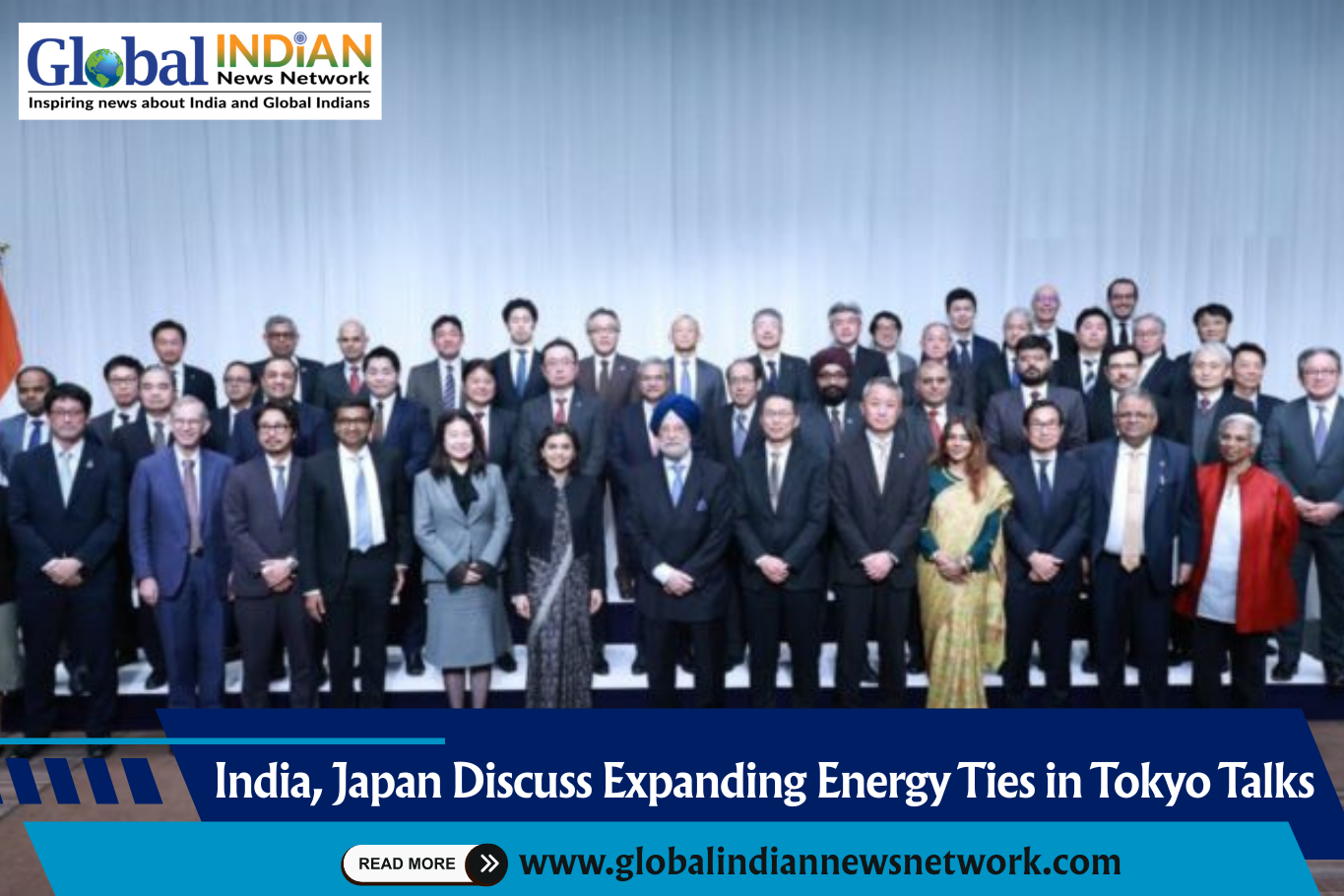
 India’s Petroleum and Natural Gas Minister Hardeep Singh Puri held a high-level roundtable in Tokyo on Monday with top leaders from Japan’s energy and technology sectors. The discussions centered on strengthening Indo-Japanese cooperation across the entire energy value chain, at a time when both countries are looking to deepen economic and strategic ties in the Indo-Pacific.
Sharing details on X, Puri said that the dialogue focused on how energy security and sustainable development in the Indo-Pacific will increasingly be shaped by India’s expanding scale—driven by massive infrastructure growth under Prime Minister Narendra Modi—and Japan’s long-standing expertise in advanced energy technologies. He underscored that the two nations are well-positioned to complement each other as global energy dynamics evolve.
Puri emphasized that India is creating unprecedented investment avenues worth more than $500 million across exploration and production, LNG, city gas networks, hydrogen, maritime logistics, and emerging clean fuels. He noted that India offers a large, skilled workforce supported by strong economic reforms and a growing manufacturing ecosystem shaped by the “Make in India for the World” vision. Japan, on the other hand, brings unmatched capabilities in innovation, green technologies, and energy-efficient infrastructure.
The minister highlighted that India’s policy landscape has undergone significant reforms, including 100 percent FDI in the energy sector, transparent competitive bidding, and a year-round exploration licensing system. These steps, he said, provide investors with clarity, stability, and long-term confidence.
Puri also pointed to the scale of India’s energy sector, stating that the country’s six major oil and gas public sector enterprises posted revenues of around $315 billion in FY 2024–25—amounting to nearly 8 percent of India’s GDP. This scale, he said, demonstrates India’s position as a global energy anchor and presents a strong case for collaboration with Japanese investors and technology leaders.
Earlier in November, Puri had highlighted India’s growing exploration footprint, noting that nearly 1 million square kilometers of offshore space has been opened for oil and gas activity. He added that 99 percent of previously restricted “No-Go” zones have now been cleared, allowing greater participation from domestic and global players.
He further explained that oil and gas blocks offered under the Open Acreage Licensing Programme (OALP) continue to attract strong interest. With Round X underway, the government expects record-level participation, reflecting global confidence in India’s long-term energy vision.