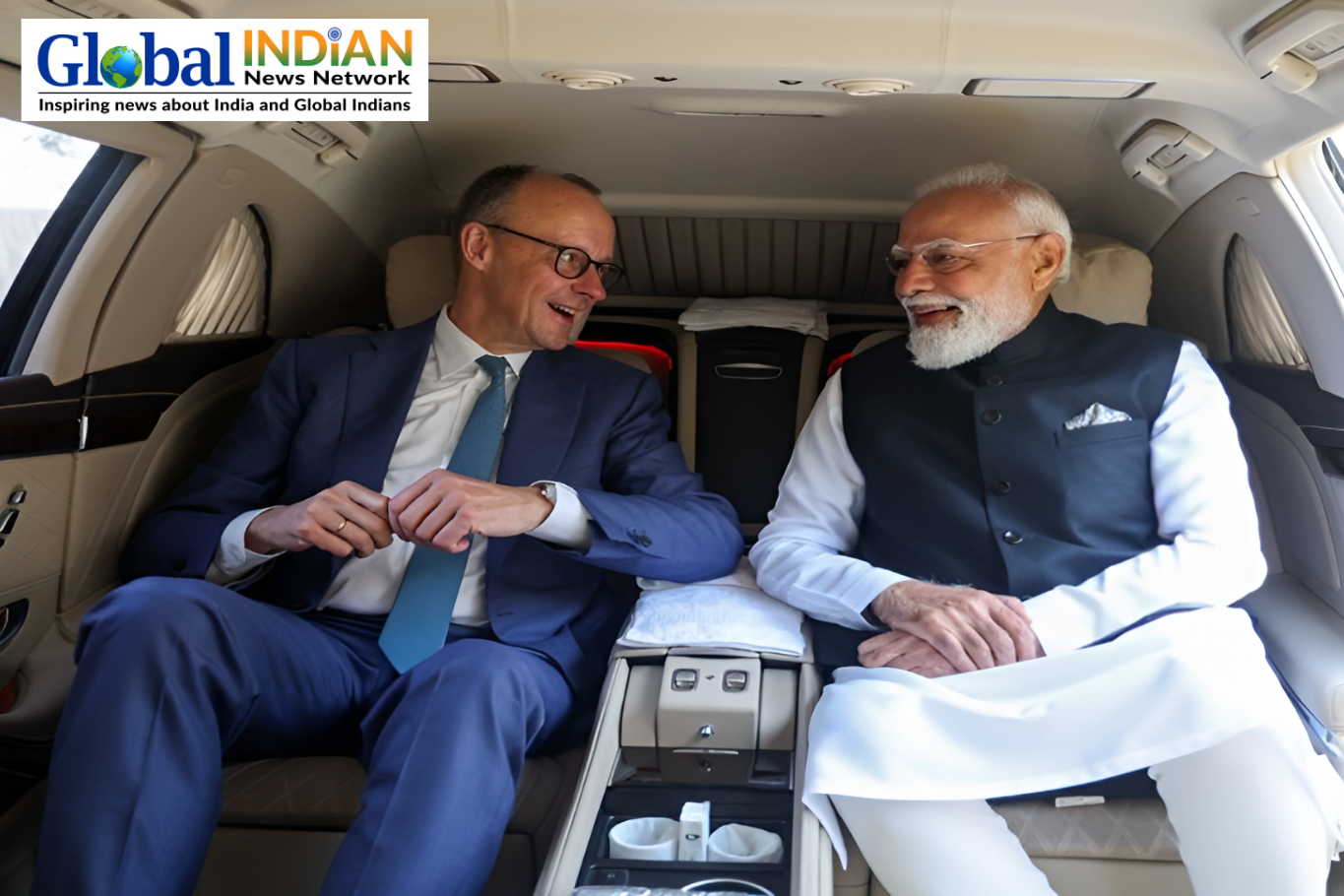
 India and Germany on Monday signed several key Memorandums of Understanding, marking a significant step forward in their strategic partnership, as bilateral trade between the two countries crossed the USD 50 billion milestone for the first time.
The agreements were signed in the presence of Prime Minister Narendra Modi and German Chancellor Friedrich Merz, following high-level talks aimed at expanding cooperation across multiple sectors. Addressing a joint press conference, Prime Minister Modi said the growing trade volume reflects the strength and maturity of economic ties between the two nations.
He noted that more than 2,000 German companies have a long-standing presence in India, underlining strong investor confidence and the expanding opportunities available in the Indian market. The Prime Minister said technology cooperation between India and Germany has steadily deepened and is now delivering tangible results through joint projects and investments.
Renewable energy and climate action featured prominently in the discussions, with both leaders reaffirming shared priorities in these areas. To further strengthen collaboration, India and Germany announced the establishment of an India-Germany Centre of Excellence, which will serve as a platform for knowledge sharing, innovation, and technological advancement.
The two sides are also working together on initiatives related to climate action, clean energy, urban development, and urban mobility. Prime Minister Modi highlighted that a proposed mega green hydrogen project involving companies from both countries could become a game changer for the future of sustainable energy.
Supply chain resilience was another key focus, with both nations agreeing to work jointly on building secure and trusted supply systems. Cooperation in sports and education was also emphasised as a means to strengthen people-to-people ties, particularly among the youth.
Prime Minister Modi invited German universities to establish campuses in India, noting that a new roadmap on higher education would deepen academic collaboration. Chancellor Friedrich Merz, in his remarks, underscored the importance of concluding a free trade agreement between India and the European Union, stating that such a deal would help unlock the full potential of India-Germany economic relations.