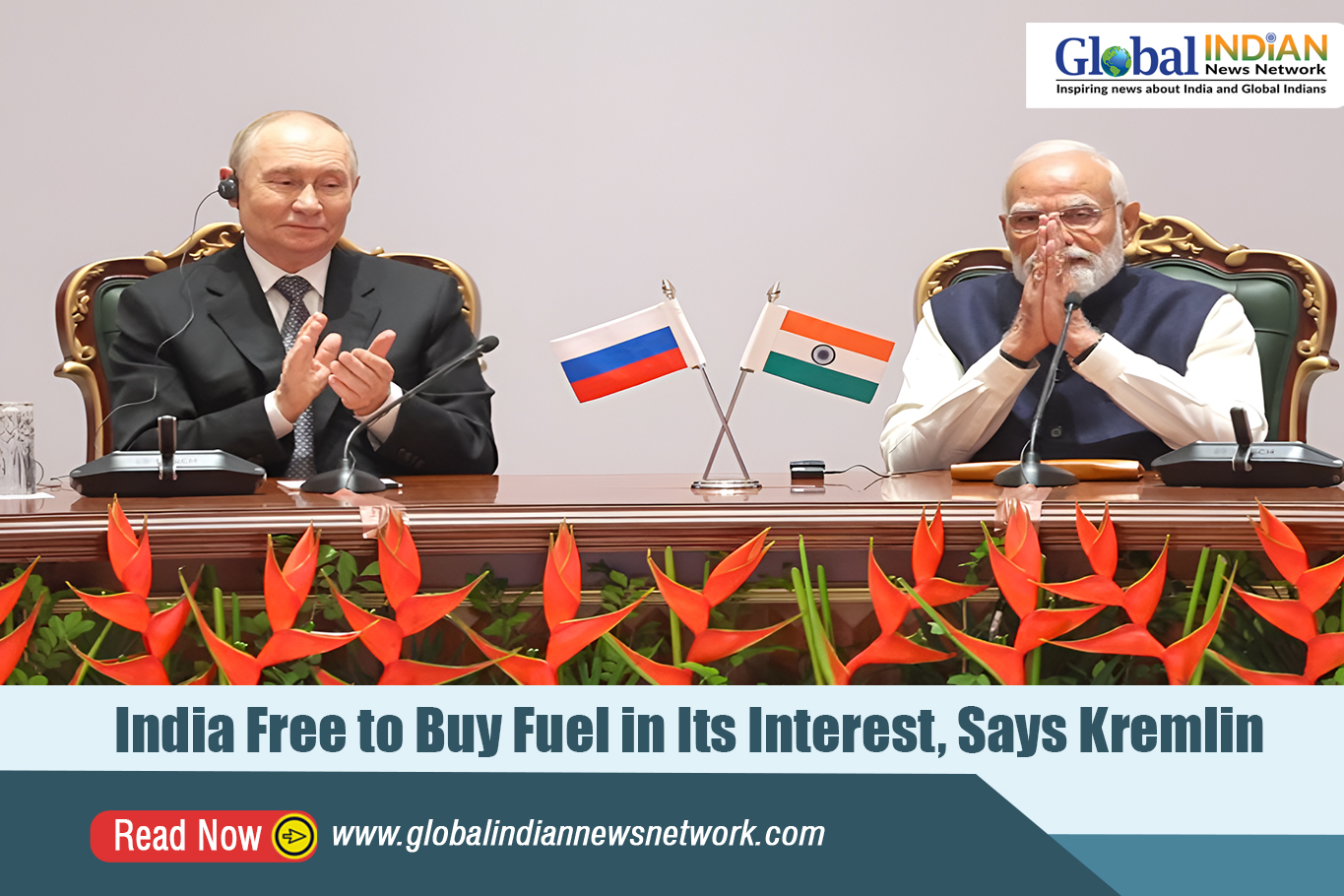
 Russia has reiterated that India will continue purchasing fuel where it finds the best economic advantage, underscoring New Delhi’s sovereign right to determine its own trade priorities. Kremlin spokesperson Dmitry Peskov said India conducts foreign trade in line with national interests and is expected to maintain the same approach following President Vladimir Putin’s recent visit to New Delhi. He described the visit as highly successful and said Moscow fully understands India’s position on sourcing energy competitively.
Peskov’s remarks aligned with President Putin’s assurances that Russia remains one of India’s most dependable energy suppliers. After talks with Prime Minister Narendra Modi, Putin said Moscow is committed to ensuring uninterrupted fuel deliveries to support India’s rapidly growing energy needs. He highlighted the strong personal rapport between the two leaders and their joint effort to closely monitor the progress of all strategic areas of cooperation.
Putin noted a major shift toward national currencies in bilateral trade, with nearly all transactions now conducted in rupees and rubles. He said financial channels between the two countries have expanded, allowing Russian companies to use rupees earned through exports to India. Major joint projects, he added, are increasingly financed in rubles as part of a broader move to strengthen economic resilience.
Energy cooperation continues to be a cornerstone of the partnership, with Russia emphasising its reliability as a long-term supplier. Putin reaffirmed that Moscow stands ready to meet India’s demands without disruption and sees significant room for future growth in the energy sector.
During the summit, Modi and Putin reviewed all dimensions of the relationship, describing it as deep-rooted, multifaceted and strategically important. They reaffirmed their commitment to advancing the Special and Privileged Strategic Partnership and discussed key regional and global developments of mutual interest.
A wide-ranging set of agreements was signed at the Hyderabad House meeting, covering trade and commerce, mobility and migration, maritime cooperation, health and food safety, fertilizers, academic exchanges, media collaboration and enhanced people-to-people ties. Both sides said these steps would further strengthen political, economic and cultural engagement in the coming years.