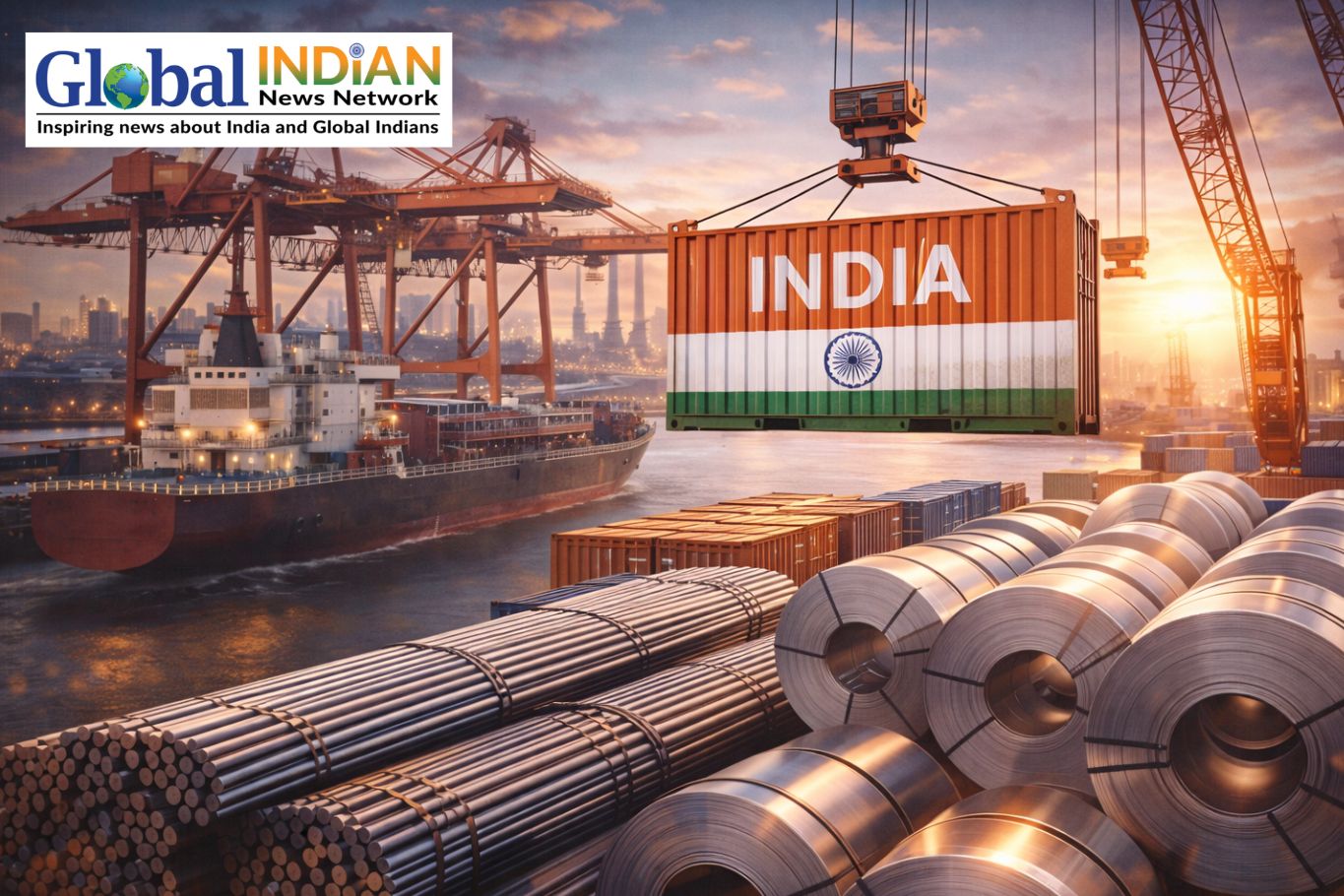
 India’s finished steel exports posted strong growth during the first eleven months of the financial year, highlighting the country’s growing influence in the global steel market. According to provisional government data, exports of finished steel reached about six million metric tonnes between April and February, marking an increase of approximately thirty six percent compared with the same period a year earlier.
The rise in shipments reflects stronger international demand as well as improved manufacturing capacity within the country. Indian steel producers have expanded production capabilities in recent years, allowing them to compete more effectively in global markets. As a result, overseas buyers are increasingly turning to India for a reliable supply of steel products.
India currently stands as the world’s second largest producer of crude steel, supported by rising demand from infrastructure projects, construction activities, and the manufacturing sector. The steady growth in exports demonstrates that Indian steel producers are successfully capitalizing on global opportunities while also strengthening their competitiveness.
Industry data also reveals a significant shift in the country’s steel trade pattern. While exports increased sharply, imports of finished steel dropped substantially during the same period. The volume of imported steel declined by more than thirty seven percent compared with the previous year, reaching roughly five million metric tonnes during the April to February timeframe. The reduction suggests that domestic producers are increasingly able to meet demand that was earlier fulfilled through imports.
At the same time, India’s crude steel output recorded notable growth. Total production during the period climbed to around one hundred fifty three million metric tonnes, reflecting an increase of over eleven percent from the previous year. The rise in output has helped strengthen supply availability for both domestic use and international markets.
Domestic consumption of finished steel also continued to grow steadily. Demand within the country rose by about seven percent, bringing total usage to nearly one hundred forty eight million metric tonnes. This expansion indicates strong activity across sectors that rely heavily on steel, including infrastructure development, construction projects, and engineering industries.
Together, these trends highlight the resilience of India’s steel sector despite fluctuations in global markets. The combination of rising production, expanding exports, and increasing domestic consumption shows that the industry remains a key driver of industrial growth.
With continued investment in production capacity and infrastructure development, India is steadily reinforcing its role as a major contributor to the global steel supply chain while supporting the country’s broader economic development goals.