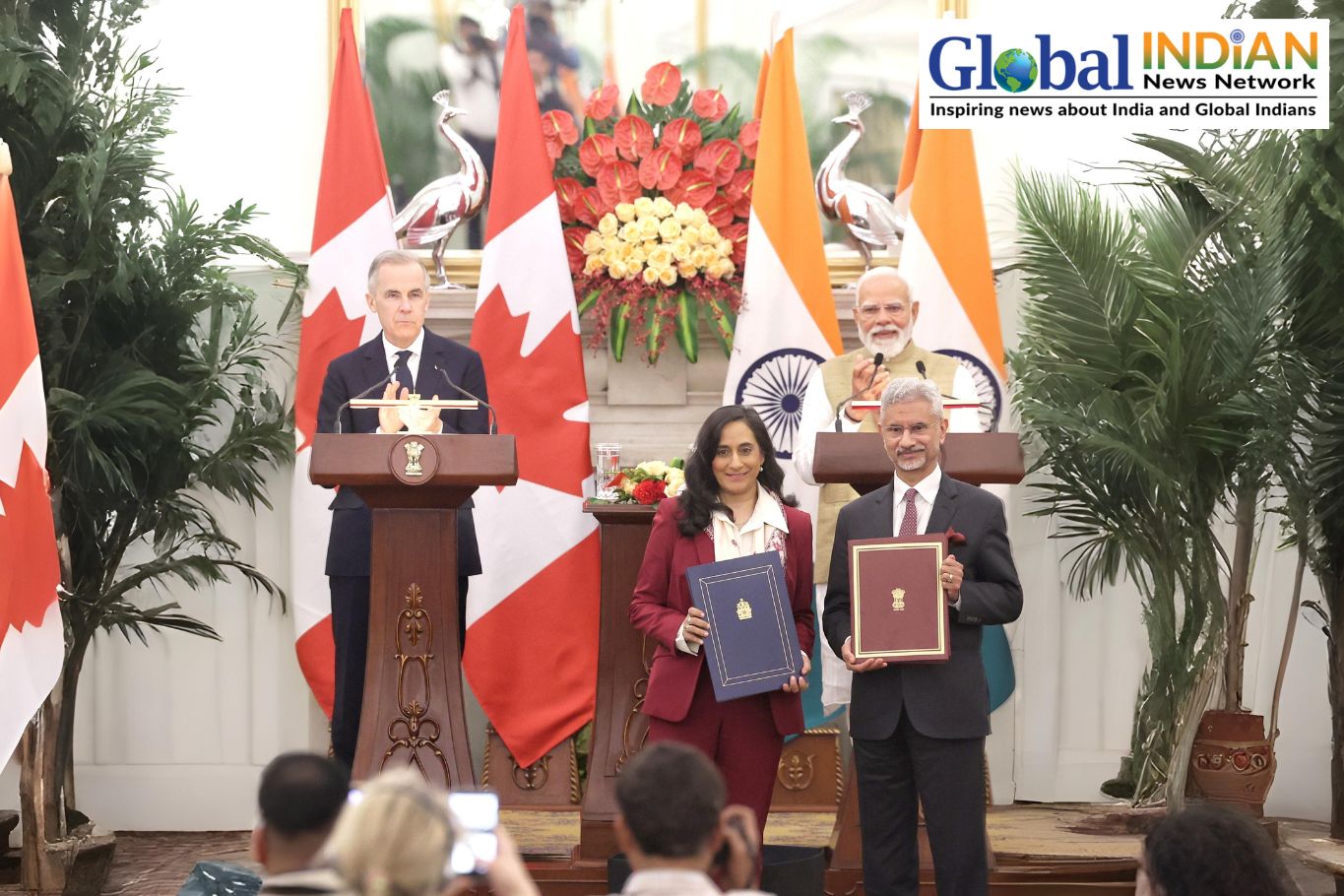
 Canadian Prime Minister Mark Carney applauded Prime Minister Narendra Modi’s leadership during a joint press appearance in New Delhi, crediting him with steering India into becoming the world’s fastest growing economy over the past decade. Carney noted that income levels across India have risen at an unprecedented pace, describing the transformation as rare in modern economic history.
Referring to India’s 2023 G20 presidency theme, “One Earth, One Family, One Future,” Carney said the message reflects the spirit needed to address global challenges that no single country can tackle alone. He emphasized that Canada shares India’s ambition and strategic vision for inclusive growth and global cooperation.
The two leaders reviewed the full range of bilateral relations, covering trade and investment, defence and security, education and cultural exchange, clean energy, critical minerals, artificial intelligence, supercomputing, and mobility. They also exchanged views on regional and global developments, agreeing that terrorism, extremism, and radicalization remain significant threats worldwide. Following their discussions at Hyderabad House, both countries signed multiple memoranda of understanding in areas such as civil nuclear cooperation, energy, critical minerals, education, skill development, science and technology, and cultural collaboration.
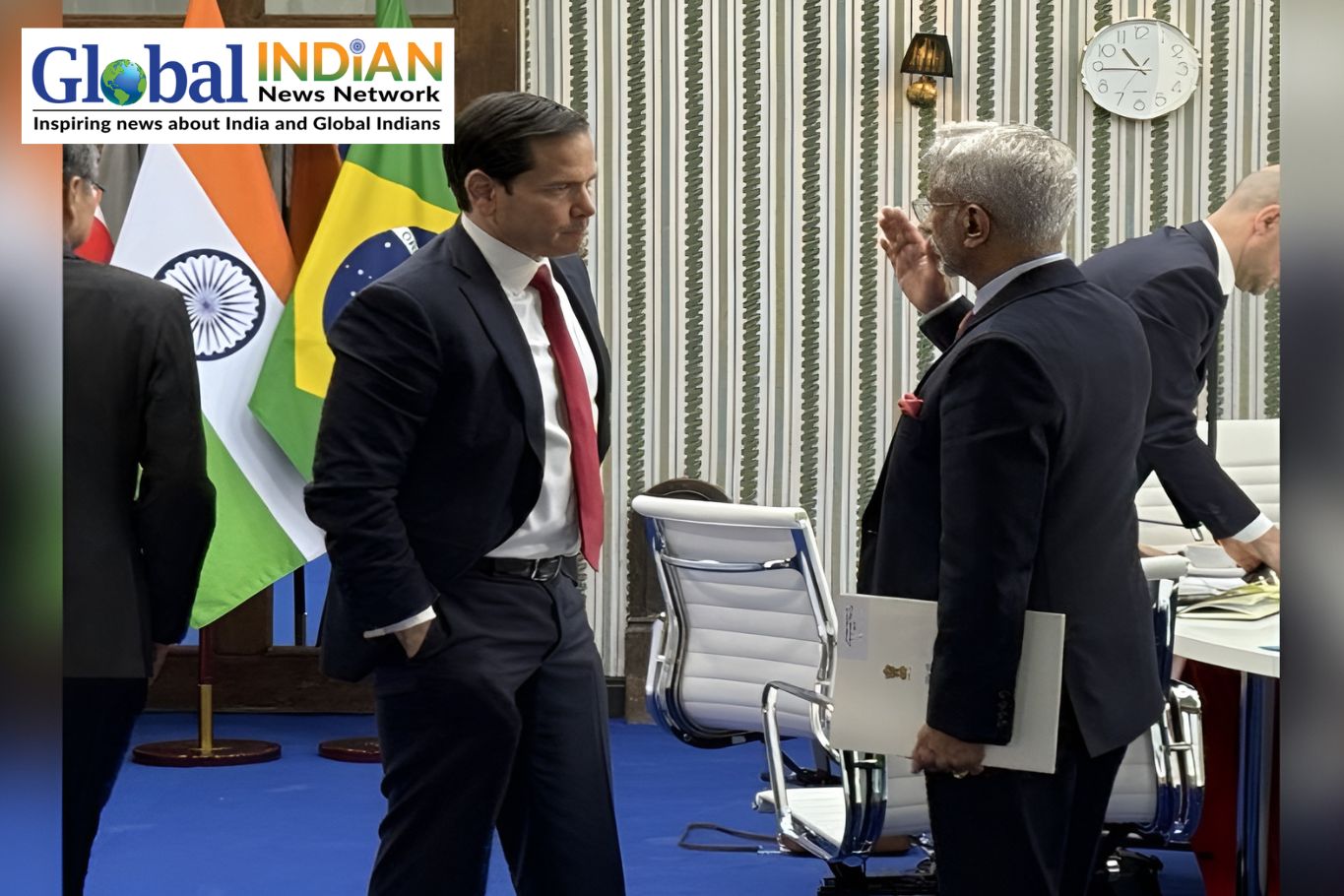
Carney announced a renewed defence and security framework, including enhanced maritime cooperation in the Indo-Pacific, expanded military exchanges, and closer coordination on shared strategic interests. He highlighted that diplomatic engagement over the past year has been unusually intensive, with foreign ministers meeting five times and multiple ministerial delegations traveling between both countries. According to Carney, there has been more interaction in the last year than in the previous two decades combined.
He described the relationship not merely as a reset but as an expansion of a valued partnership shaped by ambition and foresight. Carney also confirmed that both governments aim to finalize a comprehensive economic partnership agreement before year-end. The proposed pact is designed to reduce trade barriers, improve business certainty, and unlock new opportunities for exporters and investors, with the goal of doubling bilateral trade by the end of the decade.
Highlighting deep people-to-people ties, Carney pointed out that nearly two million Canadians trace their heritage to India. He noted that 400,000 Indian students are currently studying in Canada, strengthening educational and cultural bonds. A new talent and innovation strategy will introduce 13 partnerships involving leading Canadian universities to collaborate with Indian institutions in artificial intelligence, health sciences, and digital architecture.
Additionally, Canada’s space agency will expand cooperation with India’s space program on Earth observation, climate monitoring, agricultural data systems, disaster response, and resilience initiatives across the Indo-Pacific. Carney concluded that strengthened trade and defence foundations will reinforce this forward-looking partnership between two confident democracies.