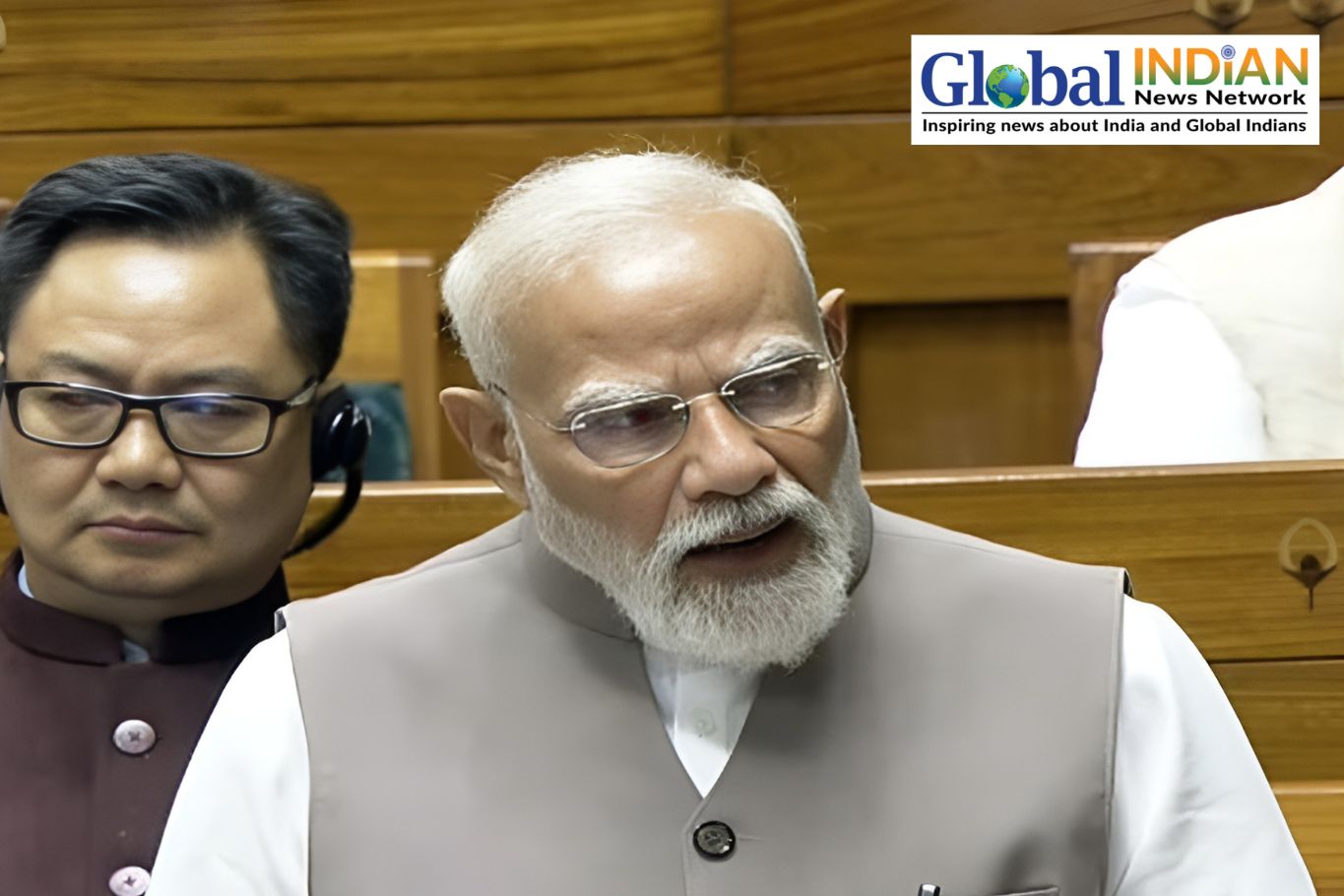
 Prime Minister Narendra Modi on Monday said the government is taking continuous steps to ensure uninterrupted oil and gas supply amid the ongoing tensions in West Asia, highlighting India’s strengthened energy security framework.
Addressing the Lok Sabha, the Prime Minister noted that India has significantly diversified its energy import sources over the past decade. While the country earlier relied on 27 nations for crude oil, LNG, and LPG, it now sources energy from 41 countries, reducing dependency on any single region.
He pointed out that a large portion of India’s imports of crude oil, gas, and fertilisers pass through the strategically important Strait of Hormuz, where shipping has become increasingly challenging due to the ongoing conflict.
Despite these disruptions, the government has ensured that the supply of essential fuels such as petrol, diesel, and gas remains stable across the country. Modi stated that India imports around 60 per cent of its LPG requirements, and amid global uncertainty, priority has been given to domestic consumers while boosting local production.
Highlighting long-term measures, the Prime Minister said India has strengthened its strategic petroleum reserves, which currently exceed 53 lakh metric tonnes, with plans to expand capacity beyond 64 lakh metric tonnes. He also noted that refining capacity has increased significantly in recent years.
The government, he added, is in constant touch with global suppliers and closely monitoring shipping routes to ensure uninterrupted flow of energy supplies. Efforts are also being made to ensure safe passage for vessels carrying essential commodities.
Modi emphasised that India’s approach combines diversification, infrastructure development, and global coordination to safeguard energy needs, ensuring stability even during geopolitical uncertainties.