 India’s steady rise as a major economic power is increasingly enabling it to play a pivotal role in strengthening the Global South, driven by shared priorities of resilience, inclusion, sustainability and locally relevant innovation. Analysts note that India’s development trajectory is offering a compelling alternative model for emerging economies seeking balanced and inclusive growth.
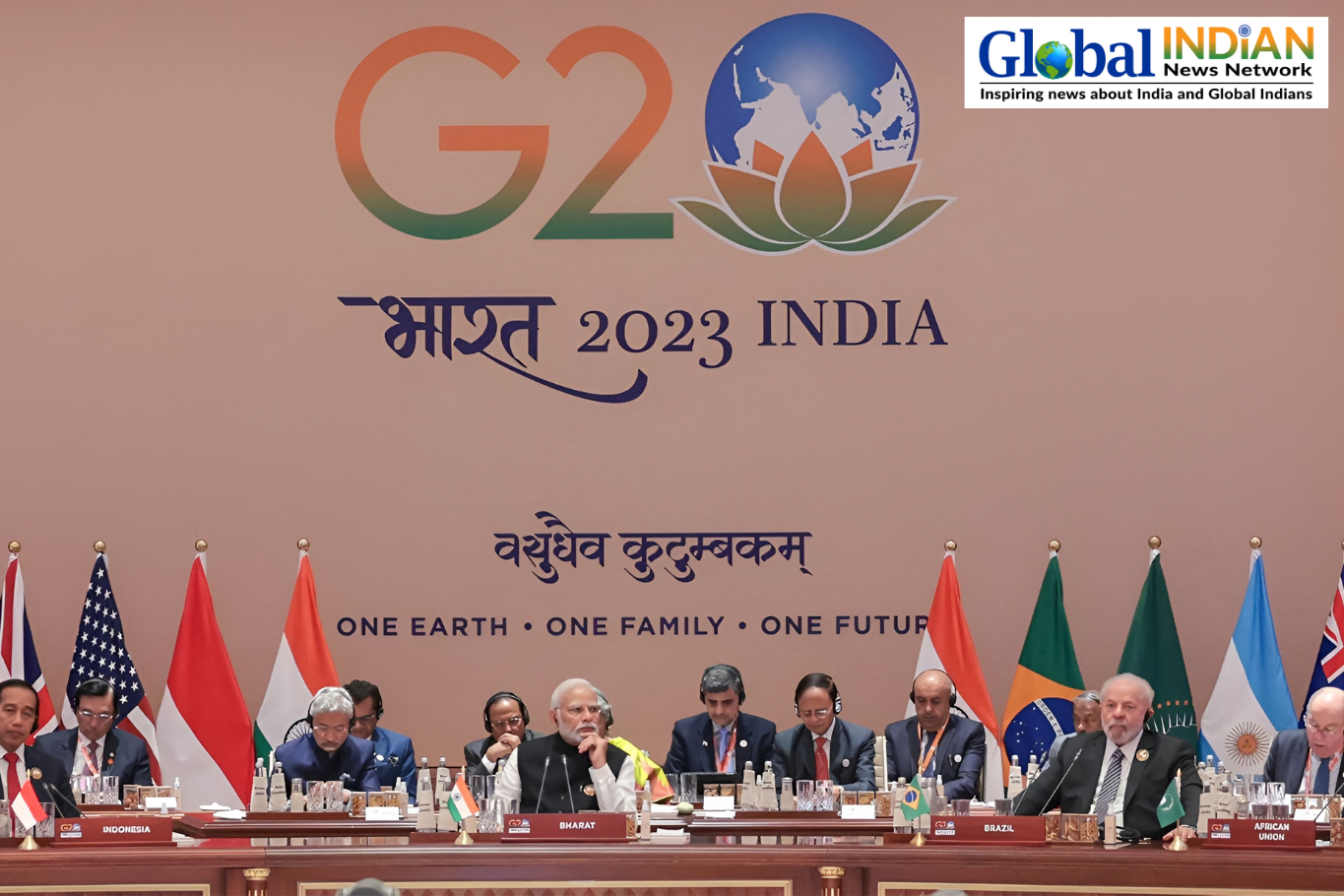
The 2023 G20 New Delhi Leaders’ Declaration reflected this vision by advocating a more representative, secure and digitally enabled global growth framework. The agenda resonated strongly with developing nations, reinforcing India’s role as a bridge between advanced and emerging economies. Observers have highlighted that India’s ascent uniquely combines scale, innovation and purpose in ways few countries can replicate.
India’s achievements in building digital public infrastructure have delivered real-time financial inclusion to millions, while its role in supplying vaccines and essential pharmaceuticals to over 150 countries has demonstrated the global applicability of its development solutions. These outcomes stem from sustained investments in institutions, human capital and technology-driven governance.
Expanding economic ties with Africa, Latin America and West Asia have further enhanced India’s influence in shaping South-South cooperation. Development partnerships spanning digital identity platforms, renewable energy and capacity building are rooted in shared experiences and practical adaptability, strengthening trust and long-term collaboration.
India’s next phase of growth is expected to be driven by a dual engine of globally competitive services and high-value manufacturing in sectors such as electronics, renewable energy, defence and semiconductors. This balanced expansion is positioning India as a stronger participant in global value chains while supporting supply-chain resilience among partner nations.
Emerging growth corridors across West Asia, Africa and Latin America are set to become hubs for collaboration in energy transition, digital infrastructure, food security and circular manufacturing. These networks are expected to enhance collective economic capacity across the Global South.
Government-led innovation has played a central role in India’s rise so far, but analysts note that the next stage will require Indian companies to scale their global ambitions. Rising outward direct investment reflects growing confidence among Indian firms to build ecosystems abroad rather than simply export products.
Indian enterprises in sectors such as FMCG, financial services, pharmaceuticals and telecommunications are expanding across emerging markets, bringing capital, technology and employment opportunities. At home, sustained investments in rural infrastructure—covering electrification, logistics, sanitation, water access and healthcare—are acting as powerful growth multipliers.
In the digital era, India is also well positioned to emerge as an AI infrastructure provider for developing economies. By building data centres, exporting computing hardware and creating locally adaptable AI platforms, India can offer affordable and sovereign digital alternatives, echoing its earlier success in the global software industry.
As the world’s economic centre of gravity continues to shift southward, India’s inclusive and partnership-driven growth model places it in a unique position to shape a more equitable and connected global economic architecture. With the Global South accounting for the majority of the world’s population and a growing share of global GDP, India’s leadership is set to play an increasingly defining role in the decade ahead.