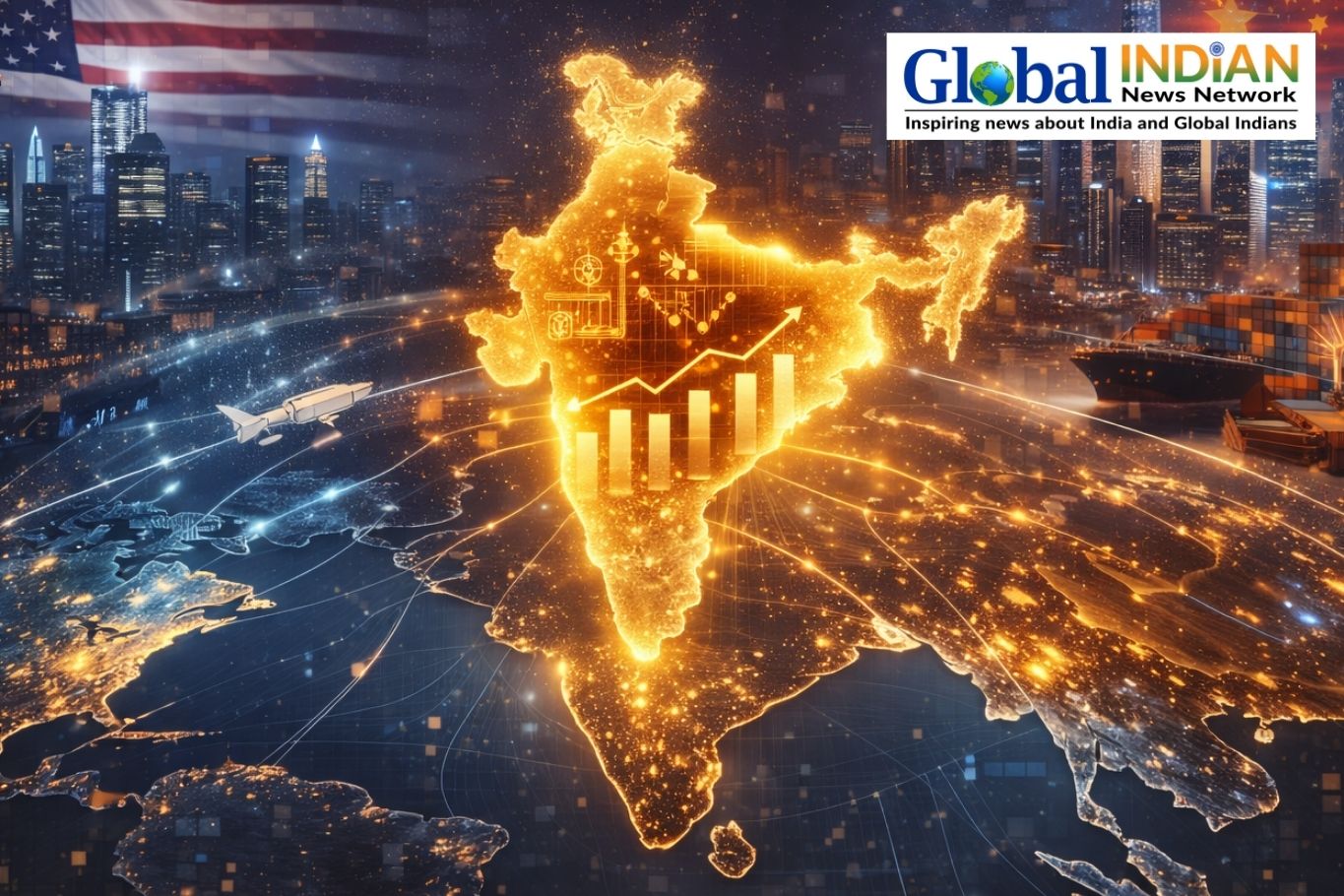
 India is increasingly being viewed as a viable third pole in a fragmented global economy, as geopolitical tensions among major powers reshape global alliances and economic strategies.
According to an analysis published in an international affairs journal, Europe and Canada are recalibrating their global partnerships amid growing uncertainty in relations with the United States and China. As Western nations seek to de-risk from China while navigating volatility in American foreign policy, India is emerging as a strategic alternative.
India offers economic scale and market depth without the geopolitical complexities often associated with China. While it does not replace the US security umbrella or replicate China’s manufacturing dominance, it represents a balanced and pragmatic option in an increasingly divided global landscape.
The analysis suggests that Europe’s expanding engagement with India — including trade negotiations and strategic cooperation — reflects this shift. Canada, despite recent diplomatic strains with New Delhi, may similarly view India as a stabilising partner to diversify economic and political risk.
India’s growing manufacturing base has strengthened its appeal. As global companies diversify supply chains away from China, India has positioned itself as a major destination for investment. The country combines competitive labour costs with improving infrastructure, technological capabilities and a vast domestic consumer market.
Another key factor is India’s democratic framework. Its institutional structures — including elections, judiciary and civil society — provide political familiarity for European and North American partners. This democratic alignment lowers the political cost of deeper cooperation.
Demographic advantages further enhance India’s long-term attractiveness. A young, English-speaking workforce and rising purchasing power contribute to sustained economic momentum. Strategically, India’s emphasis on autonomy and its complex relationship with China align more naturally with transatlantic interests than authoritarian-led global models.
While challenges remain — including regulatory hurdles and protectionist tendencies — India’s flexible diplomatic approach allows it to engage multiple power centres without fully binding itself to any one bloc. In an era marked by shifting alliances and economic disruption, this strategic autonomy may prove to be one of India’s strongest assets.
As global power dynamics evolve, India is increasingly positioned not merely as a regional player but as a connective force linking major economic blocs across the Atlantic and Indo-Pacific regions.